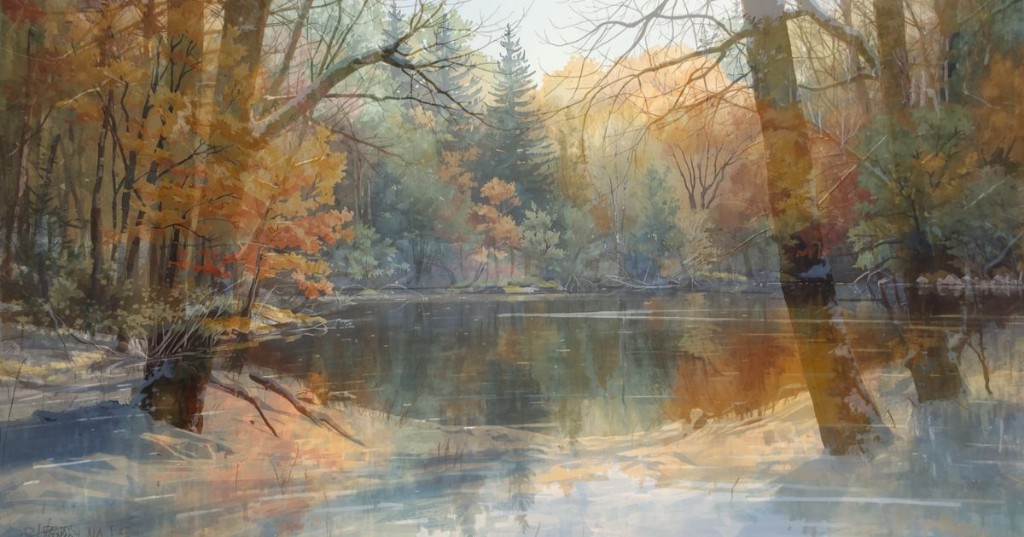
Thoreau discovers that winter isolation doesn't mean loneliness, it means becoming aware of an entire world of animal neighbors he never noticed before. The frozen pond becomes his highway to town, transforming familiar landscapes into something magical and strange. But it's the animals that steal the show. Red squirrels put on daily comedy performances at his corn pile, approaching with elaborate caution only to waste half their haul through sheer theatrics. Chickadees become so comfortable they land on his shoulders. Rabbits live literally under his floorboards, thumping around each morning.
He listens to owls having territorial disputes with migrating geese, watches foxes outsmart hunting parties, and observes the intricate social dynamics of jays stealing from squirrels. What starts as simple animal watching becomes a masterclass in attention. Thoreau realizes that when you slow down and really look, even the most ordinary backyard contains endless entertainment and wisdom. The animals aren't just surviving winter; they're thriving, each with their own personality and survival strategy.
His isolation teaches him that being alone doesn't mean being lonely when you learn to see the community that was always there. The chapter reveals how paying attention to the small, immediate world around us can be more fascinating than any human drama, and how solitude can actually connect us more deeply to life rather than separating us from it.
Amplified Discussion
The Hidden Cost of Hustle Culture
Thoreau's winter isolation reveals something crucial about modern life: our constant busyness creates a form of blindness that cuts us off from immediate reality. While he chose solitude, many wage earners on tight incomes experience a different kind of isolation, surrounded by people but too rushed, stressed, or exhausted to actually connect with their environment. The gig economy, multiple jobs, and survival mode create what researchers call 'time poverty', even when we're physically present, our attention is elsewhere, planning the next shift or worrying about bills. This isn't just about missing pretty sunsets; it's about missing practical information. The coworker who could become a real friend. The neighbour who knows about job openings. The local patterns that could make daily life easier or richer. Thoreau discovered that his squirrels, chickadees, and rabbits weren't just entertainment, they were teachers showing him how to thrive in his environment. When we're too busy surviving to observe, we miss the very information that could help us thrive. The irony is that slowing down enough to notice our immediate world often reveals resources and connections that make the hustle less necessary. What communities and opportunities might become visible if we practiced the same quality of attention Thoreau brought to his winter neighbours?
Explore this chapter with AI to uncover deeper meaning and practical takeaways.
Most of the world's information is delivered not in headlines but in small, consistent signals that surround you, and learning to read them takes practice. Watching winter animals navigate his wood-yard through the snow, Thoreau tracked the fox, the partridge, the red squirrel, and the hound that had lost its trail, finding that each creature navigated by different intelligence and left different traces for those paying attention. For one day this week, treat your immediate environment as a text and read it for patterns you normally walk past.
Lessons
PracticeThis week, notice the regular rhythms in your workplace, neighborhood, or home, who appears when, what small interactions repeat, what details you've been walking past while focused on bigger problems.
Psych reading
The Attention Audit
When we slow down and observe our immediate environment without agenda, we discover rich patterns, opportunities, and communities that were always present but invisible during our normal rushed pace.
In the mind
Thoreau discovers a fundamental pattern: when we slow down and pay genuine attention, ordinary environments reveal extraordinary complexity and richness we never noticed before. His winter isolation doesn't create loneliness, it creates awareness of an entire community of animal neighbours who were always there.
This pattern operates through what psychologists call 'attentional blindness', when we're rushing through life focused on big goals or problems, we literally cannot see the smaller details and opportunities surrounding us. Thoreau's forced slowdown allows his brain to register patterns he'd walked past hundreds of times: the squirrels' elaborate comedy routines, the chickadees' trust-building behavior, the complex social dynamics happening right under his feet. The mechanism is simple: attention is a limited resource, and when we're not spending it on distant worries or future plans, we can invest it in immediate reality.
This exact pattern appears everywhere today. The nurse who finally notices which patients respond better to humor versus gentle firmness, but only after slowing down enough to observe rather than just complete tasks. The parent who discovers their teenager actually does want to talk, just not during the rushed car rides, but during quiet evening moments when there's no agenda. The worker who realizes their 'difficult' coworker is actually responding to specific triggers that can be navigated once you pay attention to the pattern. The person who finds their neighborhood has an entire ecosystem of regular dog walkers, early morning joggers, and evening gardeners, a whole community they never noticed while focused on bigger life dramas.
When you recognize this pattern, practice 'attention audits', deliberately slow down and observe your immediate environment for patterns you might be missing. At work, notice who speaks up in meetings and who stays quiet. At home, observe the small rituals and rhythms of your family members. In your neighborhood, pay attention to the regular characters and daily cycles. The framework is: slow down, observe without agenda, look for patterns, then engage with what you discover. Most opportunities and insights exist in the details we're too busy to notice.
When you can name the pattern of attentional blindness, predict where slowing down will reveal hidden richness, and navigate by deliberately investing attention in immediate reality.
Find the right chapter
Each mood maps to a life skill. Each skill connects to the patterns in classic literature.
😔How do you feel😊
Personalize your match
Optional—life stage, what you need today, and what you're navigating help us pick chapters that fit—not generic lists. You may also freeform using the feeling search below.