
Former Inhabitants and Winter Visitors uses deep winter solitude as a lens to bring two things simultaneously into focus: the erased communities that preceded Thoreau in the Walden woods, and the handful of visitors who make the snowed-in months livable. The chapter argues, implicitly, that solitude of this density turns a person into a better reader of both history and human character.
The former inhabitants are its first subject. Thoreau reconstructs them from cellar holes and apple trees and epitaphs. Cato Ingraham, a freed slave, planted walnuts he intended to harvest when old and needed them; a younger white speculator took them. Zilpha, a spinner, made the woods ring with her singing until soldiers burned her house and her animals with it. Brister Freeman, another freed slave, whose trees still grow fruit Thoreau finds "wild and ciderish." Hugh Quoil, a Waterloo veteran turned ditcher, died at the foot of Brister's Hill; Thoreau visits his abandoned house and finds clothes curled on the bed as if they still hold a person, a broken pipe, a garden planted but never hoed. Now all these lives leave only dents in the earth, buried cellar stones, and lilac bushes that keep blooming every spring regardless, tended by no one. Thoreau wonders why this small settlement failed while Concord endured, and finds no satisfying answer.
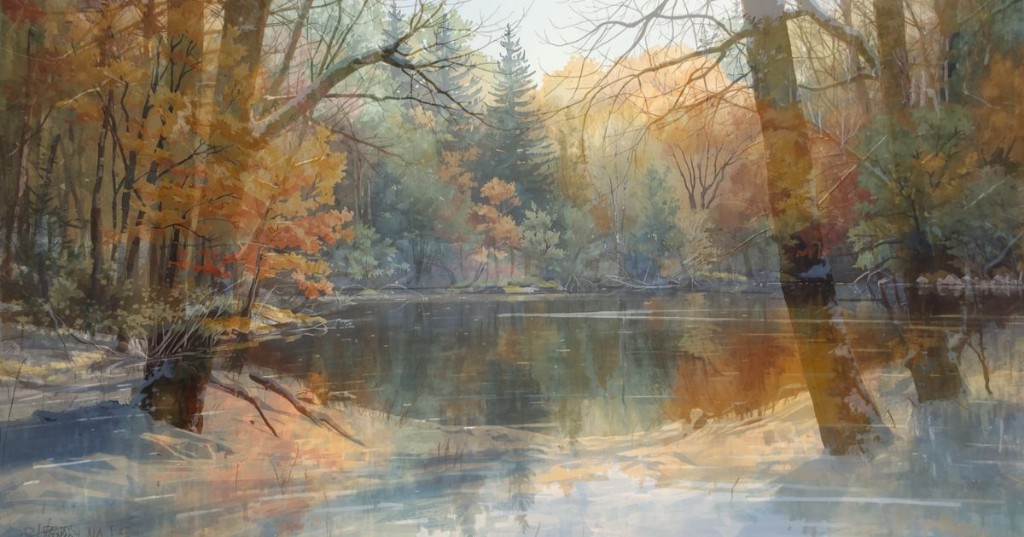
The chapter's third movement is solitude itself. Thoreau walks eight or ten miles through waist-deep snow to keep appointments with particular trees, taking the same number of steps each day along a path that becomes a dotted line between snowstorms. A barred owl sits close enough to watch in broad daylight, half-dreaming, barely registering Thoreau as anything more than a vague interruption of its visions. The chapter's tone becomes still here, attending.
Then the visitors arrive and break the stillness in the best way. A woodchopper leaves the smell of his pipe on the hearth. A philosophical farmer debates simple times and hard winters. The poet travels through any storm because, as Thoreau notes, nothing can deter a poet, being actuated by pure love. But the fullest portrait is the philosopher, almost certainly Bronson Alcott, who Thoreau describes as the sanest man he knows, pledged to no institution, whose conversations seem to fill and then crack the cabin with ideas that cannot be contained. Against all these real arrivals, Thoreau closes with the Visitor who never comes, the one he waits for at evening as long as it takes to milk a cow.
Thoreau's discovery of forgotten lives through cellar holes and lilac bushes raises profound questions about how we understand place and belonging. Every neighborhood carries layers of history, the family grocery that became a chain store, the apartment building where three generations lived before gentrification, the community garden planted by residents who could no longer afford to stay. These stories matter because they reveal the forces that shape our present circumstances. When we understand that our housing struggles connect to decades of economic policy, or that our workplace exists because of earlier labor organizing, we gain perspective on our own challenges. We're not failing individually, we're navigating systems with long histories. This knowledge transforms isolation into connection and personal struggle into shared experience. The physical remnants around us, the old factory turned into lofts, the corner store with bars on windows, the park where playground equipment sits unused, tell stories about economic shifts, demographic changes, and community responses to challenge. Reading these signs helps us understand not just where we are, but how we got here and what possibilities exist for where we're going. When we can see ourselves as part of an ongoing story rather than isolated individuals, we make different choices about how to contribute to the continuing narrative of our communities.
Explore this chapter with AI to uncover deeper meaning and practical takeaways.
AI Discussion