
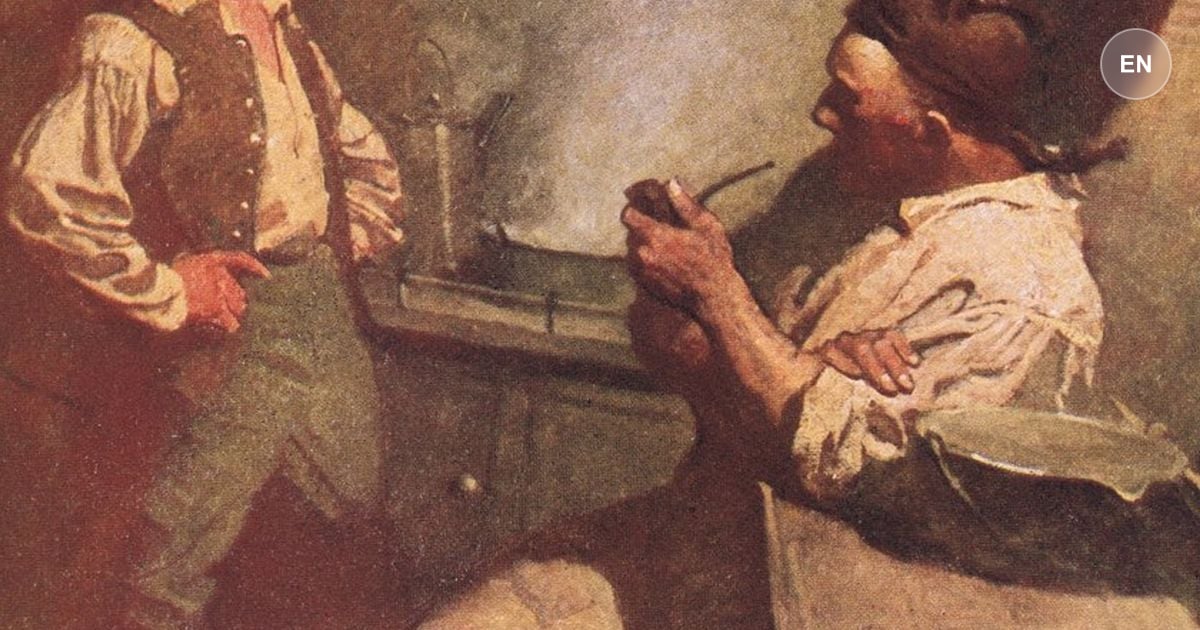
Jim watches from hiding as Pew and his gang of pirates ransack the Admiral Benbow inn, searching desperately for something more valuable than money. When they discover that Jim and his mother have already taken what they're after, Pew becomes increasingly frantic and abusive toward his own men. His greed and desperation reach a breaking point when warning signals indicate approaching danger. While his crew wants to flee with the money they've found, Pew refuses to give up the greater treasure, berating them as cowards and striking them with his stick.
This toxic leadership backfires spectacularly, when revenue officers arrive on horseback, Pew's own men abandon him in his moment of greatest need. In his panic and blindness, both literal and metaphorical, Pew runs directly into the path of the horses and is trampled to death. The irony is stark: the man who called others cowards dies alone because his greed made him impossible to follow. Jim emerges to meet the revenue officers, led by Supervisor Dance, who arrived just in time thanks to a tip about suspicious activity.
Though the main ship escapes, Jim realizes he possesses something the pirates desperately wanted, something he's kept hidden in his coat pocket. The chapter reveals how unchecked ambition destroys not just the leader, but relationships and loyalty. Pew's fate serves as a powerful reminder that leadership built on fear and greed ultimately leads to isolation and downfall.
Pew's death reveals something profound about power and loyalty that applies directly to modern workplaces and relationships. When leaders rule through fear, they create what psychologists call 'compliance without commitment', people follow orders but feel no genuine loyalty. This works fine during calm periods, but the moment real pressure hits, the facade crumbles. Pew's crew had been taking his abuse because they needed the money, but when actual danger arrived, they had zero reason to risk themselves for him. He'd given them nothing but fear and contempt, so they returned the favor by abandoning him. You see this pattern everywhere today. The manager who screams at staff during rushes, then can't understand why people quit without notice during the busy season. The family member who controls through guilt and anger, then wonders why no one visits during their health crisis. The supervisor who takes credit for successes but blames others for failures, then acts shocked when the team stops sharing information during the big project. Stevenson understood that sustainable leadership requires what we now call 'psychological safety', people need to trust that following you serves their interests too, not just your ego. Pew's blindness wasn't just physical; he couldn't see that his treatment of others was destroying the very relationships he needed to survive.
Explore this chapter with AI to uncover deeper meaning and practical takeaways.
AI Discussion