
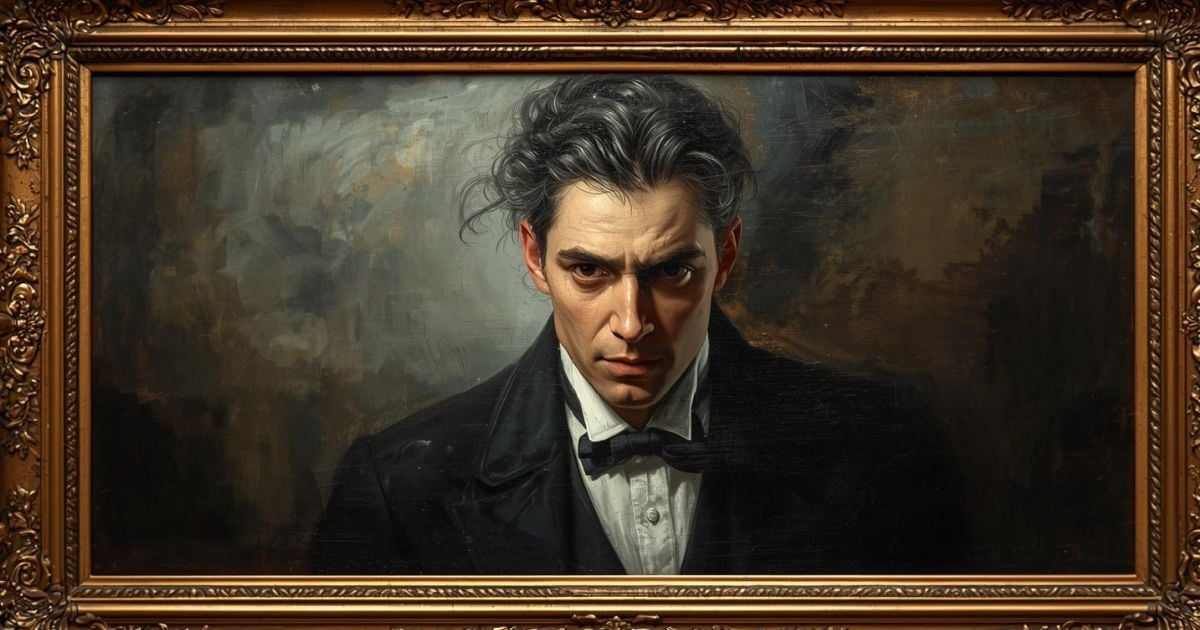
Lord Henry spends the late morning in his uncle Lord Fermor's rooms at the Albany, trading fashionable talk for what he calls useless information. Fermor remembers Lady Margaret Devereux, Lord Kelso's daughter: extraordinarily beautiful, she ran off with a penniless subaltern, then saw him killed in a duel at Spa a few months after the marriage. An ugly story said Kelso paid a Belgian adventurer to insult the husband in public. Kelso brought his daughter home. She never spoke to him again, died within a year, and left a son Fermor had forgotten. The old man hopes the boy will fall into proper hands. There should be money if Kelso did right by him, and the Selby property had already come to the mother through a grandfather who hated Kelso and thought him mean. Henry hears the tragedy as atmosphere, not as a warning. When Fermor grumbles that Lord Dartmoor wants to marry an American, Henry calls it the fashion and says the betting is on the Americans. He leaves meaning to dominate Dorian the way Dorian already dominates Basil's imagination.
At Lady Agatha's luncheon the same voice performs for a duchess, a politician, and a silent scholar. Lady Agatha wants Dorian for East End work. Henry says he wants the boy to play for him alone. He calls sympathy with suffering ugly, and answers reform by saying it is the problem of slavery, solved by amusing the slaves. The Duchess of Harley admits she has felt guilty for ignoring the East End, and that Henry's joke lets her face Lady Agatha without a blush. He tells her a blush is becoming only while one is young. When she asks how to become young again, he says she must repeat her follies. Sir Thomas calls the theory dangerous. The table laughs. Dorian, flushed at the end of the table, does not take his eyes off Henry.
After lunch Mr. Erskine of Treadley tells Henry he considers him extremely dangerous, then invites that philosophy of pleasure down to Burgundy at Treadley. Henry is already leaving for the park. Dorian touches his arm, drops a promised visit to Basil, and asks to come if Henry will keep talking. Henry says he has talked enough. All he wants now is to look at life, and Dorian may look at it with him.
Lord Henry's power over Dorian isn't in what he promises - it's in how he makes Dorian feel chosen. This reflects a timeless pattern of influence that's everywhere today. Social media algorithms work the same way, showing us curated feeds that make our real lives feel inadequate. Multi-level marketing schemes use identical language: 'You're too smart to work for someone else forever.' Dating apps and financial advisors use the same psychology: 'You deserve premium treatment.' The pattern always involves three steps: identify something you value about yourself, suggest you're settling for less than you deserve, then present their solution as the natural choice for someone of your caliber. What makes this manipulation so effective is that it contains just enough truth to feel like insight. Dorian is beautiful. Youth is fleeting. Pleasure does matter. But Lord Henry weaponizes these truths, using them to justify abandoning everything else that gives life meaning. The most dangerous manipulators aren't the ones who lie to us - they're the ones who tell us seductive truths while quietly erasing our moral compass. They make corruption feel like evolution, selfishness feel like self-care. In our age of personal branding and endless self-optimization, Lord Henry's philosophy has never been more relevant or more dangerous.
Explore this chapter with AI to uncover deeper meaning and practical takeaways.
AI Discussion