
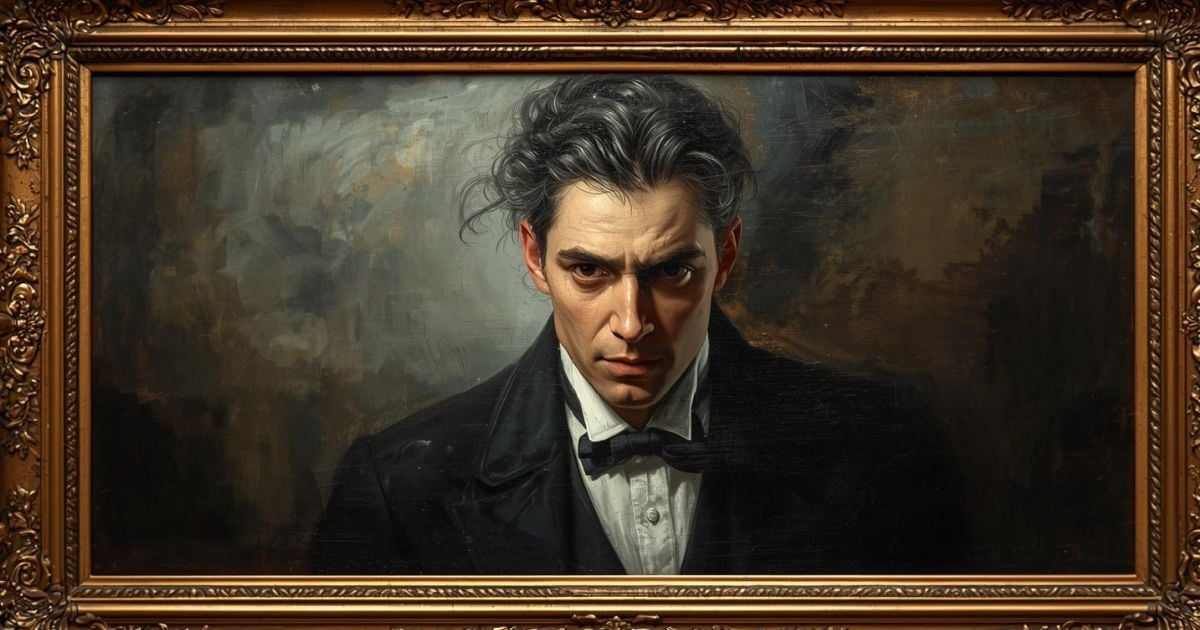
Basil and Lord Henry enter the studio and find Dorian Gray at the piano, turning the pages of Schumann's Forest Scenes and already tired of sitting for a life-sized portrait. The sulk lasts until he sees the guest Basil tried to keep away. A blush replaces it. Basil asks Henry to leave so the picture can be finished. Dorian refuses: if Henry goes, he will go too. Henry stays. The sitting begins with the older man's wit already competing with the artist for the boy's attention.
Henry talks while Basil paints, first in the studio and then among the lilacs. He says the only way to be rid of a temptation is to yield to it, then presses youth and the senses until Dorian cries stop and stands motionless for nearly ten minutes, unable to find an answer. Henry does not let the silence end the lesson. He warns against spending beauty on the tedious and the vulgar, and names a new Hedonism that would make Dorian its visible symbol. Basil catches a look he has never painted and tells Dorian not to believe a word. The words have already landed. Dorian tells Henry their friendship may as well be a caprice.
When the portrait is finished, Dorian stares at a face that will not wrinkle. Pleasure turns to pain. He says he will grow old and horrible while the picture stays this day of June, and that he would give his soul for the bargain to reverse. Henry laughs it off as hard lines on Basil's work. Dorian turns on the painter, compares himself with the ivory Hermes and the silver Faun, and says that if he finds himself growing old he will kill himself. Basil goes pale, then reaches for the palette knife to rip the canvas. Dorian tears it from his hand and calls the act murder. The portrait, he says, is part of himself.
Over tea Henry proposes the theatre and offers to break a dinner at White's. Basil begs Dorian to stay and dine, and reminds Henry of the request made in the garden that morning. Henry says he has forgotten it, then that he wishes he could trust himself. Dorian looks from one man to the other, says he must go, and leaves in the hansom. The door closes. Basil flings himself on the sofa, and a look of pain comes into his face.
Wilde presents us with a character who genuinely cares about someone while simultaneously trying to control them. Basil's dilemma reflects a universal human struggle: how do we care for someone without becoming possessive? In 1890, this played out in artistic circles and social drawing rooms. Today, it happens in workplaces, families, and friendships every day. The healthcare worker who won't let a promising colleague take on challenging cases because they might make mistakes. The parent who discourages their adult child from dating someone who might 'change them.' The friend who finds reasons why you shouldn't take that new job or join that group. The pattern is always the same: genuine care mixed with the fear of losing our special position in someone's life. What makes this particularly insidious is that the protective person often has valid concerns. Henry Wotton really could be a bad influence on Dorian. But the question isn't whether the concerns are valid—it's whether the solution is ethical. When we try to make choices for other adults, we're treating them as children, regardless of our good intentions. The road from care to control is paved with the belief that we know what's best for someone else. Real protection involves sharing information and trusting people to make their own decisions, even when we disagree with those choices.
Explore this chapter with AI to uncover deeper meaning and practical takeaways.
AI Discussion