
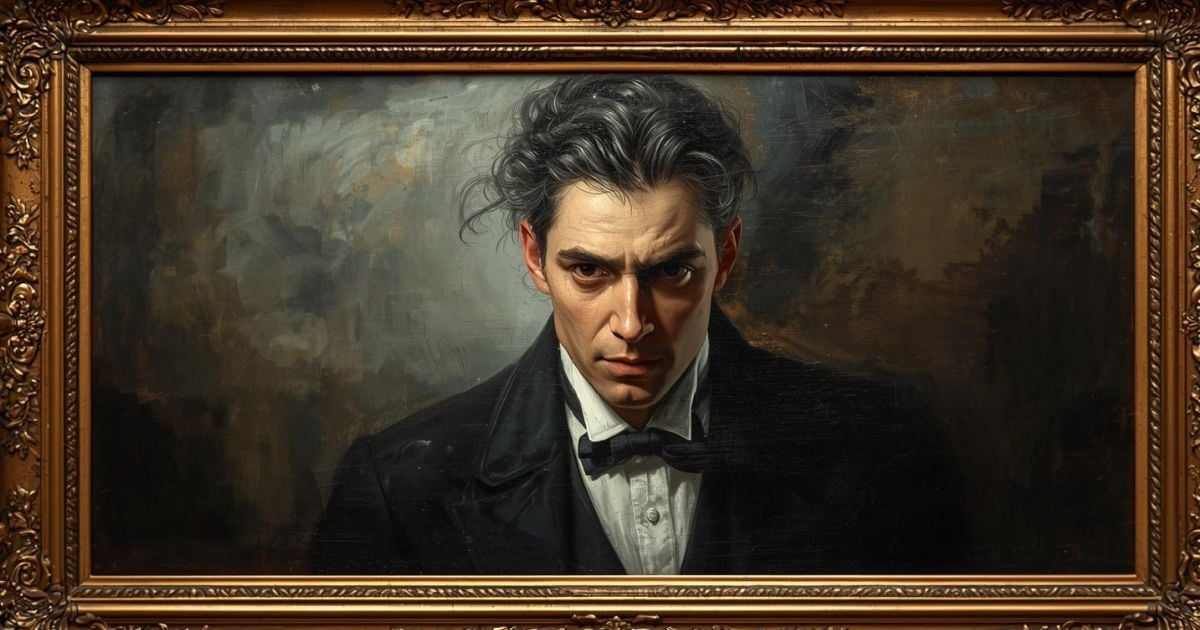
Dorian leads Basil up the dark staircase to the locked schoolroom, unlocks the door, and tears away the curtain hiding the portrait. Basil sees his own painting changed from within: Dorian's face on the canvas, still beautiful but rotted by sin, signed in vermilion with the artist's name. He blames damp and mildew until Dorian tells how vanity, Lord Henry, and a mad prayer traded his soul for eternal youth.
Basil calls the image the face of a satyr; Dorian answers that it is the face of his soul and that the picture has destroyed him, not the other way around. Hallward sees the foulness come from inside the untouched paint, like leprosy of sin eating the canvas, and begs Dorian to pray. Dorian says it is too late. Hatred rises as the grinning portrait seems to whisper; he seizes a forgotten knife and stabs Basil while the painter's arms jerk and fall still.
Dorian tells himself the secret is not to realize the situation. He breathes on the balcony under a peacock sky, hides Basil's bag in a secret press, rings the bell as if he forgot his latch-key, and tells Francis that Hallward left for Paris at eleven. He takes the Moorish lamp so it will not be missed, then opens the Blue Book to Alan Campbell, the man he will need next.
Chapter 13 is the moral hinge of the novel. Basil receives exactly what he asked for in the library: sight of Dorian's soul. The portrait is not a trick of mildew. It is the accumulated record of choices Dorian's face has refused to carry. For a few pages repentance is still possible. Basil prays. Dorian wavers. Then the grinning canvas and Dorian's pride converge, and the witness must die. What makes the scene chilling is not gore but sequence: truth, refusal, murder, calm. Wilde shows that corruption does not end with secrecy. It ends with harming anyone who could testify. The cover-up that follows, the servant lied to, the Blue Book opened for Campbell, is already the next crime being born.
Explore this chapter with AI to uncover deeper meaning and practical takeaways.
AI Discussion