
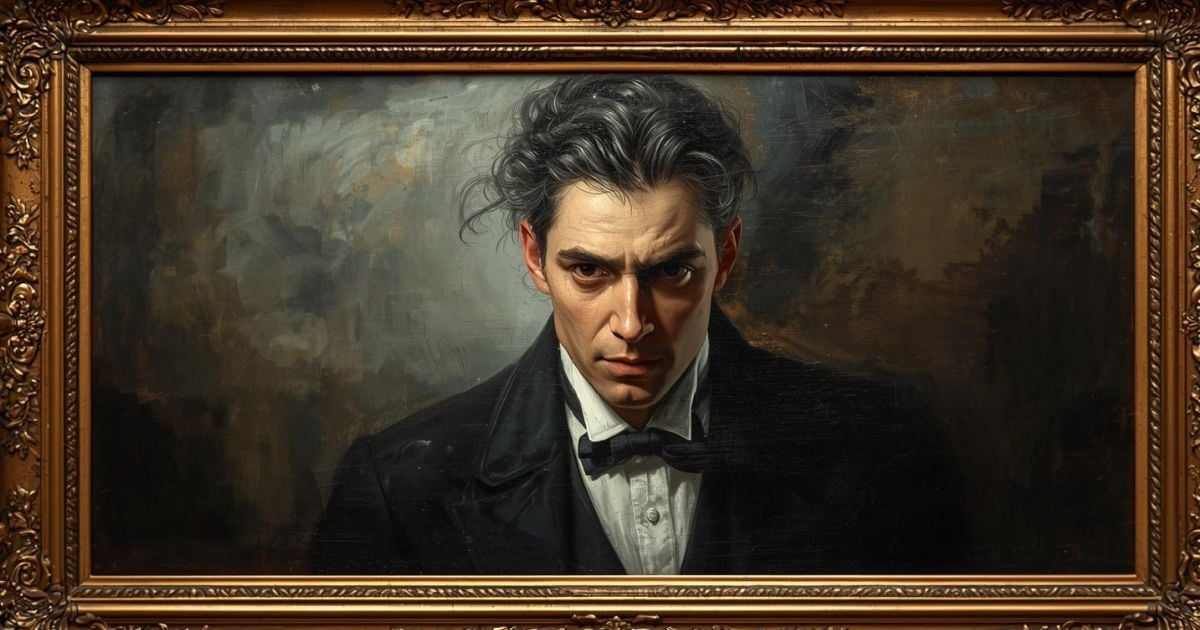
On a foggy November night, the eve of his thirty-eighth birthday, Dorian walks home from Lord Henry's and tries to pass Basil Hallward unrecognized in the mist. Basil has waited in the library since nine o'clock and follows him inside before the midnight train to Paris, trading small talk about servants while Dorian deflects anything serious.
Basil finally demands a hearing: dreadful things are said about Dorian in London, and a gentleman's name should matter even if his face still looks innocent. He lists the Duke of Berwick leaving clubs, ruined young men, Lady Gwendolen disgraced, dawn sightings in foul dens, and a dying woman's letter that names Dorian in horror. Dorian answers with contempt, calling England the native land of the hypocrite, but Basil insists friends have lost honour because Dorian led them into pleasure.
When Basil says he cannot know Dorian until he has seen his soul, Dorian turns white, then laughs and seizes a lamp. Pride replaces fear: the painter who made the portrait will finally look on what it records. Dorian calls it his diary, kept in the room where it is written, and invites Basil upstairs, saying the plain answer cannot be given in the library below.
Wilde wrote Dorian Gray during the birth of modern celebrity culture, when photography was making image manipulation possible for the first time. Today, we live in Dorian's world completely—where curated perfection is the currency of success, where your public image can be completely divorced from your private reality. Social media has made us all potential Dorians, managing multiple versions of ourselves while the real costs accumulate in private. The pattern Wilde identified—that maintaining a perfect facade while making increasingly corrupt choices—now plays out millions of times daily across every platform. We see it in influencers pushing products they know are harmful, politicians maintaining spotless images while making backroom deals, companies with beautiful marketing campaigns built on exploitative labor practices. The technology has changed, but the human dynamics remain identical. What makes this story enduringly relevant isn't the supernatural portrait—it's the very human tendency to believe we can separate our actions from their consequences indefinitely. The question isn't whether we're all managing some version of a public image versus private reality, but whether we're honest about the real cost of that gap.
Explore this chapter with AI to uncover deeper meaning and practical takeaways.
AI Discussion