
Chapter 6 delivers the full backstory of the Moonstone through Franklin Blake's account of his visit to the family lawyer, and the revelation reshapes everything Betteredge thought he understood about the diamond's arrival at the house. In the opening quarter, Franklin explains how the connection between his father and Colonel Herncastle began not through affection but through mutual need. Franklin's father was pursuing a legal claim to a dukedom and needed documents the Colonel possessed. The Colonel, freshly returned from India and already regarded as disreputable, saw through the social pretense immediately and proposed a blunt exchange: the papers in return for a peculiar favor. He wanted someone to hold his enormous diamond in a bank strongroom and receive annual letters confirming he was still alive. If the letters stopped, sealed instructions were to be opened and followed without question. Franklin's father accepted, convinced the Colonel was an opium-addled eccentric who had mistaken a piece of crystal for a priceless gem.
The middle quarter tracks the arrangement across years. Brief, identical letters arrived on schedule, each reading simply that the Colonel remained a living man. Then the pattern broke. A final letter announced he was dying, and the lawyer visited to find him isolated in a suburban villa with only animals for company, his fortune largely spent on chemical experiments. His will was simple: care for his animals, fund a chemistry professorship, and leave the Moonstone to his niece Rachel as a birthday gift. Franklin's father nearly refused the executorship until jewelers confirmed the stone was worth at minimum twenty thousand pounds, at which point his skepticism became embarrassment. The third quarter is where Franklin's own interpretation diverges sharply from his father's.
The sealed instructions directed that if the Colonel died by violence, the diamond was to be sent to Amsterdam and cut into four to six separate stones, with proceeds funding the chemistry professorship. Franklin points out the critical logic: cutting the stone would actually increase its monetary value, since smaller flawless brilliants fetch more collectively than one large flawed gem. The instructions were therefore not designed to protect financial worth. They were designed to destroy the stone's identity, its wholeness, its sacred meaning to whoever was hunting it. The conspiracy was never about theft for profit. It was about recovering a religious artifact, and the Colonel's strategy was to threaten its spiritual annihilation as a deterrent. In the closing quarter, the theory becomes urgent and personal.
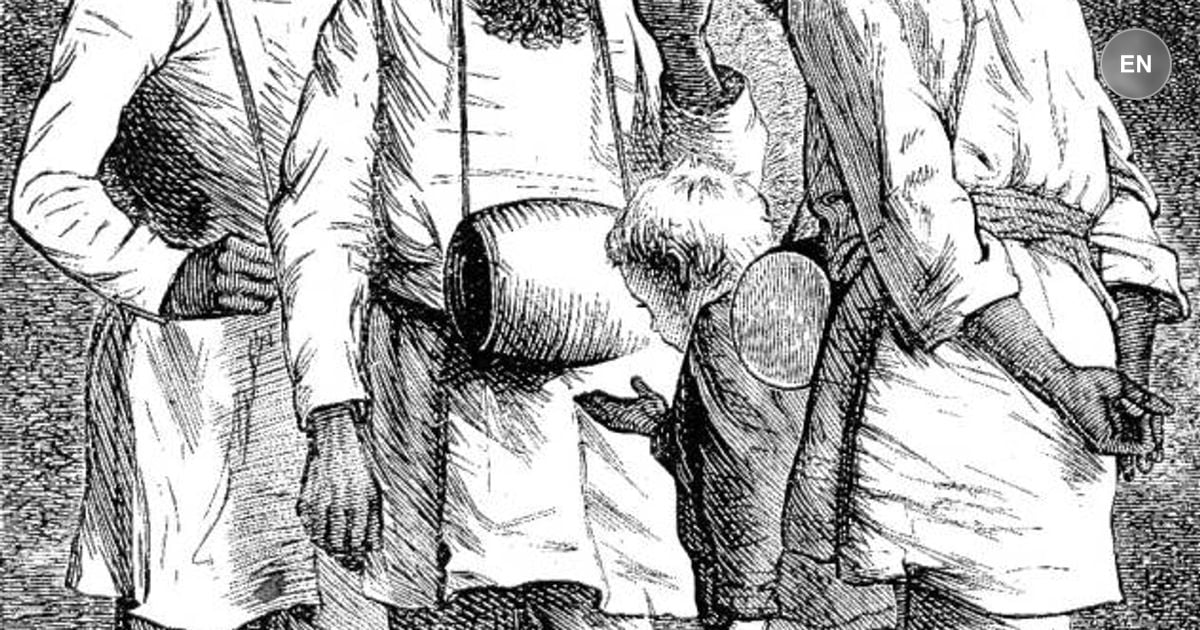
Franklin believes he was followed three times while transporting the diamond from the bank in London, and he changed his travel plans to arrive early and shake the surveillance. He then learned that three Indian performers had already visited the house and used a boy as a medium to investigate what Franklin carried. The timing is not coincidence. The same forces that once circled the Colonel have now followed the Moonstone to Rachel's home. Franklin frames the central question plainly: is he misreading accidents, or has a decades-old conspiracy survived the Colonel's death and arrived at their door? Betteredge, listening to all of it, finds himself wondering whether he has woken from a dream.
The Colonel's arrangement with Franklin's father reveals a sophisticated form of emotional manipulation: using legitimate family bonds to force people into carrying forward your unfinished business. He knew the diamond would bring danger, but his wounded pride mattered more than his family's safety. This pattern appears everywhere in working-class families, where survival often depends on mutual support, making it harder to distinguish between genuine need and manipulation. The parent who guilts adult children into paying their bills because 'family helps family,' while continuing to make irresponsible financial choices. The relative who creates drama at every gathering, then demands everyone accommodate their behavior because 'we don't abandon family.' The family member who refuses addiction treatment but expects everyone else to manage the consequences of their drinking. These situations exploit our deepest values, loyalty, love, responsibility, to avoid accountability. The key insight from Collins is recognizing the difference between helping someone in genuine need versus enabling someone who's weaponizing family bonds. Real family support helps people become more capable and independent. Manipulation disguised as family obligation typically makes everyone less capable and more trapped. When someone consistently frames their choices as your responsibility, you're probably dealing with inherited consequences rather than genuine family need.
Explore this chapter with AI to uncover deeper meaning and practical takeaways.
AI Discussion