
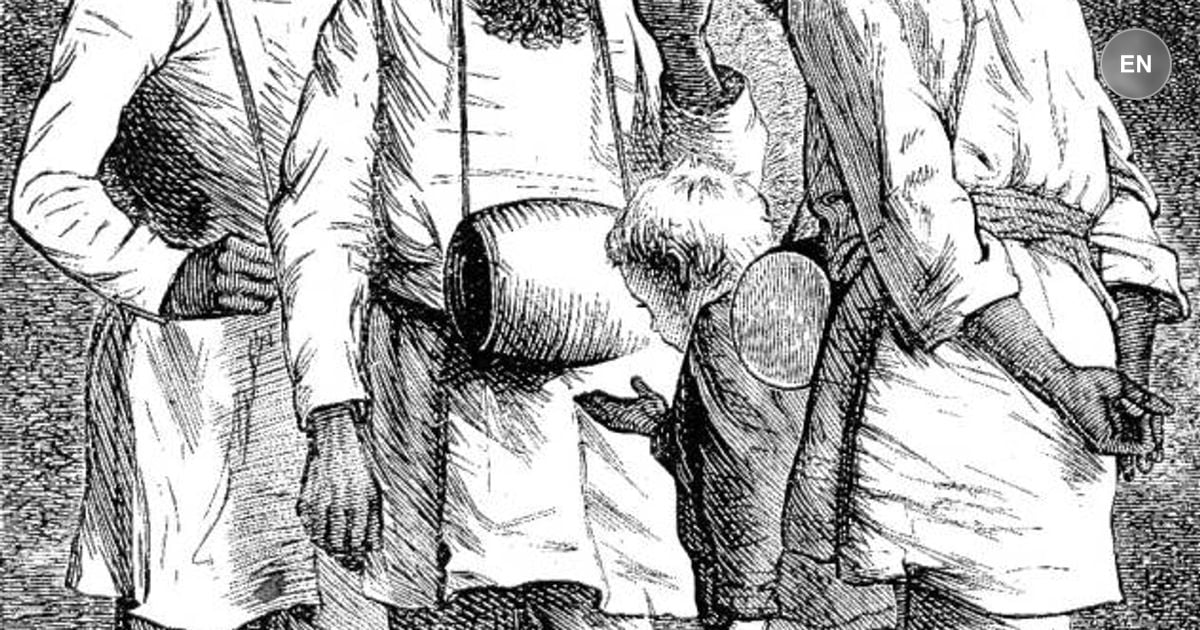
Gabriel Betteredge, the house steward, receives exciting news that Franklin Blake is returning from years abroad to celebrate Rachel's birthday. But the joyful anticipation takes an ominous turn when three mysterious Indian conjurors appear at the estate. Using what appears to be supernatural scrying with a young English boy, they perform a disturbing ritual that reveals specific knowledge about Franklin's arrival and cryptically asks whether 'the English gentleman has It about him.' Gabriel initially dismisses this as an elaborate con game designed to impress the household and earn money through fake fortune-telling.
His practical, skeptical mind sees only the obvious explanation: traveling performers who overheard servant gossip. However, his daughter Penelope takes the encounter seriously, particularly the Indians' mysterious reference to 'It.' Her feminine intuition senses genuine danger that her father's rational male perspective misses. The chapter establishes a crucial tension between different ways of interpreting threatening situations.
Gabriel's dismissive attitude reflects how we often rationalize away warning signs that don't fit our worldview, while Penelope's concern shows the value of trusting instincts even when we can't explain them logically. The revelation that Franklin himself will take the Indians seriously, and that 'It' refers to the Moonstone diamond, suggests that sometimes the most fantastic explanations turn out to be true. This sets up the central mystery while exploring how class, gender, and personal experience shape our ability to recognize real danger.
Gabriel Betteredge represents a dangerous modern trap: the belief that being rational always makes us safer. His practical mind immediately generates logical explanations for the Indians' unsettling knowledge, they must have overheard servant gossip, they're just skilled performers. This rationalization feels sophisticated and intelligent, but it leaves him completely unprepared for actual supernatural threat. We see this pattern everywhere today. Healthcare workers dismiss their own symptoms because 'it's probably stress.' Parents explain away their teenager's behavior changes because 'all kids go through phases.' Employees rationalize company layoffs because 'it's just restructuring.' The mechanism is always the same: when reality threatens our comfortable assumptions, our minds work overtime to preserve those assumptions rather than investigate the threat. Penelope's feminine intuition serves as the counterbalance, she's willing to consider possibilities that don't fit neat logical categories. This isn't about gender roles but about different approaches to processing information. Sometimes survival requires suspending our need for logical explanations and trusting patterns we can't yet understand. The most practical people often miss practical dangers because they've confused rationalization with reason.
Explore this chapter with AI to uncover deeper meaning and practical takeaways.
AI Discussion