
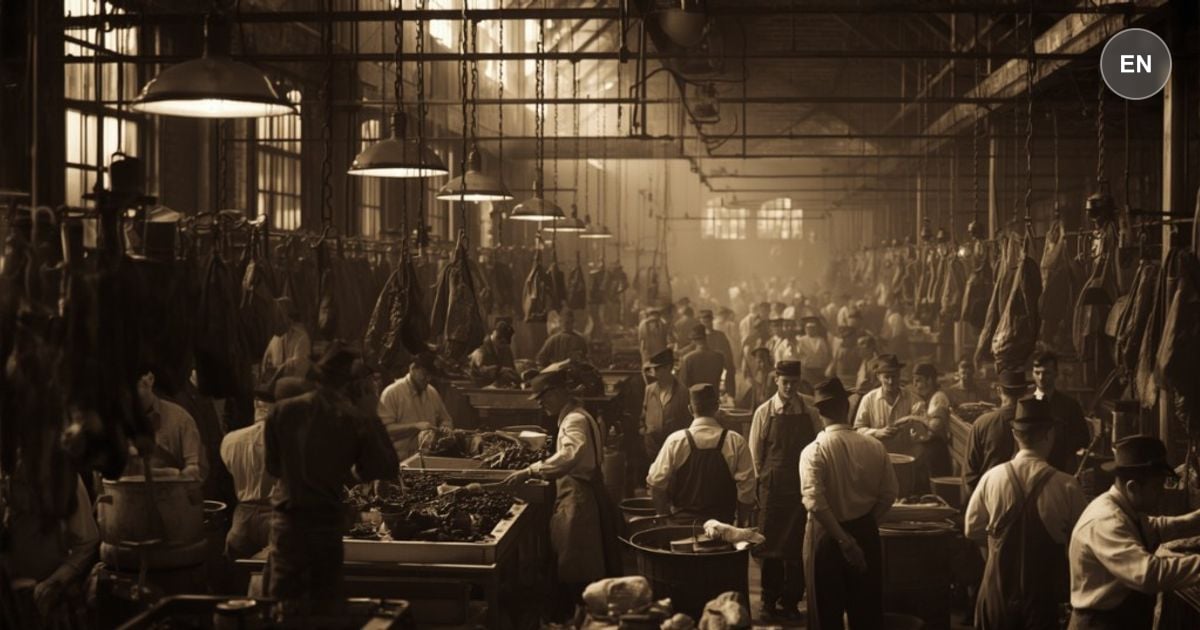
Jurgis reports at seven and waits nearly two hours at the wrong side of the door because no one told him to enter. The boss curses him in English he cannot understand, then puts him on the killing beds sweeping smoking entrails through blood halfway up his boots. At seventeen and a half cents an hour he earns more than a dollar and a half in one rush day and comes home triumphant. Two hours at the wrong door end in entrails halfway up his boots.
The same week brings Jonas a job promise through Jokubas's policeman friend and Marija two dollars a day painting cans after bullying her way through Packingtown. With three incomes in sight, Jurgis unfolds a color placard from a rent-to-own house campaign: fifteen hundred dollars total, three hundred down, twelve a month, cheaper than renting forever. Ona calculates board and wages until the numbers look possible. Szedvilas warns of swindles; Jurgis, flush with wages, overrides fear and insists a man of the family must decide. Three incomes make the color placard look like destiny.
The Sunday inspection disappoints: wrong colors, unfinished basement and attic, muddy street, but the agent talks without pause and they are peasants facing a gentleman. They cannot question him without seeming ungrateful. At signing, Jokubas discovers the document says rental for eight years and four months. Panic, a lawyer who greets the agent by first name, Elzbieta's trembling obedience to Jurgis's command to stop if anything is wrong, and then the money is counted and gone while Ona watches, unable to speak. The agent's patter and the lawyer's grin seal a rental trap.
Jurgis storms out believing they are ruined, ready to kill the agent, until a second lawyer laughs and explains the rental clause as an eviction convenience. Ona and the family had thought he went to murder the man. Relief replaces terror, but the chapter has already shown the mechanism: language, class deference, and legal opacity turn hope into obligation before the family knows what it signed. Three hundred dollars is gone before they understand the word rental.
Sinclair reveals a cruel paradox: the very hope that motivates us to build better lives also makes us perfect targets for exploitation. Jurgis's family isn't naive, they're hopeful, which is different and more dangerous. Their hope is earned; they ARE working, they DO have income. But predators understand that hope creates blind spots. When we're riding high on legitimate success, we're most likely to ignore red flags that would be obvious during calmer moments. This isn't about victim-blaming, it's about understanding a systematic pattern. Modern predators still use the same playbook: strike when hope peaks, create artificial urgency, exploit language barriers and knowledge gaps, then disappear behind complex contracts. The payday loan industry, MLM schemes, predatory colleges, and rental scams all follow this template. They don't target the hopeless, they target the hopeful. The defense isn't cynicism, which kills dreams. It's recognizing that real opportunities don't disappear in 24 hours. Your dreams are valid, but they don't require you to sign today. The question becomes: How do we protect our hope without abandoning it? How do we stay open to genuine opportunities while recognizing artificial pressure? The answer lies in understanding that legitimate hope never demands immediate action.
Explore this chapter with AI to uncover deeper meaning and practical takeaways.
AI Discussion