
They have bought their home, and their week with Aniele ends in three days, so every spare hour goes to furnishing. Feather-your-nest advertisements will fill four rooms for seventy-five dollars down and monthly payments. Elzbieta signs another contract. A parlour set with pink roses, crockery painted with the same roses, a broken plate Ona means to exchange, two saucepans where three were promised. The advertised nest has too few feathers for this many birds. Jurgis hauls mattresses two miles on his head while policemen glance and move on. He brings packing boxes to turn into bureaus. They sleep on floors and shared mattresses, hammer thumbs, hang what they can, and for the first time he has useful work that takes everything in him.
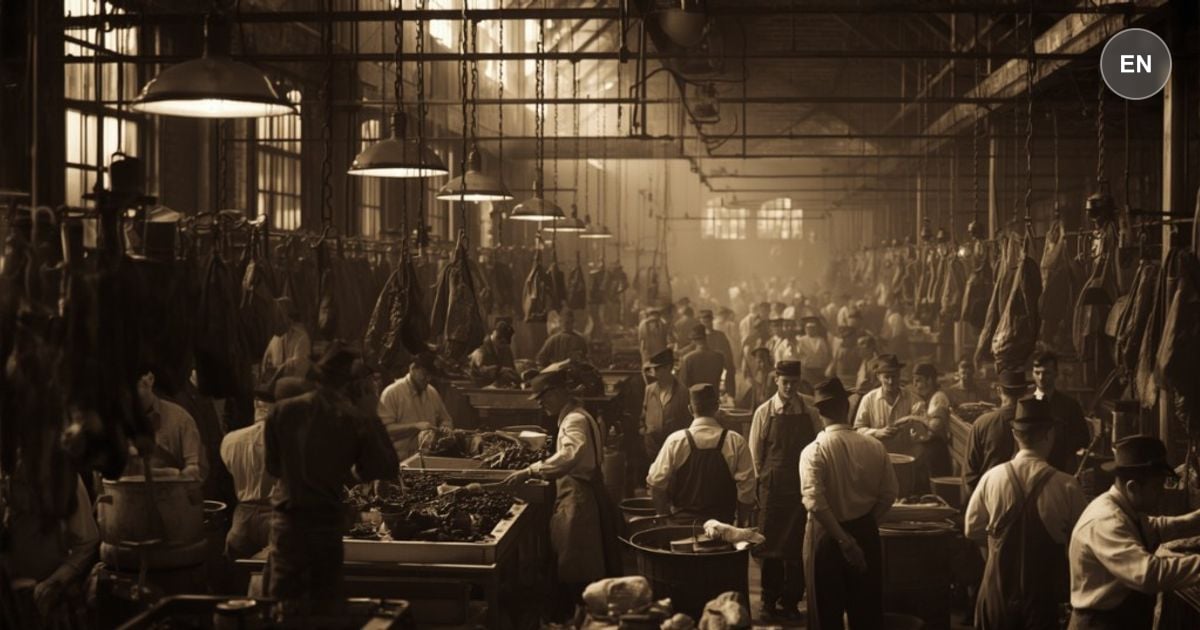
On the killing floor the pace is set by pacemakers paid to drive the rest, with hundreds outside the gate ready to replace anyone who fails. Jurgis enjoys the speed at first. He scorns men who hate the plant, the bosses, the neighbourhood, the city. When a union delegate asks for dues he nearly comes to blows. Anyone strong enough, he says, should survive without slowing the gang for the weak. He has not studied laissez faire, but he knows a man must shift for himself. All day he consigns the unfit to destruction, then goes sick at heart because old Antanas is wandering the yards begging for a chance to earn bread.
Antanas has worked since he ran from a beating at twelve for trying to learn to read. Durham's hierarchy of graft, which Tamoszius maps from floor boss to superintendent, sets each rank to squeeze the rank below. After two days the meekest man God ever put on earth comes home cursing. They have set him to cleaning traps in the canning room, where beef lies in chemical vats, and he must swab the filth from the floor back toward the production stream. Marija learns she took her can-painting place from Mary Dennis, who is dying after fifteen years at the bench. Jonas inherits a truck route when the previous man is crushed against a wall.
Then Jurgis sees the meat with his own eyes. Inspectors stroll away. Slunk calves are butchered. After hours, with the government men gone, downers, injured, sick, and dead cattle ride a special elevator and scatter into the chilling room so they cannot be identified. He had consigned the unfit to destruction that morning. Now the same logic is applied to carcasses and to men. He comes home sombre, having begun to see how those might be right who had laughed at him for his faith in America.
Sinclair reveals something profound about how corruption spreads: it's not primarily about bad people making bad choices, but about systems designed to exploit vulnerability. When Jurgis's father pays bribes for work or witnesses diseased meat being processed, he's not choosing evil, he's trapped in a structure that makes moral action economically catastrophic. This pattern hasn't disappeared; it's evolved. Today's gig economy apps exploit driver desperation to maintain unsafe vehicles. Healthcare systems pressure nurses to work understaffed shifts that endanger patients. Retail chains structure scheduling to avoid providing benefits while demanding total availability. The mechanism remains identical: create economic desperation, then offer survival in exchange for complicity. Those who refuse get crushed as examples to others. What makes this particularly insidious is how it transforms victims into participants. The father who stays silent about contaminated food isn't evil, he's protecting his family's survival. But his silence enables harm to other families. The system creates a cascade of moral injury, where good people are forced to participate in practices that violate their deepest values. Understanding this pattern is crucial for modern workers facing similar pressures. When you can name forced complicity, you can begin to resist it strategically rather than simply enduring it.
Explore this chapter with AI to uncover deeper meaning and practical takeaways.
AI Discussion