
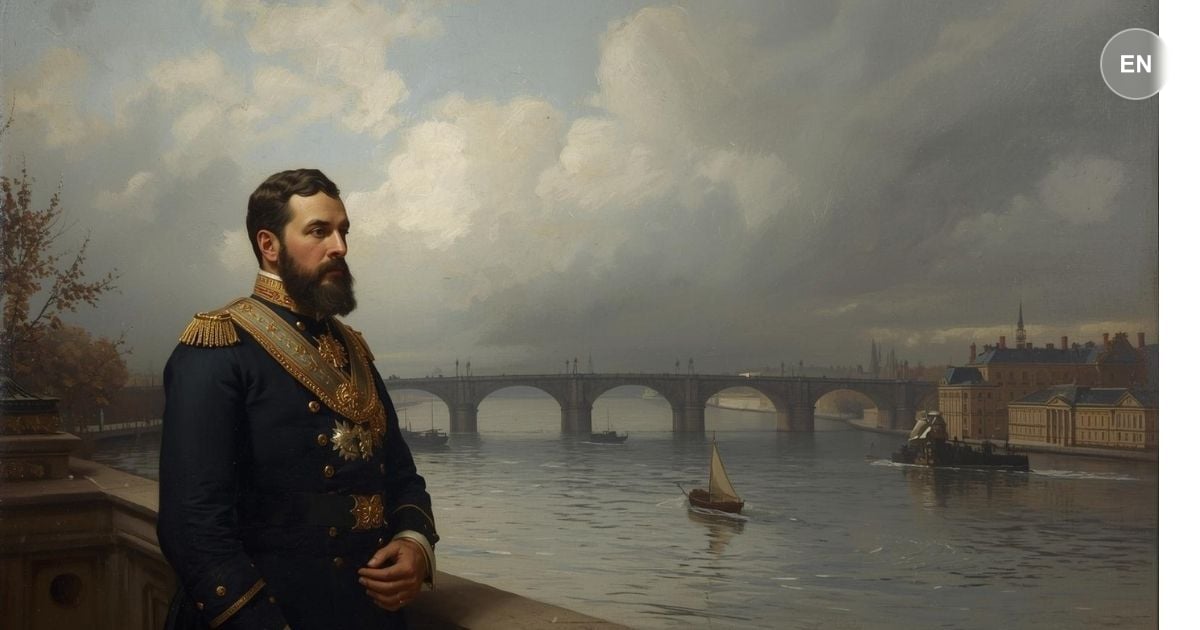
The house praises General Epanchin because he knows his place. He rose from the ranks, holds rents and monopolies, and likes to seem to carry out other people's ideas. Nobody is invited to look into the mind that performs that humility. He so respects and fears his wife that he is very near loving her. She is proud of the old Muishkin line. Their three daughters are clever, pretty, in no hurry to marry, and spoken of with horror for the number of books they have read.
At eleven the prince rings and sits in the ante-chamber with the bundle on his knees. The study servant tells him to wait next door and leave the bag. He would rather sit here. The man begins a sentence that means this shabby visitor cannot be Prince Muishkin, and asks if he is from abroad instead. The prince says the swallowed line for him, admits his circumstances are not rosy, and says he has not come to beg. He wants an acquaintance, a little advice, and to be announced by his name. If he is received, very good; if not, very good again. The servant can only sort him as a beggar or a fool. A sensible prince would not sit here talking about his private affairs.
The cloak comes off. Under it is a worn but decent coat and a silver Geneva watch. The talk turns to Russian stoves, then to Lyons, then to a man named Le Gros who cried on the scaffold, white as paper. The servant says at least there is no pain. The prince says the machine's mercy is the worst part: not the cut, but the certain knowledge that in an hour, then ten minutes, then this instant, the soul must leave. A soldier before a cannon can still hope. A man who has heard his sentence cannot. The servant cannot say it that way, but he enters into it. He offers a smoke he had called shameful. There is no time.
Gania comes in with papers. The servant whispers the bundle. Gania's smile is sweet and a little thin, the teeth too even; the prince thinks that alone he hardly smiles at all. Then Gania remembers the unanswered letter from Switzerland. That memory, not the talk, opens the study. A voice calls him in. Gania nods, goes, and two minutes later the door opens on the words come in, please, prince.
Dostoevsky understood something profound about human nature: the people who work hardest to appear powerful are often the most afraid of being exposed. General Epanchin has achieved everything Russian society said would make him secure—wealth, title, influential connections—yet he remains constantly anxious about his humble origins. This isn't just a 19th-century Russian problem. Walk into any workplace today and you'll find the same dynamic: the manager who micromanages because they're terrified of being found incompetent, the colleague who name-drops credentials because they doubt their actual abilities, the supervisor who rules through fear because they've never learned to lead through respect. Meanwhile, genuine authority often comes from unexpected places—the janitor everyone trusts with their problems, the new employee who asks the questions no one else dares to ask, the person who admits mistakes and focuses on solutions. The tragedy isn't that some people start with advantages and others don't. The tragedy is that we often mistake the performance of power for the real thing, following the loudest voice rather than the wisest one. Dostoevsky shows us that authentic power doesn't need to announce itself—it simply acts with integrity and purpose. In our own lives, this means learning to recognise the difference between confidence and insecurity dressed up as authority.
Explore this chapter with AI to uncover deeper meaning and practical takeaways.
AI Discussion