
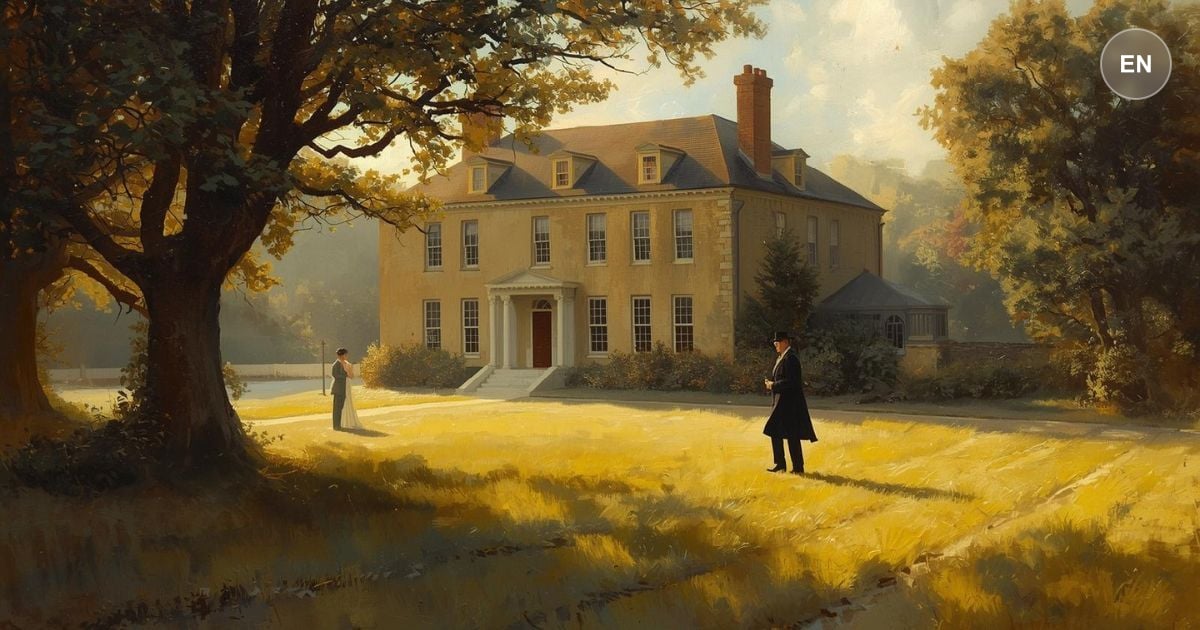
Nick cannot sleep after the accident. At dawn he crosses to Gatsby's open house and finds him slumped in the hall. Nothing happened, Gatsby says: he waited all night, and about four o'clock Daisy came to the window, stood there a minute, then turned out the light. Nick tells him to leave town before the yellow car is traced. Gatsby refuses. He cannot abandon Daisy until he knows what she will do. In the grey dawn he finally tells Nick the story behind the dream: how he met Daisy in Louisville as a penniless officer, took her on an October night under false pretenses of security, and felt married to her after one month. He went to war, got delayed at Oxford, and while Daisy drifted through orchids and saxophones Tom Buchanan arrived as the force of practical love. The letter reached Gatsby at Oxford.
When the story ends, daylight is back on Long Island and Gatsby is still editing the verdict. He insists Daisy never loved Tom, that yesterday's Plaza fight only frightened her into saying things she did not mean. Nick listens and knows better. They have breakfast on the porch while the gardener asks to drain the pool before the leaves clog the pipes. Gatsby says not today. He has waited this long for a phone call that may never come. Up in the city Nick tries to work, then dozes until Jordan phones. She is cool and distant; Tom and Daisy have left town without a forwarding address. The link Nick half expected is already gone.
The chapter cuts back to Wilson's garage the night before. Michaelis stays with him until dawn while Wilson mutters about the yellow car, remembers Myrtle's bruised face, and decides the driver murdered her on purpose. At the window he tells Myrtle's body that you may fool me but you can't fool God, staring at the giant eyes of Doctor T. J. Eckleburg until he repeats, God sees everything. By afternoon Wilson has found his way to West Egg. Gatsby floats on an inflated mattress in the pool, still waiting for word from Daisy. No call comes. Nick's prose catches the cost: a man who has paid a high price for living too long with a single dream, looking up at an unfamiliar sky.
Wilson shoots Gatsby and then himself. Nick arrives from the station to find the chauffeur, butler, gardener, and himself hurrying to the pool. The mattress drifts toward the drain, leaves turning it slowly and tracing a thin red circle in the water. They carry Gatsby toward the house; only then does the gardener see Wilson's body in the grass. The holocaust is complete.
After the accident Gatsby waits outside Daisy's window while Nick begs him to leave. In the grey dawn he tells the Louisville story: false security, Oxford delay, and Daisy's marriage to practical love while his letter was still traveling. Wilson, guided by Eckleburg's eyes and Tom's hints, closes the distance Gatsby thought his fortune could hold off forever while the dream keeps editing yesterday's verdict.
Explore this chapter with AI to uncover deeper meaning and practical takeaways.
AI Discussion