
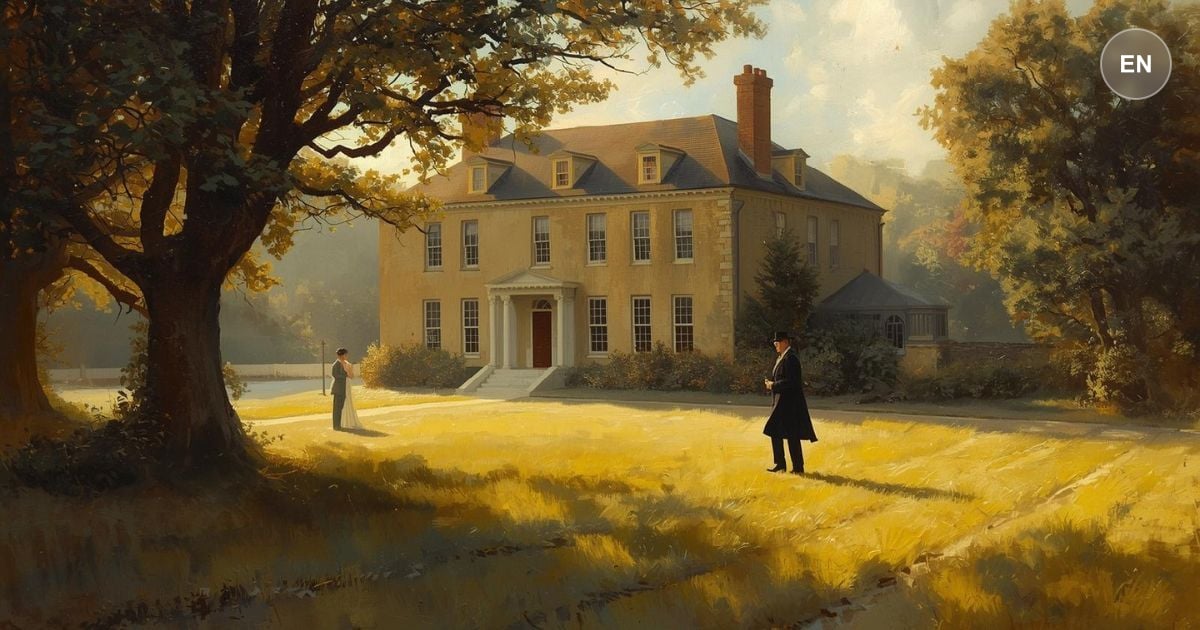
The lights in Gatsby's house fail to go on, and his career as Trimalchio is over. Cars turn into the drive and leave a minute later. A new butler, hostile and unfamiliar, tells Nick that Gatsby is not sick. The old servants are gone. Wolfshiem's people have replaced them, and they do not gossip in the village, because Daisy has started coming over in the afternoons. That same Saturday the commuter train is so hot the conductor's hand leaves a stain on the tickets. At the Buchanans' the room is shadowed. Daisy and Jordan lie on a couch like silver idols while Tom takes a call about selling a car to Wilson. Jordan whispers that the caller is Tom's girl. Daisy pulls Gatsby's face down and kisses him on the mouth. Then a nurse brings in Pammy. The child roots into her mother's dress, and Gatsby stares as if he had never believed she existed. The girl from Louisville now has a daughter, and the dream has to make room for her. Daisy asks what they will do with themselves this afternoon, and the next thirty years. Jordan tells her not to be morbid. Life starts all over again when it gets crisp in the fall. Daisy is on the verge of tears. Everything is confused, and she wants town.
Tom sees the look that passes when Daisy says Gatsby always looks so cool. The affair stops being a rumor he can ignore. Daisy wants town, anything but the heat. Tom tells Gatsby to take the blue coupé and let him drive the yellow car. Daisy will not ride with her husband. She sends Nick and Jordan with Tom in Gatsby's car, and she follows with Gatsby in the coupé. Jordan and Nick sit in the front seat while Tom pushes the unfamiliar gears and the yellow car shoots off into the heat. Tom has already decided this is no Oxford man. Like hell he is, Tom says. He wears a pink suit. On the road he drops the hint he has been saving: you can buy anything at a drugstore nowadays. The remark is the charge he will make out loud at the Plaza. At the garage in the ash heaps, Wilson looks sick enough to look guilty. He has just got wised up to something, and he and his wife want to go West. Myrtle watches from the window above the garage. Her face changes when she sees Jordan beside Tom in the big yellow car. Later, stopped in the heat, Nick begins to say that Daisy's voice is indiscreet. Gatsby finishes the sentence. Her voice is full of money.
They take a suite at the Plaza, and the fight fills the room. Tom calls Gatsby Mr. Nobody from Nowhere and sneers at a man making love to his wife. Gatsby says Daisy never loved Tom, that she married him only because Gatsby was poor and she was tired of waiting. Tom answers with the investigation he has already done: Gatsby is Meyer Wolfshiem's man, a bootlegger who sold grain alcohol over a drugstore counter and left Walter Chase in a New Jersey jail for a month. Daisy tries to stop them. Pressed to say she never loved Tom, she says it, then breaks. She did love him once, but she loved Gatsby too. It would not be true to pretend otherwise. For a moment the set of Gatsby's face is the face of a man who had killed someone. The demand that would have erased five years is dead, and he keeps arguing as if it were not.
Tom tells Daisy the flirtation is over and sends her home with Gatsby in the yellow car. Nick remembers that the day is his thirtieth birthday, with a new decade opening on the road ahead. Myrtle breaks out of the room where Wilson has locked her and runs into the highway. The yellow car hits her and does not stop. At the garage Tom arrives in the coupé and tells a policeman the yellow car was not his, and that he has not seen it all afternoon. A man at the scene says it was a big new yellow car, going faster than forty. Only Nick and the man nearest Tom hear the denial clearly. After dark Gatsby steps from the bushes below the house. He tried to swing the wheel. Daisy was driving, and of course he will say he was. She will be all right tomorrow, he says. She has locked herself in her room. If Tom turns brutal she will flash the light, and Gatsby will wait for that signal. Nick finds a rift at the pantry blind. Tom and Daisy sit over cold fried chicken and two bottles of ale, his hand covering hers. Nick walks away. Gatsby stays in the moonlight, watching over nothing.
Heat makes every gesture feel like an insult to life. Tom sees Daisy's kiss, Gatsby sees Pammy as proof the past has consequences, and the Plaza fight strips the affair into open warfare over who loved whom first. Myrtle's death in the valley of ashes converts jealousy into catastrophe while Daisy drives away and Gatsby takes the blame. The illusion that money can rewrite history finally meets a body in the road.
Explore this chapter with AI to uncover deeper meaning and practical takeaways.
AI Discussion