
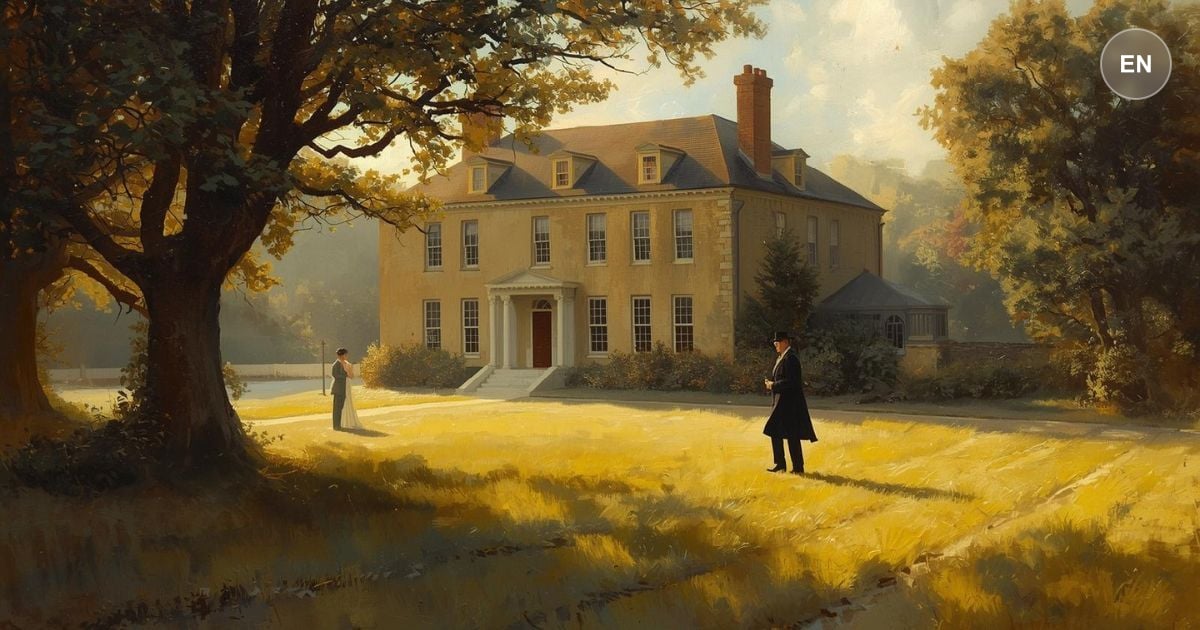
Two years later Nick still remembers the hours after Gatsby's death as police, photographers, and reporters marching through the house while boys slip in through his yard to stare at the pool. The papers turned Wilson into a man deranged by grief; Catherine swore at the inquest that Myrtle had never known Gatsby and had been completely happy with her husband, crying as if the suggestion itself were unbearable. The real story was buried before it could spread. Nick found himself alone on Gatsby's side, responsible because no one else cared enough to act. Daisy and Tom had already left with their baggage and no forwarding address. Wolfshiem would not come; Klipspringer called about tennis shoes.
Gatsby's father Henry C. Gatz arrived from Minnesota, proud and shattered in the same breath. He showed Nick a creased photograph of the house Jimmy had sent him and an old Hopalong Cassidy book with a boyhood schedule: rise at six, study electricity, save three dollars a week, resolve to be better to parents. The funeral was set for three. Nick chased guests who had eaten Gatsby's food all summer. One man said Gatsby got what he deserved. Klipspringer promised a picnic instead. Nick visited Wolfshiem at the Swastika Holding Company and heard how he had made Gatsby out of a hungry young major; Wolfshiem refused the funeral and offered the lesson that friendship should be shown while a man is alive.
Nobody came. The Lutheran minister waited in the rain with Mr. Gatz while Nick watched the empty drive. The procession to the cemetery was three cars and a handful of soaked servants until Owl Eyes splashed up behind them and said the poor son-of-a-bitch. That was the crowd Gatsby's fortune had bought.
Nick broke with Jordan, who was engaged and accused him of throwing her over by phone. On Fifth Avenue he confronted Tom, who admitted he told Wilson Gatsby owned the yellow car because Wilson had a revolver in his pocket and would have killed him otherwise. Tom called Gatsby a tough one who ran over Myrtle like a dog; Nick walked away knowing the truth and unable to say it. Before leaving the East he erased an obscene word scrawled on Gatsby's steps and stood on the beach where the island had once looked like a fresh green breast to Dutch sailors. He thought of Gatsby's wonder at the green light on Daisy's dock, already behind him in the dark fields of the republic. Gatsby believed in the orgiastic future that recedes before us. So we beat on, boats against the current, borne back ceaselessly into the past.
Gatsby's funeral exposes the emptiness of his guest list. Reporters, police, and former partygoers vanish; Klipspringer calls about tennis shoes. Henry Gatz arrives with the boyhood schedule that makes the dream almost innocent again, and Nick walks away judging Tom and Daisy as careless people who smash things and retreat into their money. The novel ends not on glamour but on the cost of mistaking acquisition for return.
Explore this chapter with AI to uncover deeper meaning and practical takeaways.
AI Discussion