
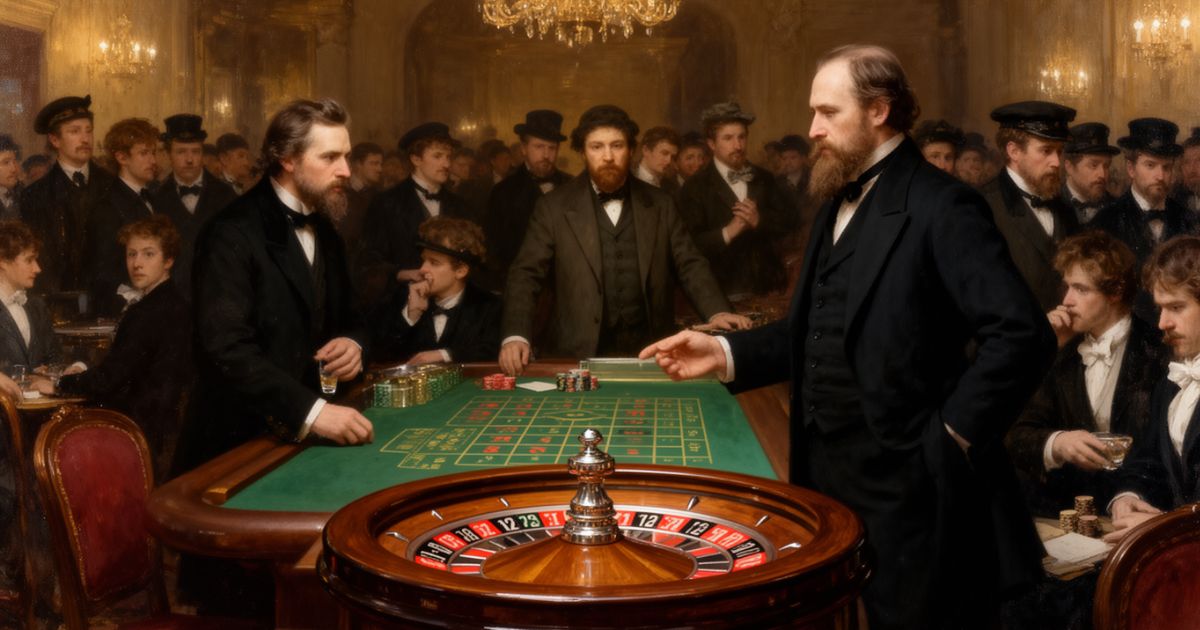
Alexei comes back from the table with a fortune and finds Polina still in the room, yet the money fills his attention first. He locks the door, counts again, and offers fifty thousand francs as rescue: take it, humiliate De Griers, accept his life as a friend's gift. Polina hears a price tag, not devotion. De Griers already tried to buy her; she will not take money for nothing. The night swings between hysteria and tenderness she barely remembers, and by morning pride has the last word. She asks for the francs he promised, then throws the packet in his face when he says they were always hers.
The hotel is already narrating the scandal. Astley has taken Polina in, cold and explicit: if she dies, Alexei will answer for it. He also names what the win has done — not killed love outright, but moved it onto a plane where Paris looks like the natural next scene. Before breakfast Blanche completes the prophecy: stockings, Frankfurt, fifty thousand, a kick when he oversteps, and a train leaving in fifteen minutes. Alexei boards with notes still stuffed under the bed and a month already counting down in his head. He tells himself Roulettenberg will see him again. For now the addiction has chosen the faster spend.
Dostoevsky understood something we still struggle with: money amplifies existing relationship dynamics rather than healing them. When Polina rages at the narrator's offer, she's not ungrateful, she's recognizing that he's repeating the same pattern as De Griers, treating her like something to be purchased rather than someone to be understood. This dynamic plays out constantly in modern working-class life. The parent who works overtime to buy their teenager expensive sneakers instead of coming to their games. The spouse who thinks a surprise vacation will fix months of not listening. The adult child who sends cash to aging parents instead of calling regularly. The manager who offers pizza parties instead of addressing unsafe working conditions. The underlying message in all these situations is the same: 'Your feelings aren't worth my time, but here's money instead.' What makes this pattern so insidious is that money does solve many problems, rent, medical bills, car repairs. But when we're dealing with someone who feels unheard, disrespected, or abandoned, financial gestures often feel like another form of dismissal. The person receiving the money might even take it out of practical necessity, but the emotional wound remains. Understanding this pattern helps us recognize when we're avoiding the harder work of genuine connection and when others might be doing the same to us.
Explore this chapter with AI to uncover deeper meaning and practical takeaways.
AI Discussion