
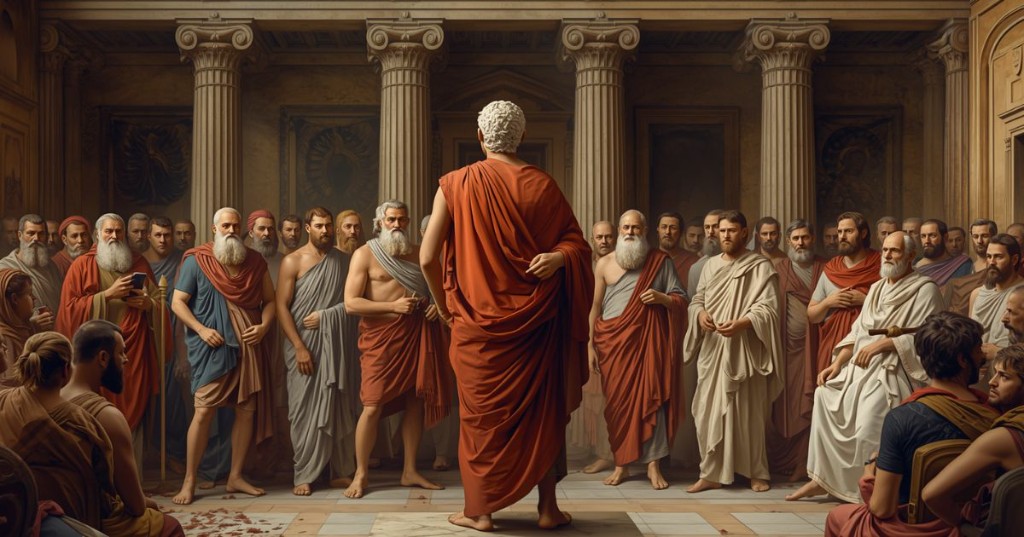
Socrates opens his defense by admitting his accusers spoke so persuasively they almost made him forget who he was, then adds they said hardly a word of truth. Facing death, he starts with honesty about persuasion's power and its limits.
The charge that trapped him was the warning not to be deceived by his eloquence. That claim collapsed the moment he spoke: everyone could hear he was no polished orator. Socrates turns the word back on them. If eloquence means the force of truth, he accepts the title, but his truth and theirs are not the same thing. He promises the whole truth, not a set speech ornamented with phrases. He swears by heaven that he will use whatever words come to him in the moment, because he trusts the justice of his cause.
At seventy, appearing in court for the first time, he asks one favor. Do not be surprised when he speaks as he always has in the agora and at the money-changers' tables. Treat him like a foreigner using his own tongue, not a juvenile performer. Never mind the manner, he tells the jury. Think only of whether his words are true, and decide justly. That single request sets the terms for everything that follows.
Socrates faced the death penalty, yet chose everyday language over courtroom theatrics. This wasn't naive or unprepared. It was strategically brilliant. In a world of polished accusers and slick presentations, authenticity became his competitive advantage. His plain speaking exposed their empty rhetoric while building trust with the jury. This pattern repeats constantly in modern workplaces. The manager who admits uncertainty and asks for input often commands more respect than the one with perfect PowerPoints but no real answers. The coworker who speaks directly about problems gets heard while the one using corporate buzzwords gets tuned out. Healthcare workers know this instinctively. Patients trust the nurse who explains procedures in plain English over the one who hides behind medical jargon. Families connect with the social worker who acknowledges limitations while offering genuine support. Yet many of us still believe we need to perform competence rather than demonstrate it. We think fancy language makes us sound smarter, that admitting what we don't know makes us look weak. Socrates shows the opposite. When stakes are high, authenticity cuts through noise. When trust matters, substance beats style. When facing judgment, your real voice carries more weight than borrowed eloquence. The question becomes: in your own high-stakes moments, do you reach for performance or authenticity?
Explore this chapter with AI to uncover deeper meaning and practical takeaways.
AI Discussion