
While Aeneas is away seeking Tuscan allies, Turnus receives a divine nudge from Iris, who tells him the Trojan camp is undefended and urges an immediate assault. Turnus reads the moment as providence, gathers his Rutulian forces, and marches on the walled settlement where the Trojans wait behind defenses their absent leader ordered them not to abandon. Frustrated by Trojan caution, Turnus tries to burn the ships anchored below the camp. The attack should destroy their last hope of escape, but Cybele intervenes: the sacred pines from Ida transform into sea nymphs, break their cables, and dive into the Tiber while both armies watch in shock. Turnus alone refuses to be intimidated. He reframes the miracle as a sign that the Trojans are trapped on land and promises his men a final assault after nightfall.
Virgil compares him to a starving wolf circling a fold, furious that prey remains just out of reach. The image captures Turnus's energy and his frustration with enemies who will not come out and fight on his terms. Messapus keeps watch while the Rutulians feast, never imagining that the quiet Trojan post above them is studying every gap in their discipline. Inside the camp, fear and duty compete. Mnestheus and Seresthus share command, soldiers rotate watch, and two young friends, Nisus and Euryalus, stand guard together at a vulnerable post near the enemy lines. Nisus studies the sleeping Rutulian camp and proposes a daring mission: slip through the lines, reach Aeneas, and bring help before the Trojans are overrun.
Euryalus refuses to be left behind. Their debate is tender and fierce. Nisus worries for the younger man's life; Euryalus insists that glory and friendship are inseparable. They win approval from the Trojan council and rich promises from Ascanius, who pledges gifts, land, and lifelong loyalty. Euryalus asks only that someone care for his mother, who followed him into exile without knowing the danger he would choose. Alethes weeps with pride, Mnestheus gives armor, and the boys leave the ramparts to applause they will never hear again as living men.
Armed and blessed, the two pass through the trenches and into the enemy camp, where wine, sleep, and overconfidence have left the Latins exposed. Nisus cuts a path through sleeping warriors, killing Rhamnes and others with silent efficiency. Euryalus matches his ferocity, and for a time the raid succeeds beyond expectation. But dawn approaches, and Nisus urges retreat. Euryalus pauses to claim shining armor from a slain enemy, including Messapus's helmet. That trophy catches moonlight.
Volscens and his cavalry spot them, give chase, and trap Euryalus in the woods. Nisus escapes, realizes his friend is missing, and turns back into certain death. He kills Sulmo and Tagus with thrown spears, then rushes into the open crying that he alone is guilty. Volscens kills Euryalus anyway. Nisus kills Volscens in return and dies on his friend's body. Virgil pauses to promise their names immortality, but the practical cost is immediate. Turnus parades their severed heads on spears at dawn, and the Trojan ramparts fill with horror.
Euryalus's mother runs through the battlements, tearing her hair and cursing the war. Her public grief shakes the defenders' morale at the worst possible moment. Turnus launches a full assault. Messapus breaches the palisades, Mezentius hurls fire, and the Latins press the walls from every side. The Volscians raise moving shields like a shed, fill ditches, and try to scale the works while the Trojans answer with stones, javelins, and ten years of siege experience.
Numanus taunts the Trojans for softness and eastern rituals until young Ascanius, firing his first war bow, kills him with Jove's thunder as omen. Apollo briefly appears in disguise to tell the prince not to tempt fate further. Pandarus and Bitias, two giant brothers, impulsively open the gates and invite disaster inside. Turnus slips through like a tiger in a fold and slaughters until Mnestheus rallies the Trojans and drives him toward the Tiber, where the river god receives the exhausted prince and washes the gore from his limbs. A wooden tower burns and collapses on defenders. Young Lycus and Helenor die trying to escape the flames.
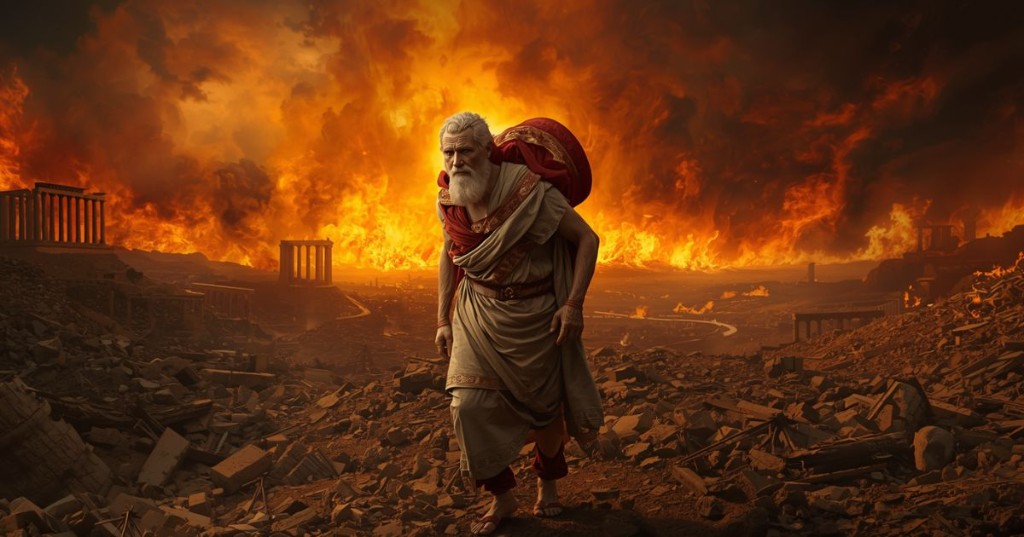
Turnus kills Caeneus and drives the Trojans back in ferocious hand-to-hand fighting until he is forced toward the river. The chapter closes with the camp still standing but battered, its defenders reminded that individual courage can be magnificent and still fail to change the strategic picture. Nisus and Euryalus embody loyal friendship, but their story also warns that love without limits and trophies without discipline can turn a brilliant raid into a public catastrophe. Turnus gains momentum, the Trojans remain cut off from their leader, and the war's human cost becomes visible in a mother's scream above the walls. Book 9 leaves Italy burning on two fronts: the siege still tightens, and the story of two friends will be told as long as Latin is read.
Virgil understood something we still struggle with: the people who love us most can hurt us worst, not from malice but from misguided devotion. Nisus and Euryalus aren't villains, they're the friends we all have, the ones who'd do anything for us. That's exactly what makes them dangerous. When we're motivated by love, for friends, family, community, we often skip the careful thinking we'd apply to selfish goals. The nurse who works extra shifts to help family but makes medical errors from exhaustion. The parent who cosigns a loan they can't afford. The friend who lies to police to protect someone, making everything worse. We tell ourselves love justifies the risk, but love doesn't change physics. Good intentions don't prevent bad consequences. The most loving thing is sometimes saying no to a desperate request, or taking time to plan instead of rushing to rescue. Ancient Troy fell partly because good people made emotionally-driven choices. Modern communities fracture the same way. The pattern hasn't changed in three thousand years: we're most dangerous to the people we'd die for, because love makes us feel invincible when we're actually most vulnerable. How do we honor our devotion without letting it blind us to reality?
Explore this chapter with AI to uncover deeper meaning and practical takeaways.
AI Discussion