
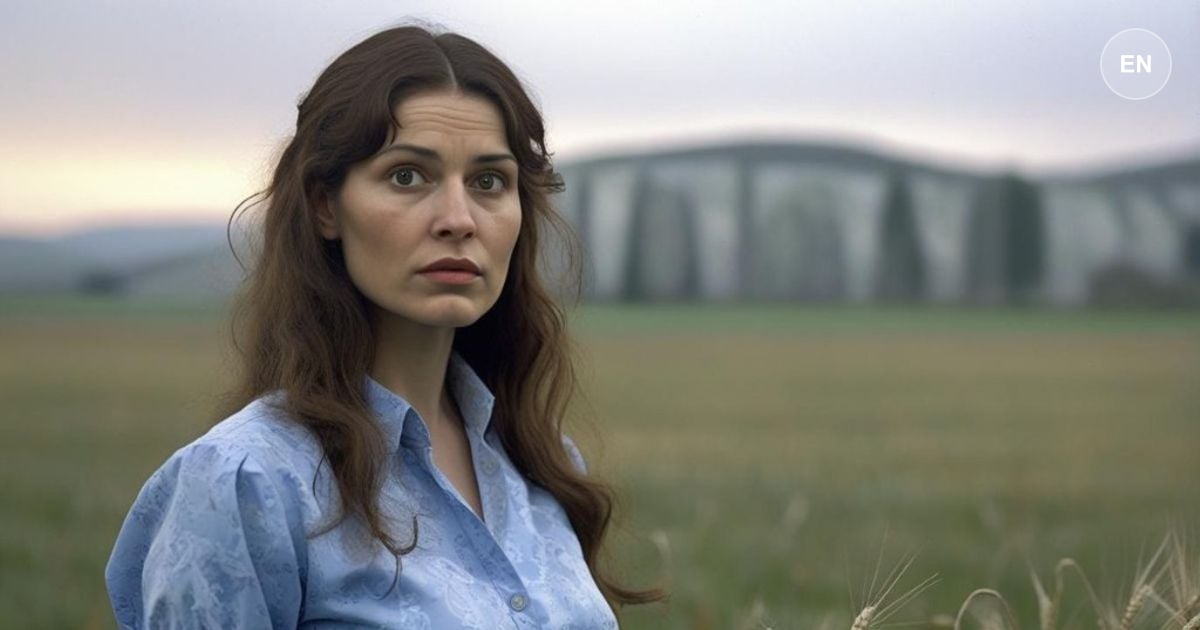
Sunday breakfast is the morning she had meant for her answer, and Crick has news of Jack Dollop. The old milker has married a widow for her fifty pounds a year, then learned that the marriage lost her the income. Angel, set apart with the newspaper because Mrs Crick respects his gentility, asks if Dollop kept his promise to the daughter he wronged. He never meant to. The room laughs. Mrs Crick, Marian, Izz, and Retty all say the widow should have spoken in time, or refused him. Crick turns to Tess. Bread and butter choke her. She thinks the woman ought to have told the truth, or else refused him, and she does not know which. Beck Knibbs calls all fair in love and war, and would have used the rolling-pin. Tess manages a sorry smile and leaves.
She walks the channels to the Var, where cut weed floats in green islands. Clare springs the gully, ready to call her his wife. She says no, for his sake. His arm is already under the loose Sunday hair, and a yes would have been kissed. He feels it unfair to press a woman who shares the house and cannot avoid him, so he lets her go. The widow's tale is the whole of her strength. Another moment and it would have failed. He walks off perplexed. For two or three weeks he treats the refusals as coyness and woos her in an undertone among the cows, the butter, the cheese, the poultry, and the pigs, keeping off caresses. She repeats that she can never be his wife, and the need to say so is already the sign that she is failing.
One morning between three and four he bars the stair, her candle in her hand. A fortnight is enough. She must say what she means, or he will leave the house for her safety. She begs for later in the day. He makes her call him Angel dearest. She says it to the flame. He had meant not to kiss her until she promised, and he breaks that for a moment on her cheek. She goes down without looking back. The other maids, Marian excepted, watch them in the candlelight. In the raw dawn she tells him the three ahead live tremulous lives too, and that almost any of them would make a properer wife, and perhaps love him almost as well. His impatient answer is a relief. She cannot offer them in her place a second time. She knows the day will decide it. That afternoon the far-mead milk must go straight to the station. Clare volunteers to drive and asks her along. She has only a milking-hood, arms bare. She gives her pail and stool to Crick and mounts the spring-waggon beside him.
Hardy wrote Teresa during Victorian England's moral crisis, when society brutally punished women for men's crimes while letting the men walk free. The breakfast scene where workers mock Jack Dollop's abandoned wife isn't just gossip - it's a public rehearsal of how society treats women in impossible positions. Teresa hears her own future in their laughter. Today's version plays out everywhere: the single mom who won't date because she thinks kids make her 'damaged goods,' the worker who won't apply for promotions because of an old mistake, the assault survivor who believes she's somehow 'tainted.' Society's double standards become our inner voice, whispering that we don't deserve good things. The cruelest part is how this voice disguises itself as wisdom. 'I'm being realistic,' we tell ourselves. 'I'm protecting everyone.' But we're really just internalizing society's harshest judgments about us. Hardy shows how Teresa's shame isn't really about her past - it's about absorbing a culture that punishes victims while protecting perpetrators. The breakfast laughter represents every casual cruelty that makes people believe they're unworthy of love or opportunity. Recognizing this pattern means asking: whose voice is really speaking when I tell myself I don't deserve something good?
Explore this chapter with AI to uncover deeper meaning and practical takeaways.
AI Discussion