
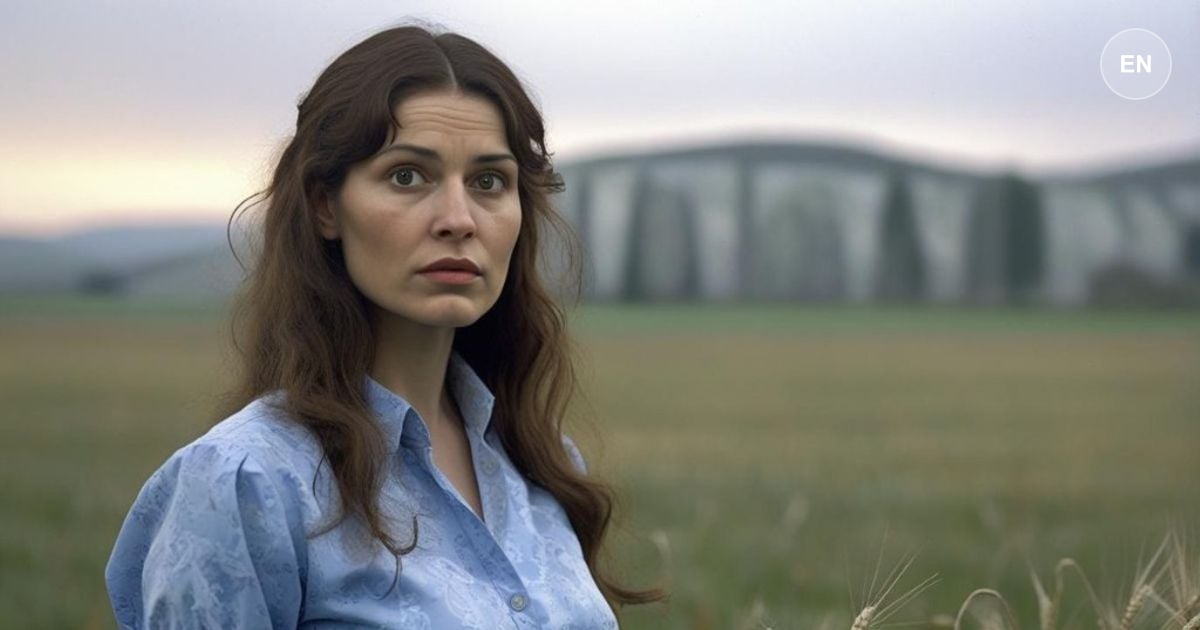
The refusal does not daunt him for long. He has known enough women to hear a no as the preface to a yes, and too little to recognise the exception in this one. When he asks why she was so positive, she starts, and will only say she is not worthy, and that his friends would scorn her. He holds her so she cannot slip away, and wants a promise that some day she will be his. There is no other man. She likes to hear that he loves her. What she refuses is a husband's place, for his sake, she says, and he does not know why. He hears modesty, and tells her how much of his own speech and knowledge she has already picked up. After each of these talks she goes off alone, under the farthest cow or into the sedge, and mourns. Her heart is on his side. Two ardent hearts against one conscience. She came to Talbothays already resolved. She asks herself why nobody has carried her story the forty miles to the dairy. Nobody seems to know, and nobody tells him.
At the next cheese-making the Cricks leave them with the curd. Her sleeves are rolled above the elbow. He lays his hands on hers and kisses the inside of her arm, cold from the whey until the blood flushes it. She looks up, devoted, then afraid that her own desire will break the refusal. He calls her almost a coquette, sees the cut, and takes the word back. Her lip quivers and she leaves. He catches her in the passage, curd still on his hands. She will give him a complete answer if he lets her go. She will tell him her experiences, all of them. He agrees as if a girl like the new convolvulus on the hedge could have no history worth the name, and he will not hear her call herself unworthy. They fix Sunday. She runs to the pollard willows and stays hidden through milking. He covers her absence. A pumpkin moon rises, and she goes up without a light.
The willow afternoon is a Wednesday. He leaves her alone through Thursday, Friday, and Saturday. The other maids guess that something is afoot and force no talk at night. On Saturday she hears one of them sigh his name in her sleep. Her face is hot on the pillow. She will give way. She will say yes. She cannot bear anyone else to have him. The same breath still holds the fear that the truth, once he knows it, may kill him.
Teresa believes she's protecting Angel by hiding her past, but she's actually protecting herself from rejection. This distinction matters because it reveals how we disguise self-preservation as selflessness. In Hardy's time, a woman's 'purity' determined her entire social value, Teresa knows Angel's idealization of her would shatter if he knew about Alec. Today, we carry different secrets but the same fear: that our past mistakes, traumas, or failures make us unworthy of love. The parent who hides their addiction history from their teenager. The partner who conceals debt from their spouse. The friend who never mentions their mental health struggles. We tell ourselves we're sparing them pain, but we're really avoiding our own vulnerability. The cruel irony is that secrets in intimate relationships create the very distance they're meant to prevent. When we withhold our full selves, we force our loved ones to fall in love with a carefully curated version of us. Then we live in constant fear that the real us will be discovered and rejected. Hardy shows us that love built on concealment isn't sustainable, it's a house built on sand. The foundation will eventually give way, and the collapse will hurt far more than early honesty would have. What secrets do we carry that feel like protection but actually prevent true intimacy?
Explore this chapter with AI to uncover deeper meaning and practical takeaways.
AI Discussion