
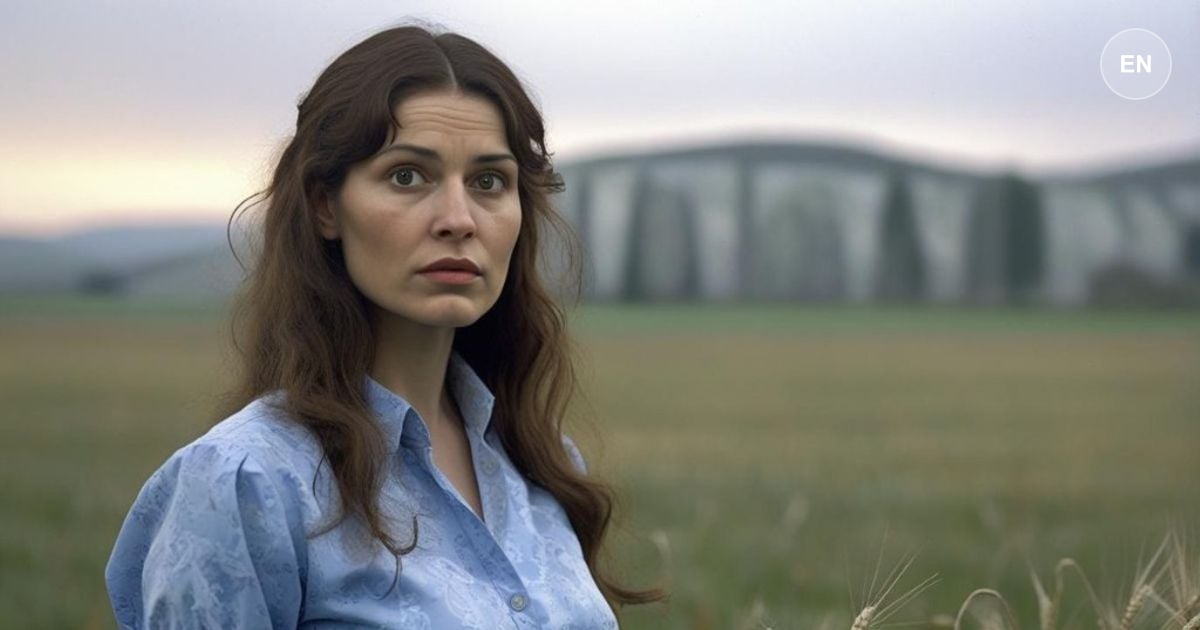
The ride from Emminster brings him down into the valley in the heat of the afternoon, and the dairy is asleep. Dry pails hang on the oak by the door. Snores come from the cart-house. He feeds his horse. At three, the skimming hour, Tess comes down the stairs yawning, one arm stretched above her coiled hair, her face flushed with sleep, her eyelids heavy. She has not heard him enter. She blurts his name, how he frightened her, and then his look reminds her what the declaration in the meads has changed. He will not be called Mister. He has hastened back because of her. Mrs Crick is at market with the dairyman, Retty is unwell, the others are out until milking, and only old Deborah Fyander is there to skim. Angel sends Deborah upstairs until milking-time and stays.
He has been turning the question since that day last week, and he puts it as farm business, so she will not think his judgement disapproves. He will soon marry. He needs a wife who knows how a farm is run, and he asks Tess to be that woman. She has accepted that she loves him. She has not reckoned on this. The answer she has sworn, as an honourable woman, costs her like a dissolution. She cannot be his wife. She would rather be his than anybody's in the world, and still she cannot marry him. He thinks some other man must have a promise. No one has. Driven to a subterfuge, she puts his parents between them. His father is a parson. His mother will want a lady, not such as her. He has spoken to them both. That was partly why he went home. He offers her time and will not allude to it for a while. She takes up the skimmer and cannot hit the cream. The grief that fills her eyes is one she can never explain to him.
He turns the talk to his father's zeal, and to a scene near Trantridge: a lax young man, a landowner's son with a blind mother, who resented being preached at and made a disturbance. Tess's mouth goes hard and tragical. She stops trembling. Clare, full of his father, does not notice. They finish the leads. The other maids return. As she starts for the cows he asks again, softly. The allusion has brought Alec d'Urberville back, and her answer is grave and hopeless. It can't be. She bounds out to the mead and falls in with the milkmaids as they walk into the open like swimmers into a wave.
Teresa's tragedy isn't what happened to her, it's how shame about what happened continues destroying her life years later. She's caught in a brutal cycle: convinced she's fundamentally damaged, she rejects love before it can reject her. This isn't stupidity; it's emotional survival that's become emotional suicide. Hardy understood something psychology would later confirm, trauma doesn't just hurt us once. It creates internal voices that keep hurting us by convincing us we don't deserve healing. Today, we see this everywhere: the single mom who won't date because 'no one wants someone with baggage,' the recovering addict who isolates from healthy relationships, the assault survivor who sabotages intimacy. The pattern is always the same, shame masquerades as protection while stealing possibilities. What makes this especially cruel is how shame targets our strengths. Teresa's capacity for deep love becomes the weapon shame uses against her. She cares so much about not hurting Thomas that she destroys their chance at happiness. The question isn't whether we have shame, we all do. The question is whether we'll let it make our major life decisions.
Explore this chapter with AI to uncover deeper meaning and practical takeaways.
AI Discussion