
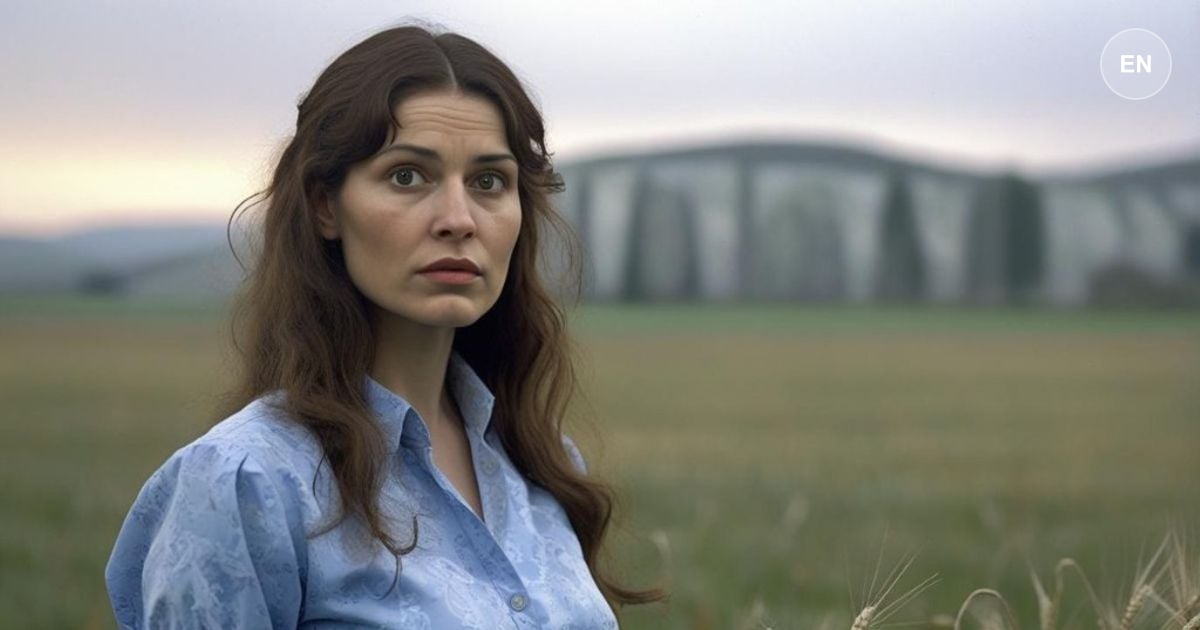
After evening prayers Angel remains with his father. He has spent the kneeling looking at the nails in his brothers' boot heels, working himself up to speak. Land comes first, a farm on a large scale in England or the Colonies. Because Angel was never sent to Cambridge, old Mr Clare has been laying money by each year, so the youngest son will not feel slighted. In worldly wealth he may even stand above his brothers. That kindness lets Angel go further. He is twenty-six. A man in the fields all day will need a wife who can keep the house, milk, churn, make cheeses, and judge sheep and calves. His father is ready with Mercy Chant, pure and saintly, the flowers she has begun to set on the Communion table a girlish outbreak that can be cured. Angel describes another woman and does not give her name. Serious, a regular church-goer, beautiful, as able on a farm as the farmer himself. His mother has come softly into the study and asks if the girl is a lady, of a family he would care to marry into. Not in the common sense of the word, he says. She is a cottager's daughter, and he is proud to say so, and a lady in feeling and nature all the same. Mercy, his mother answers, has family and accomplishments. They are doubtful, and they take some comfort that this unknown girl at least sounds firm in her faith. They ask him not to hurry. They will not object to seeing her. He tells them nothing more. He never mentions Tess to Felix or to Cuthbert.
In the morning the brothers leave on a walking tour. Angel will not join them. His mother cuts sandwiches, and his father rides a little of the way on his own mare, talking of clergymen who call his doctrine pernicious. One failure stays with Angel. A young squire near Trantridge, named d'Urberville, and not of the ancient house of Kingsbere, insulted Mr Clare in public after a sermon on the text from St Luke, that this night his soul would be required of him. The young man had a blind mother and culpable passions. He stopped short of blows. Angel flushes at the insult. His father counts the pain as the squire's, not his own, and goes on praying for him. Angel cannot share the narrow dogma. He reveres the practice, the more so because this father has never once asked whether the wife in question is well provided or penniless.
He rides on alone towards Talbothays, the reverence still warm, and the name d'Urberville laid beside a quarrel he has not matched to any face he knows.
Angel Clare faces every wage-earning person's dilemma: how do you bring someone you love into spaces that weren't built for them? His strategy, emphasizing Teresa's farming skills and faith while downplaying her origins, reveals how class anxiety shapes even progressive relationships. We all do this. The CNA mentions her medical knowledge but not her lack of formal education. The mechanic talks about 'automotive systems' instead of 'fixing cars' at his girlfriend's college reunion. The question isn't whether we translate, it's whether we're protecting our loved ones or protecting ourselves from embarrassment. Angel genuinely wants his parents to see Teresa's worth, but he's also managing his own social standing. The danger lies in the feedback loop: when we constantly translate someone's reality into acceptable terms, we risk starting to see them through that filtered lens ourselves. We begin valuing the translated version over the authentic person. Hardy shows us that love across class lines requires more than individual courage, it demands we recognize how deeply class shapes our language, our values, and our vision of worth itself.
Explore this chapter with AI to uncover deeper meaning and practical takeaways.
AI Discussion