
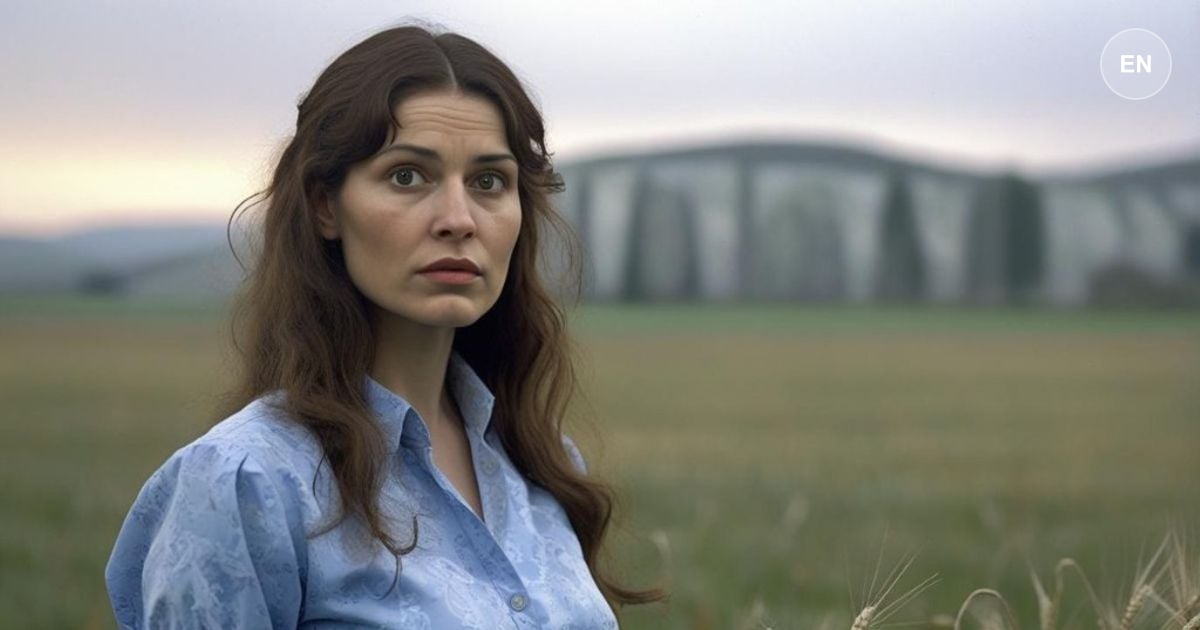
Crick's rule is that no cow may keep a favourite milker, or her leaving will stop the milk. The maids break the rule every day. Tess, her fingers soft from the years indoors, soon has eight who give down at a touch: Dumpling, Fancy, Lofty, Mist, Old Pretty, Young Pretty, Tidy, and Loud. She tries to take the herd as it comes. The easy eight fall to her too often for chance. Angel has been helping to fetch them in. She tells him, blushing, that he has ranged the cows. He says it makes no difference. She will always be here to milk them. She hopes so, and then regrets the hope. He does not know her reason for wanting this seclusion, and may think the earnestness was for him. At dusk she walks in the garden alone, sorry she let the kindness show.
A June evening so still that silence feels like a thing. His harp, thin and poor from the attic, holds her behind the hedge. She goes through rank weeds, cuckoo-spit on her skirts and slug-slime on her hands, until the pollen seems to be the notes made visible. He comes round the fence and finds her drawing off. She is not afraid of outdoor things, she says, not while the apple blossom is falling. She is afraid of life. So is he. This hobble of being alive is rather serious, and he had not looked for it in a girl so young. The trees have inquisitive eyes, she tells him. Tomorrows stand in a line, the nearest largest, all of them crying that they are coming. His music can drive the fancies off. He is struck, and he does not guess the cause. What harmed her in the body has been a harvest in the mind. She cannot see why a parson's son, above want, milking only because he is learning the work, should feel it a mishap to be alive. Neither has the clue to the other's history. They wait, and they do not pry.
He offers her history, or any reading she likes. She is gathering lords and ladies on the bank, and beside what he knows she feels like the Queen of Sheba with no spirit left in her. She peels a bud and says it is a lady again. There are always more ladies than lords. Learning that she is one of a long row, her past and her future already lived by thousands, would only make her sad. She would like to know why the sun shines on the just and the unjust alike. Books will not tell her that. He says fie, out of convention more than surprise, and goes. She flings the buds on the ground, angry at her own foolishness and warm towards him. The wish for his good opinion brings back the marble people in Kingsbere. She is a true d'Urberville, not the kind made of money at Trantridge. Before she says so, she asks Crick what Mr Clare thinks of old families that have lost everything. Angel hates them, Crick says. He mocked Retty Priddle for being a Paridelle, and gave half a crown to a boy whose people were too new to have a surname. Tess keeps the vault to herself. Will he still single her out, if the new milkmaid is an old name?
Hardy captures something universal about how relationships form through accumulated small gestures rather than dramatic moments. Angel's quiet arrangement of easier cows for Teresa mirrors countless modern scenarios, the supervisor who always schedules you for better shifts, the coworker who covers your mistakes without mentioning them, the neighbour who handles problems before you even know they exist. This kindness creates intimacy because it requires observation and care, but it also creates anxiety because it establishes unspoken debt. The recipient becomes vulnerable, wondering what the giver expects in return. Modern workplaces are full of this dynamic, managers who show favoritism through small considerations, colleagues who build relationships through helpful acts they never discuss directly. The challenge is distinguishing authentic care from strategic relationship-building. True kindness expects nothing specific in return, while manipulative kindness always has an agenda. Teresa's discomfort reveals the emotional complexity of receiving care when you feel unworthy or suspicious of motives. Her consideration of revealing her noble heritage shows how desperation can make us want to 'pay back' kindness with status or information, even when that payment might backfire. The healthiest response to genuine kindness is simple acknowledgment without the burden of equivalent return.
Explore this chapter with AI to uncover deeper meaning and practical takeaways.
AI Discussion