
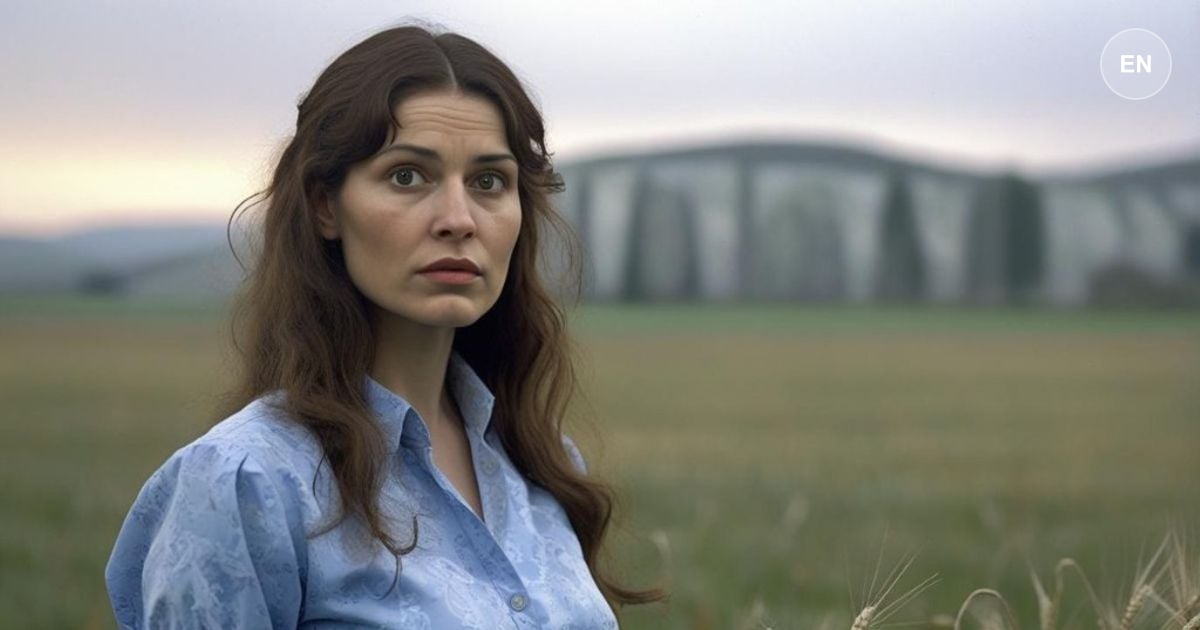
On a thyme-scented morning in May, between two and three years after she came home from Trantridge, Tess leaves home a second time. From the hill she looks back at Marlott and her father's house, though she has been anxious to go. The children will play as before. She has decided they would gain less from her precepts than they would take harm from her example. A hired trap carries her through Stourcastle. At the junction she accepts a farmer's seat as far as Weatherbury, knowing the offer is a tribute to her face, and walks the rest.
She has never seen this country, and it feels kin. Trees mark Kingsbere, where her useless ancestors lie. She almost hates them for the dance they led her. Nothing of theirs remains but the old seal and spoon. All her prettiness, she says, comes from her mother, and her mother was only a dairymaid. Wrong turnings stretch a few miles over Egdon into two hours. From the summit the Valley of the Great Dairies opens larger than Blackmoor: fifty-acre fields, cattle in tribes, the Froom clear and quick where the streams at home are slow and muddy. No watchful eye is on her. She is twenty, and not finished growing. Ballads are too small for the lift in her. She chants the Benedicite, sun and moon and green things upon the earth, then stops. Perhaps she does not quite know the Lord as yet.
The new valley has to be read from inside. Down on the flat she is not sure of the way, a fly on a billiard-table of no definite length, and of no more consequence to the place than that fly. A heron stands and looks at her. Then the milking call spreads from east to west, Waow, waow, waow. It is half-past four. The nearest herd troops towards the barton, and Tess follows through the open gate. The shed-posts are rubbed glossy by the flanks of cows long dead. Milk drops while the animals wait, and the sun copies their homely outlines on the wall as carefully as it once copied kings. No one has spoken to her yet.
Hardy understood something profound about human psychology: sometimes you have to change your location to change your story. Teresa's journey to the Valley of the Great Dairies isn't just about finding work, it's about finding herself again. In her hometown, she'll always be defined by what happened to her. In the new valley, she can be defined by what she chooses to do. This pattern appears throughout history and across cultures. People have always known that physical distance can create psychological freedom. The Underground Railroad wasn't just about escaping slavery, it was about reaching places where different stories about Black humanity were possible. Immigrants don't just seek economic opportunity, they seek places where their children can be seen as Americans, not perpetual foreigners. Today's gig economy creates new versions of this same pattern. The nurse who leaves the toxic hospital for travel nursing. The retail worker who drives to the next county where nobody knows their family's reputation. The single parent who moves across town to a school district where their kid gets a fresh start. But here's what Hardy also shows us: the most important journey isn't geographical, it's the internal shift from victim to agent, from shame to pride, from living someone else's story to writing your own. The real question isn't whether you can escape your past, but whether you can stop letting it define your future.
Explore this chapter with AI to uncover deeper meaning and practical takeaways.
AI Discussion