
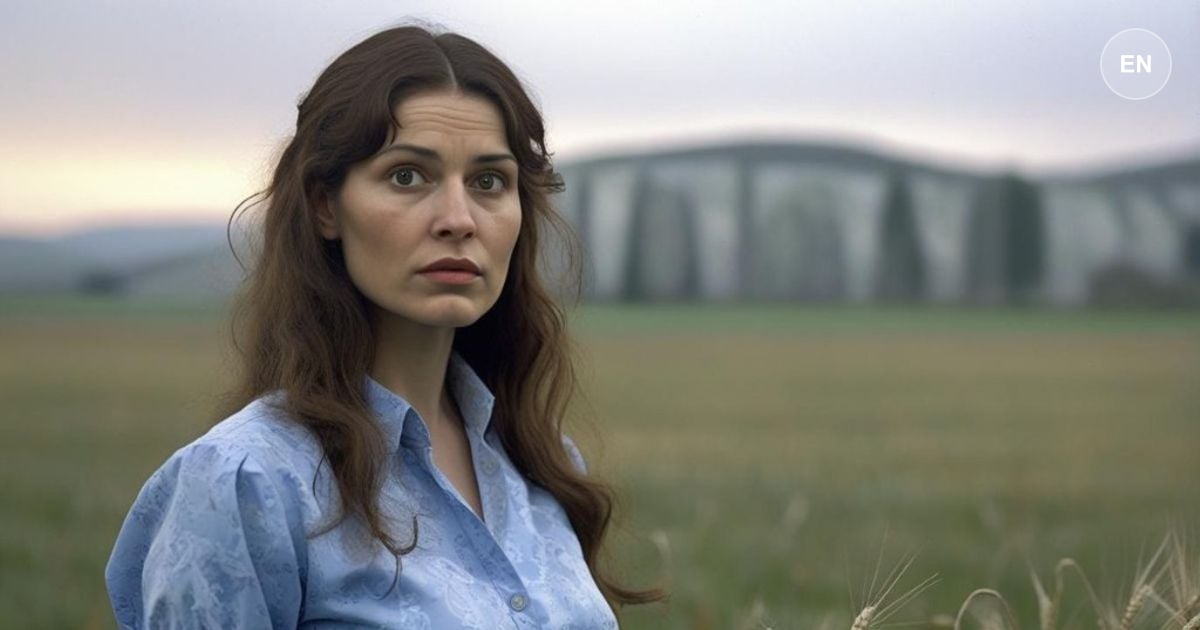
Through the winter Tess stays in her father's house, plucking fowls and cutting clothes for the children out of finery Alec gave her and she put by with contempt. She will not apply to him. She marks the dates as they come: the night of her undoing, The Chase dark behind it, the baby's birth, the baby's death, her own birthday, and a date she cannot find, the day of her own death, which she passes over every year without feeling the chill. Almost at a leap she has become a complex woman. Trouble has not demoralised her. But for the world's opinion, those years would have been a liberal education. Marlott has nearly forgotten a grief it never generally knew. She cannot be comfortable where her family tried to claim kin, and, through her, a closer tie. Hope is still warm. To be rid of the past she will have to leave.
She asks herself whether once lost is always lost, where chastity is concerned. If she can veil the bygones, she might prove the saying false. Living things recover. She does not see why maidenhood alone should be refused that power. A fine spring stirs her as it stirs the animals. In early May a letter comes from a woman she has never seen, an old friend of her mother's. A skilful milkmaid is wanted for the summer at a dairy many miles south. It is not so far as she wished. For a life as small as hers, miles count as degrees.
There will be no more d'Urberville air-castles. She will be the dairymaid Tess, and nothing more. Joan never mentions the knightly ancestry now. Yet the place draws her because it lies near the old estates and the family vaults. The dairy is called Talbothays. She will be able to look at those tombs and think that the name fell, and that a humble descendant's innocence can lapse as silently. Youth rises in her like sap after a check. Who will accept her doing, now she has learnt it too late for home?
Teresa's decision to leave for the dairy farm reveals a profound truth about human psychology: sometimes we need physical distance to achieve emotional distance. In Hardy's time, a woman's reputation could follow her for life, making geographical escape one of the few paths to redemption. Today, public feeds and background checks might seem to eliminate the possibility of true fresh starts, yet the psychological principle remains powerful. Consider the nurse who transfers hospitals after a patient complaint becomes office gossip, or the recovering addict who moves across town to avoid triggers and judgment. Each understands that while you can't outrun your past, you can sometimes outrun other people's version of your story. The key distinction lies in motivation: are you running away from responsibility, or running toward possibility? Teresa chooses the dairy not to escape consequences, she's already faced those, but to escape the limiting narrative others have imposed on her. This pattern appears in military families who embrace frequent moves as opportunities for reinvention, immigrants who see new countries as chances to redefine themselves, and anyone who's ever felt lighter just crossing city limits. The question becomes: when does staying put become staying stuck, and when does moving forward require actually moving?
Explore this chapter with AI to uncover deeper meaning and practical takeaways.
AI Discussion