
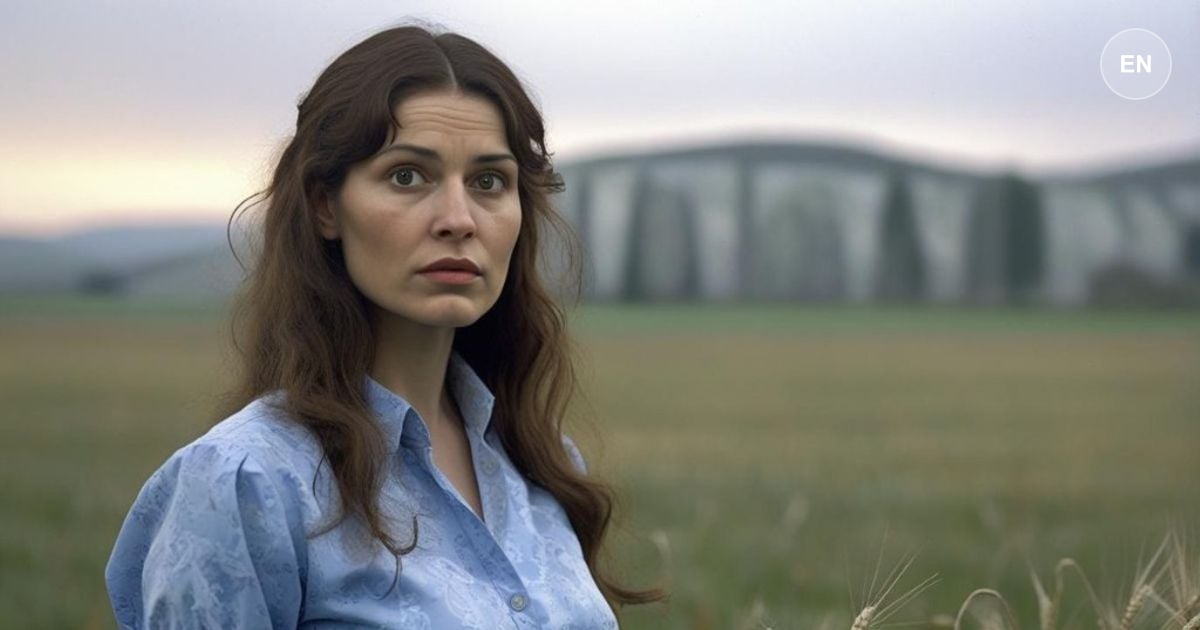
On a hazy August morning the reaping-machine works the wheat outside Marlott, and the women bind behind it. One keeps her bonnet so low that her face is hidden, and the stubble scrapes her bare wrist until it bleeds. When she stands, she is Tess, paler, the same and not the same, a stranger in her own village. After a long seclusion she has come out because harvest pays. Near eleven her sister brings an infant in long clothes. Tess sits apart, refuses the ale, and nurses him. She dandles the child almost with dislike, then kisses him so hard he cries. The woman in the red petticoat says Tess wishes them both in the churchyard, and is fond of him all the same. Someone heard sobbing in The Chase last year. A thousand pities, they agree, that it was the comeliest.
The trees, she has noticed, are as green as before. Other people only think, in passing, that she is unhappy or that she bears it well. She binds until dusk and rides home almost gay, while the women sing of a maid who went to the green wood and came back changed. At the door the baby is suddenly ill, and plainly dying. She can bear punishment for herself. She cannot bear a child unbaptised, and with no salvation. She asks for the parson. Her father, back from his weekly drinking at Rolliver's and raw about the family name, locks the door and pockets the key.
At one in the morning the child's breath fails, and the hell she was taught stands in the dark. She begs God to spend the anger on her and pity the child. Then she lights a candle, wakes the brothers and sisters who share the room, and stands in her nightgown with the infant on her arm. The next sister holds the Prayer-Book, as the clerk holds it for the parson. They kneel. A line from Genesis gives the name. "Sorrow, I baptize thee in the name of the Father, and of the Son, and of the Holy Ghost." The children say Amen. She draws a great cross on him with a wet finger. She does not look like Sissy to them. She looks tall, and apart.
He dies in the blue of the morning. The children ask for another pretty baby. Tess is calm. If heaven will not ratify her rite, she does not value the heaven lost by it. After dusk the new vicar, who does not know her, says the baptism will be just the same. Burial will not. He came to the house and was refused, and he does not know the refusal was her father's rather than hers. She tells him she will never come to his church again, and begs him to speak as himself, not as saint to sinner. He says again that it will be just the same. That night a deal box goes under an old woman's shawl to the nettle corner, buried by lantern-light for a shilling and a pint of beer, where the unbaptised infants, the drunkards, and the suicides lie. Tess sets a cross of two laths, string, and flowers at the head, and a jar of water at the foot. The jar says Keelwell's Marmalade. She does not see the words.
Hardy shows us something profound about power: sometimes the authority we need doesn't exist in any institution, so we must create it ourselves. Teresa's midnight baptism isn't rebellion, it's recognition that love and intention matter more than official permission. This pattern runs deep in wage-earning life, where institutions often fail when we need them most. The nurse who advocates for a patient when doctors dismiss concerns. The parent who homeschools when the local school system fails their child. The neighbour who organizes flood relief when FEMA gets tangled in red tape. Each situation demands the same courage: the willingness to say 'if no one else will do what's right, I will.' The risk is real, acting without official sanction can bring consequences. But Hardy suggests something crucial: sometimes the greater risk is waiting for permission that never comes. The vicar's eventual validation of Teresa's baptism reveals that many authorities know the rules are sometimes wrong, but they need someone else to act first. When you authorize yourself to do what needs doing, you often discover that the power was always there, you just needed the courage to claim it.
Explore this chapter with AI to uncover deeper meaning and practical takeaways.
AI Discussion