
John is truly sorry that the one help he had left himself can no longer be done. Mrs. Dashwood tells him and Fanny that she has a house, and will trouble them only until she can move into it. They are surprised. Fanny says nothing. John hopes, civilly, that she will not settle far from Norland. She has the pleasure of answering that she is going into Devonshire. Edward turns at once. So far, and to what part? Four miles north of Exeter, she says. It is only a cottage, but if friends will travel that far, she will make room for them. She invites John and Fanny kindly, and Edward more kindly still. Fanny's warning has not done what it aimed at. Separating him from Elinor was never Mrs. Dashwood's object, and this invitation shows how wholly she sets that disapproval aside.
The furniture cannot go by his help. Linen, plate, china, books, and Marianne's pianoforte are sent round by water. Fanny watches the packages leave, and sighs that people with so small an income should own anything handsome. The house is taken for a year, and it is already furnished. The horses were sold soon after Mr. Dashwood died. Elinor now persuades her mother to sell the carriage too. For the children's comfort, Mrs. Dashwood would have kept it. Elinor also limits the servants to three: two maids and a man. One maid and the man go ahead to ready the cottage. Mrs. Dashwood will not stay first at Barton Park, because Lady Middleton is a stranger, and she trusts Sir John's letter so fully that she has no wish to see the house until she enters it as her own. John tells her, again and again, how sorry he is that the distance keeps him from helping with the move. He really is vexed. That help was the task to which he had already limited his father's promise, and Devonshire has made it impossible. She hears him talk of housekeeping costs, and of the endless claims on a man of any consequence, and she gives up hope. His help, she becomes sure, was never meant to go beyond their six months at Norland.
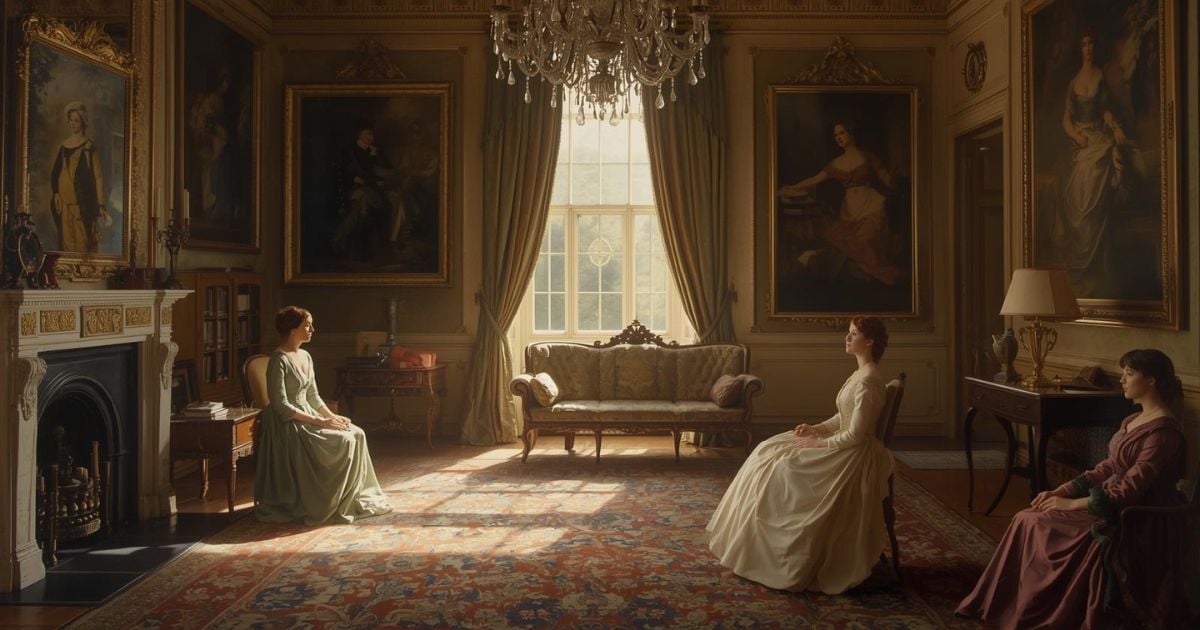
In a few weeks they are ready to leave. On the last evening Marianne walks alone before the house. Dear Norland, she says. When shall she cease to regret it? The trees will go on the same. No leaf will decay because they are gone, and no branch will stand still because they can no longer see it. The trees will not know the pleasure or the regret of the people who walked under them. But who will remain to enjoy them? She is speaking to a house that cannot answer. Will the cottage she has not yet entered give her any other place to put that question?
Austen shows us something crucial about how people handle loss of status and security. When the Dashwood women lose their comfortable life, Elinor immediately starts problem-solving while Marianne burns energy on emotional resistance. This isn't just personality difference, it's a strategic choice with real consequences. In 1811, women had even fewer options when their circumstances changed. They couldn't earn independent income or make major decisions without male relatives. Yet Elinor's practical approach still gave her more agency within those constraints than Marianne's dramatic mourning. Today, we have more options but face similar patterns. Medical bankruptcies, job losses, housing instability, these crises hit working families hard and fast. Some people channel their energy into immediate adaptation: researching resources, adjusting budgets, building new routines. Others get stuck in the resistance phase, spending mental energy on anger about unfairness or grief for their old life. Both responses are human and understandable. But only one builds stability. The hidden cost of emotional resistance isn't the feelings themselves, it's the opportunity cost. Every hour spent lamenting circumstances you can't change is an hour not spent building solutions within your new reality. Austen understood that survival often depends on this choice, especially for people with limited resources and social power.
Explore this chapter with AI to uncover deeper meaning and practical takeaways.
AI Discussion