
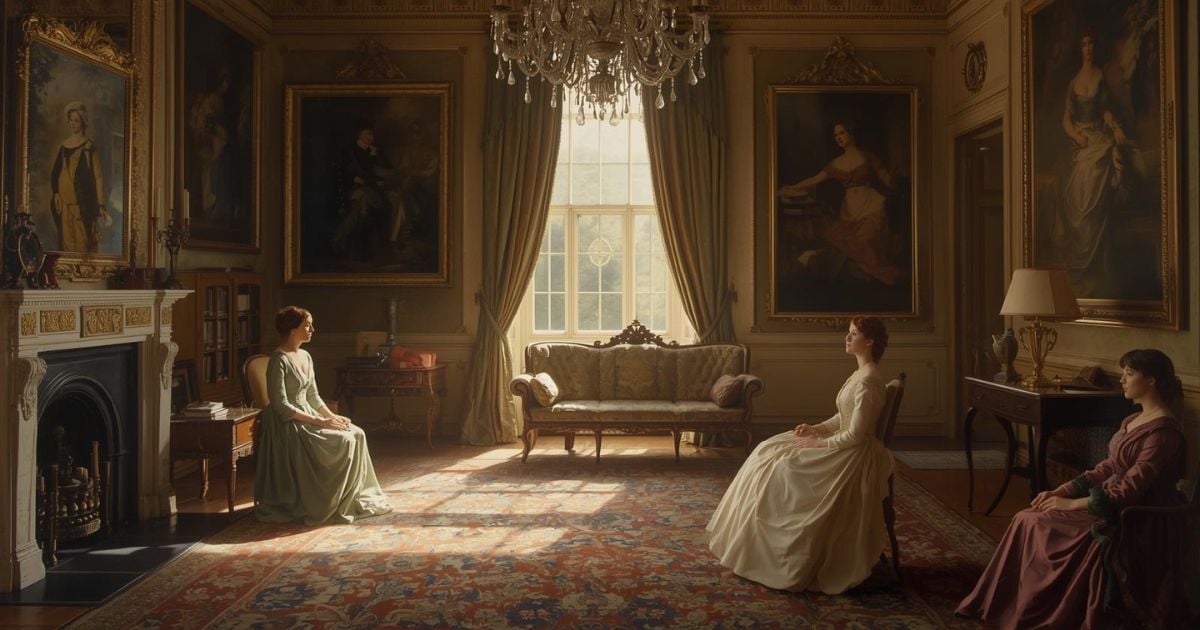
Before the housemaid has lit the fire, Marianne, only half dressed, is kneeling at the window-seat in the little January light, writing through tears. Ask nothing, she tells Elinor. You will soon know all. At breakfast she does not eat.
A letter comes. She turns deathly pale and runs out. Mrs Jennings calls it a very good joke, hopes it is to Marianne's liking, and measures worsted for a rug. When are they to be married? They were in love from the first. Marianne came, she says, to buy wedding clothes. Mrs Jennings tells everybody, and so does Charlotte. Nothing, Elinor answers, would surprise her more than such a marriage, and spreading the report is unkind.
The letter, from Bond Street, begins My dear Madam. He is concerned if his behaviour last night failed to meet her approbation, and quite at a loss to know how he offended. It was unintentional. If he gave rise to a belief of more than he felt, or meant, he should have been more guarded. He cannot have meant more. His affections have long been engaged elsewhere, and in a few weeks that engagement will be fulfilled. He returns her letters, and the lock of hair which she so obligingly bestowed. He signs himself her most obedient humble servant, John Willoughby. Elinor reads it until every line is an insult, and she will not say aloud that the break is an escape. A glass of wine is needed before Marianne can say that she makes her sister unhappy. There has been no engagement, Marianne says. He has broken no faith. Did he say he loved her? Yes. No. Never absolutely. It was every day implied, and never professedly declared. Still she wrote, and she says anyone in her place would have done the same. She felt as bound as if a legal covenant had been signed. The notes ask him to come, to explain the silence, and, after the party, to return the notes and the lock if his mind has changed. He did feel it, she says, for weeks and weeks. The lock he now gives up was begged of her with the most earnest supplication. She has been cruelly used, but not by him. By all the world, rather than by his own heart. By the woman he mentions, whoever she is. Repeating his phrase for the lock, she asks where his heart was when he wrote those words. They are unpardonable. He cannot, Elinor says, be justified in any possible way. Will the words used to send the lock back be allowed to replace the way it was asked for?
In Austen's time, a broken engagement could ruin a woman socially and financially - there was no divorce, no independent income, no second chances. Edward's secret engagement to Lucy wasn't just about love; it was about survival in a system where reputation was everything. But notice how the secret poisoned every other relationship he tried to build. He couldn't be honest with Elinor without destroying Lucy, but he couldn't be fair to Elinor while bound to Lucy. The secret created a web of deception that hurt everyone involved. Today's workplace operates on similar dynamics. We keep quiet about job searches to protect current positions. We hide relationship problems to maintain professional images. We don't disclose financial pressures that might affect our work decisions. But these secrets create the same web of confusion Austen described. Your coworkers make assumptions about your availability, your commitment, your interests - all based on incomplete information. The person who seems uninterested in team social events might be dealing with family obligations they can't discuss. The colleague who turns down overtime might be working a second job they're not supposed to have. The manager who seems to play favorites might be constrained by HR policies they can't explain. Understanding this pattern helps us stop taking other people's limitations personally and start asking better questions about what constraints might be shaping their choices.
Explore this chapter with AI to uncover deeper meaning and practical takeaways.
AI Discussion