
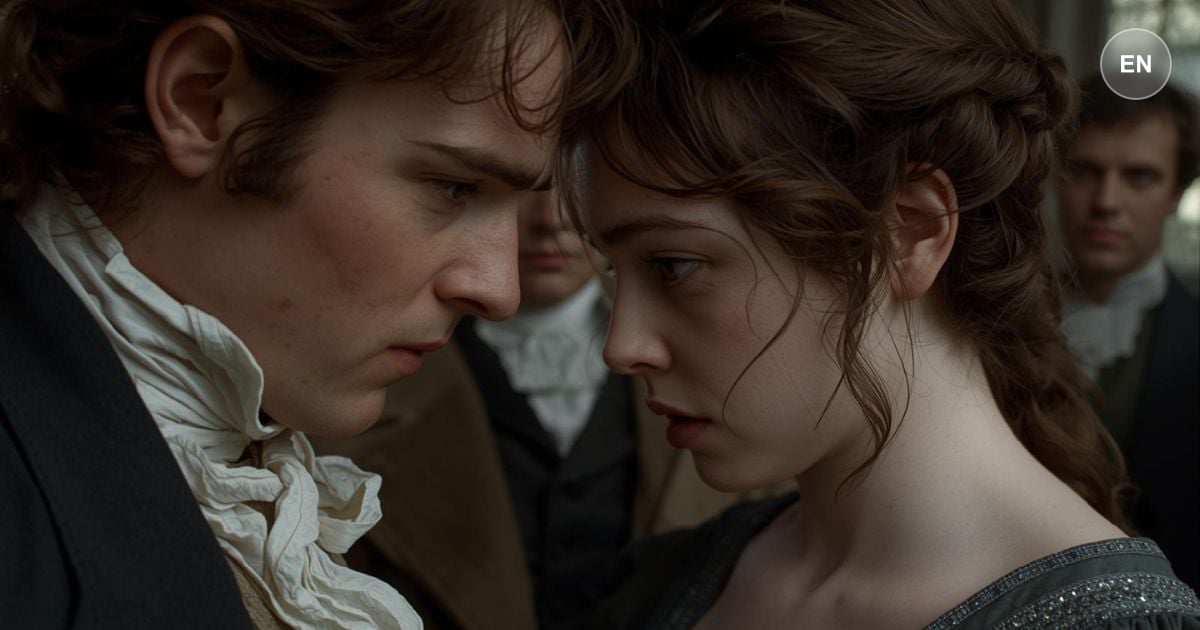
A ballroom is where a whole neighbourhood decides who matters in an evening, and one careless sentence can fix a reputation for years. The Bennets still cannot get a straight account of Bingley from Mr. Bennet, so they rely on Lady Lucas: young, handsome, agreeable, coming to the assembly with a large party. Bingley returns Mr. Bennet's visit but stays ten minutes in the library; the women watch from a window and learn only that he wore a blue coat and rode a black horse. Mrs. Bennet's dinner invitation is refused because he must be in town; rumors swell about twelve ladies in his party until the ball itself, when he walks in with five people: his sisters, Mr. Hurst, and a friend named Darcy.
Bingley is everything a room wants: easy, lively, dancing every dance, twice with Jane. Darcy arrives with ten thousand a year and a fine figure, admired for half an hour until his manners turn the room against him: too proud to be introduced, dancing only with his own party. Elizabeth, sitting out for lack of partners, overhears Bingley press him to dance and hears Darcy glance at her and say she is tolerable, but not handsome enough to tempt him. She tells the story afterward with great spirit, though she feels no warmth toward him.
The family returns to Longbourn in good spirits anyway. Jane has been admired; Mary heard herself called the most accomplished girl in the neighbourhood; Kitty and Lydia had partners all night. Mrs. Bennet overflows to Mr. Bennet about Bingley's admiration for Jane, listing every dance until he begs her to stop. She finishes by denouncing Darcy's shocking rudeness and assuring him that Lizzy loses nothing by failing to suit that gentleman's fancy.
Austen wrote about ballroom politics, but the same dynamics play out in every workplace today. When someone new enters our professional space, a manager, colleague, or client, we size them up in seconds based on limited information: how they dress, where they went to school, how they speak, whether they acknowledge our expertise. These snap judgments feel protective, but they often create the very problems we're trying to avoid. If we decide someone is 'stuck up' based on their reserve in the first meeting, we approach them defensively. They sense our hostility and become more guarded, confirming our initial judgment. Meanwhile, they've formed their own snap judgment about us being 'difficult to work with.' Both sides are now locked in a dance of mutual reinforcement. The tragedy is that these cycles often prevent us from accessing opportunities, building alliances, or learning from people who could actually help us grow. In hospitals and clinics, education, retail, or any service industry, this pattern can derail careers and harm the people we're supposed to serve. The person who seems 'too good for this place' might actually bring valuable resources. The colleague who appears standoffish might just be overwhelmed or shy. Breaking these cycles requires swallowing our pride and choosing curiosity over defensiveness, exactly the journey Elizabeth and Darcy must take.
Explore this chapter with AI to uncover deeper meaning and practical takeaways.
AI Discussion