
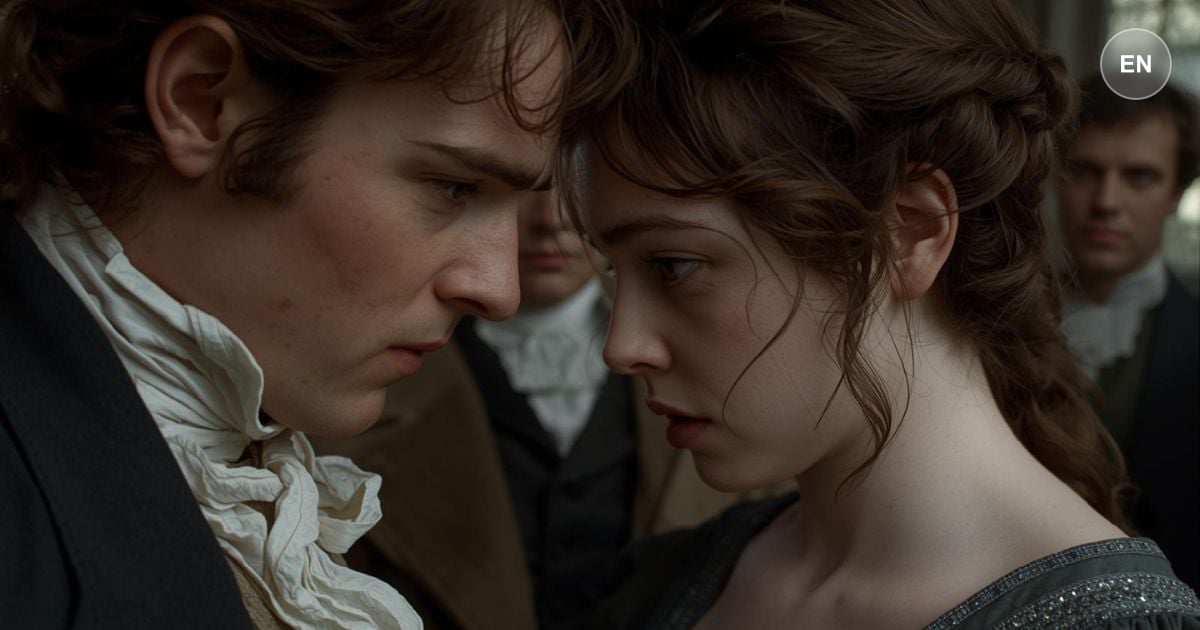
The person you are trying to protect often hears the warning as an insult to their judgment, not a gift. Alone after the ball, Jane finally admits how much she admires Bingley: sensible, good-humoured, perfectly well bred. Elizabeth teases her for being surprised by the second dance, gives her leave to like him, and names the difference between them: Jane takes the good in everyone and says nothing of the bad; Elizabeth does not.
They split on the Bingley sisters. Jane insists Miss Bingley will be a charming neighbour; Elizabeth, remembering the assembly, finds them proud and conceited. The narrator fills in what the sisters cannot see from the conversation alone: fine ladies with twenty thousand pounds and northern trade in the family memory, spending above their means and thinking meanly of others; Bingley inheriting nearly a hundred thousand pounds and renting Netherfield on impulse; Darcy and Bingley bound in friendship despite opposite temperaments, Bingley liked wherever he appears, Darcy continually giving offence.
Afterward the two men compare notes on the same evening. Bingley found everyone pleasant and Miss Bennet angelic. Darcy saw no beauty, no fashion, no interest, and admitted Jane pretty only to add that she smiled too much. His sisters nevertheless called her a sweet girl, which authorized Bingley to think of her as he chose.
Jane Austen understood something brutal about human nature: the people we love most are often the least likely to take our warnings seriously. Jane Bennet's desperate need for acceptance makes her vulnerable to manipulation, while Elizabeth's clear-eyed assessment of the Bingley sisters falls on deaf ears. This dynamic hasn't changed in 200 years. We see it everywhere, from domestic violence situations where friends can't convince victims to leave, to workplace scenarios where someone can't see they're being set up for failure. The cruel irony is that love creates the very blind spots that put our loved ones at risk. The person being protected often experiences warnings as criticism of their judgment, making them double down on defending the threat. Meanwhile, the protector grows increasingly frustrated, sometimes damaging the relationship they're trying to preserve. Austen shows us that Jane's optimism is both her greatest strength and her most dangerous weakness. In a world where people do smile while plotting your downfall, assuming good intentions can be devastating. Yet cynicism isn't the answer either. Elizabeth's sharp-eyed realism protects her but could make her miss genuine goodness. The question becomes: how do we love someone enough to protect them while respecting their autonomy to make their own mistakes?
Explore this chapter with AI to uncover deeper meaning and practical takeaways.
AI Discussion