
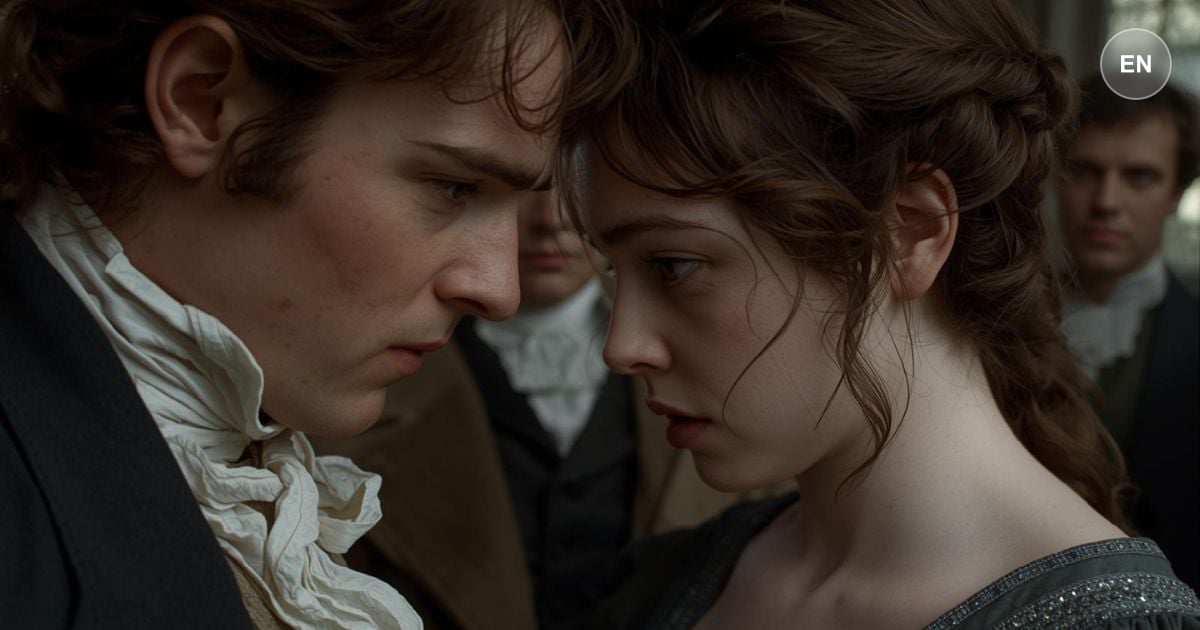
Telling a friend the story you believe and hearing them refuse to pick a villain tests whether your certainty is evidence or appetite. Elizabeth tells Jane everything Wickham said about Darcy and the denied living. Jane is distressed but cannot think Darcy capable of such cruelty; she prefers to believe both men were deceived by interested misrepresenters. Elizabeth is sure: Wickham named names and facts, there was truth in his looks, and Darcy may contradict him if he dares.
Bingley and his sisters arrive in the shrubbery to invite the family to the Netherfield ball on Tuesday. Caroline and Mrs. Hurst are civil only to Jane, then hurry away from Mrs. Bennet. Jane anticipates an evening with Bingley; Elizabeth plans to dance with Wickham and read guilt in Darcy's face; Kitty and Lydia care chiefly that it is a ball.
Elizabeth asks Collins whether he will dance. He has no scruple and solicits her for the two first dances, those she reserved for Wickham. She accepts with bad grace and realizes he marks her as future mistress of Hunsford. Mrs. Bennet finds a match highly agreeable; Elizabeth avoids quarrelling before any offer. Rain blocks the walk to Meryton until Tuesday, leaving Wickham unchallenged and the younger sisters impatient.
Chapter XVII is talk and anticipation, not the ball itself. The shrubbery scene is the novel's debate on evidence: Jane will not think Darcy capable of robbing his father's favourite; Elizabeth trusts Wickham's openness and dares Darcy to answer. Austen does not yet vindicate either sister. The Bingley visit reintroduces Netherfield society and Caroline's Jane-only politeness. Elizabeth's ball fantasy pairs romance with prosecution. Wickham's company and Darcy's telltale look. Collins shatters the fantasy with ecclesiastical confidence that dancing is moral and with a claim on the first two dances that announces his choice of Elizabeth as parsonage mistress. Mrs. Bennet's approval looms. Rain is a small plot brake: Wickham cannot be seen before Tuesday, so the story in Elizabeth's head goes unchallenged. The chapter bridges Wickham's narrative (XVI) to the ball's collisions (XVIII): prejudice, proposal pressure, and social comedy converging.
Explore this chapter with AI to uncover deeper meaning and practical takeaways.
AI Discussion