
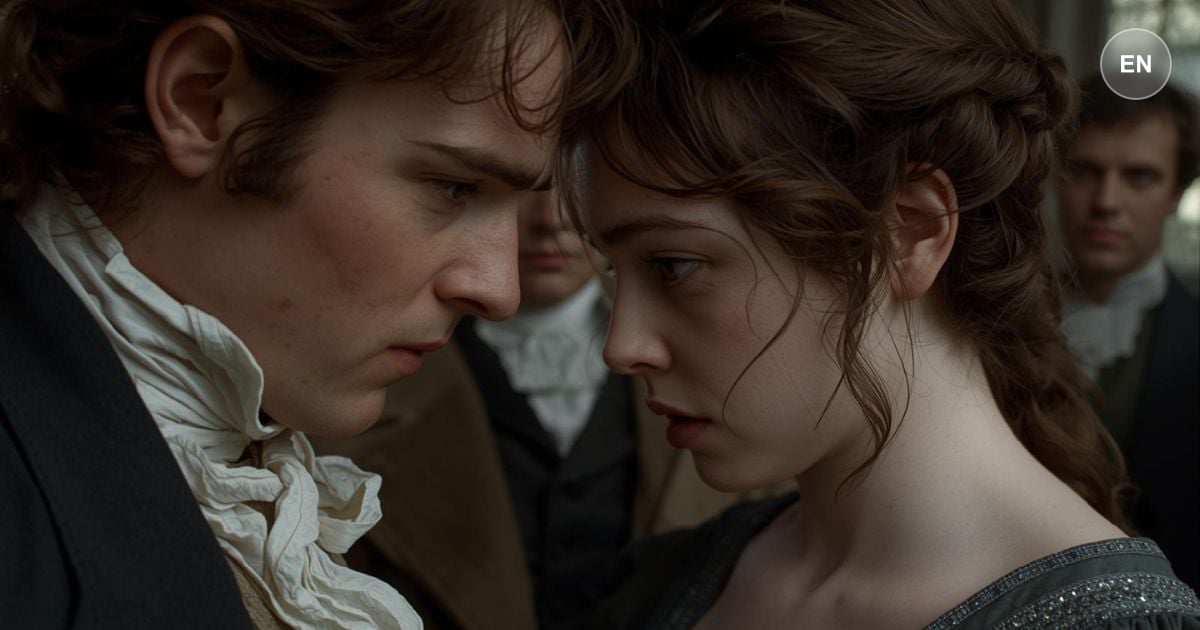
One crowded evening can lock in a false story when absence reads as guilt, rivals tell you what you want to hear, and your family performs every mistake in public. Elizabeth arrives at Netherfield expecting Wickham and finds him absent. Mr. Denny says he went to town; his smile suggests he avoided Darcy. Disappointment sharpens her anger before she can be civil to Darcy. The two first dances with Collins are mortification; an officer praises Wickham. Darcy asks Elizabeth to dance; she accepts without thinking, then tells Charlotte she is determined to hate him.
Their set mixes wit and hostility: she probes his unappeasable resentment, mentions forming a new acquaintance at Meryton, and trades barbs when he warns that Wickham makes friends more easily than he keeps them. Caroline claims Wickham is the steward's son and Darcy has been kind; Elizabeth reads malice. Jane, radiant with Bingley's attention, reports that Bingley and Caroline call Wickham imprudent and say the living was conditional. Elizabeth trusts Bingley's sincerity but not his evidence, and refuses to revise Wickham on assurances alone.
Collins discovers Darcy is Lady Catherine's nephew and introduces himself despite Elizabeth's protest; Darcy receives him with distant civility Collins misreads as warmth. Mrs. Bennet, overheard by Darcy, loudly anticipates Jane's marriage to Bingley and Elizabeth's to Collins. Mary sings twice despite Elizabeth's silent pleas; Collins preaches clerical duty aloud and bows to Darcy. Elizabeth thinks her family has exposed themselves with maximum spirit; Bingley may have missed the worst, but Darcy and the Bingley sisters have seen enough to ridicule.
Collins shadows Elizabeth for the rest of the evening while Darcy avoids her; she rejoices at his silence and blames her Wickham allusions. The Bennets leave last after Mrs. Bennet's maneuver; Caroline and Mrs. Hurst wish them away with barely concealed fatigue. Mrs. Bennet presses civilities on Bingley for a family dinner; he promises an early visit from London. She is sure of Jane at Netherfield within months and Elizabeth with Collins, ranking Elizabeth least dear now that a richer match is in view, while Mr. Bennet silently enjoys the spectacle of social collision.
Chapter XVIII is the novel's first great set piece. Austen runs parallel plots: Wickham missing, Jane winning Bingley, Elizabeth losing her evening to Collins and gaining Darcy instead. The dance dialogue is famous because both minds are sharp and neither is honest yet. Elizabeth tests Darcy with his own words about resentment; he warns her about Wickham without explaining. Sir William's blunder links the couples in public. Caroline's intervention is crude class snobbery mixed with real information Elizabeth rejects. Jane's report from Bingley is the first crack from Elizabeth's own camp, she closes it by trusting partial sincerity. Collins's Darcy approach is pure comedy with stakes: he will be her cousin soon in his mind. Mrs. Bennet's supper talk is social violence overheard by the man she insults. Mary's song and Collins's speech complete the Bennet family portrait Darcy already despises. The departure fixes Mrs. Bennet's delusion and Elizabeth's relief at Darcy's silence, dramatic irony for readers who know his feelings. The ball is not filler; it is where prejudice, pride, and attraction are shown, not told.
Explore this chapter with AI to uncover deeper meaning and practical takeaways.
AI Discussion