
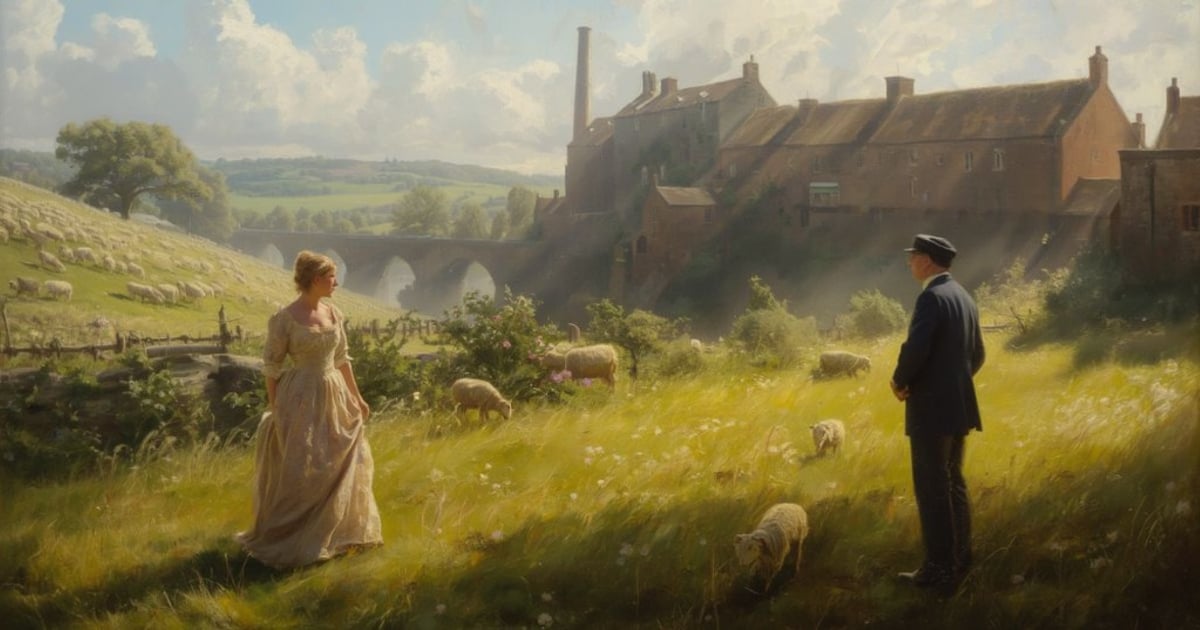
Margaret returns home to Helstone after her cousin's wedding, finally getting the quiet country life she's always craved. But homecomings are rarely what we expect. Her mother stayed behind from the wedding due to pride, she had nothing suitable to wear and couldn't bear the shame of appearing shabby next to her wealthy sister. This sets the tone for deeper problems Margaret begins to notice.
While Margaret loves her outdoor life in the forest, connecting with local people and feeling truly herself, the indoor family dynamics are strained. Her mother constantly complains about their isolated location and her husband's lack of career advancement, comparing him unfavorably to less talented men who've gotten better positions. Her father grows increasingly withdrawn and anxious, especially around mail time, suggesting he's hiding something significant. Margaret suspects this involves her brother Frederick, who cannot return to England due to some naval scandal that's never fully explained.
The chapter reveals how financial insecurity and social shame can poison family relationships, even when love exists. Margaret finds herself caught between her parents, wanting to defend her father to her mother, and her mother to her father. She's also learning that the adult world contains complexities her younger self couldn't perceive. The chapter ends as Margaret sits sketching in October sunshine, finally feeling settled after weeks of rain. Then the housemaid announces Mr. Henry Lennox at the drawing-room door. He said in the London drawing room that he might pay a call at Helstone, and he has kept his word.
Margaret's mother skips the wedding because she has nothing suitable to wear, a decision that seems reasonable but reveals how shame can trap us in cycles of isolation. In Gaskell's time, social appearances carried enormous weight, and Mrs. Hale's choice reflects real economic pressures. But her withdrawal feeds her resentment, making her marriage and family life worse. This pattern transcends historical periods. Today's version might be the parent who stops attending school events because they can't afford what other families wear, or the worker who avoids company gatherings due to financial stress, missing networking opportunities that could improve their situation. The mechanism stays consistent: financial pressure creates social anxiety, social anxiety leads to withdrawal, withdrawal increases isolation and bitterness. Mrs. Hale can't enjoy her daughter's return or her husband's steady character because she's consumed by what they lack compared to others. Her pride, meant to protect her dignity, becomes a prison that separates her from the very connections that could provide support and meaning. The tragedy isn't their modest circumstances, it's how shame about those circumstances destroys their ability to find joy in what they do have.
Explore this chapter with AI to uncover deeper meaning and practical takeaways.
AI Discussion