
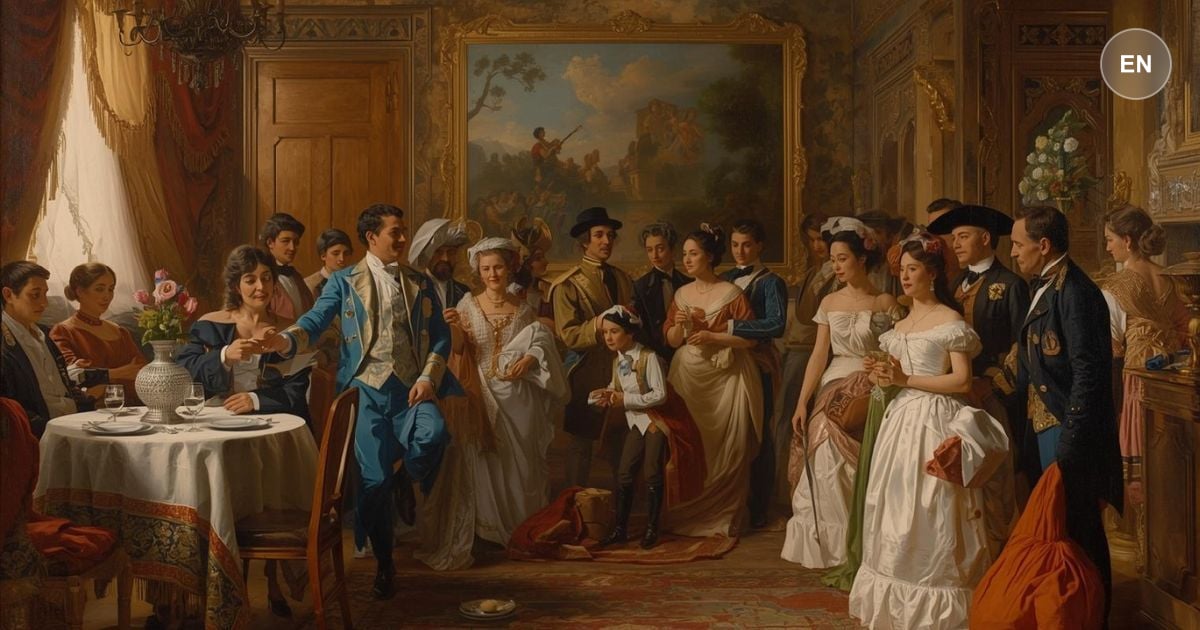
Rizal tells the fiesta through three letters. A Manila correspondent gushes over friars, Spanish dignitaries, and Capitan Tiago's champagne while noting Ibarra's absence from the theater, turning San Diego into propaganda for an audience that will never smell the lake, meet Sisa, or hear the pilot's name spoken by soldiers in the woods.
Capitan Martin writes privately to Choy about gambling losses, Damaso smashing a lamp, and Carlos the Chinaman's suspicious luck at liam-pó, revealing the fiesta's backroom economy of debt, rage, and fixed games beneath the processions and champagne toasts that the newspapers call civilization.
Maria Clara's perfumed note asks why Crisostomo hides, bored by piano duties and Damaso's chatter, threatening to skip the cornerstone ceremony if he fails to appear. The same celebration becomes propaganda, business, and love depending on the writer. Rizal teaches readers to read official piety against backroom wagers and intimate longing, because colonial festivals always run on multiple ledgers at once and truth arrives in envelopes, not trumpets, and every letter hides the writer's stake in the story whether they write for editors, creditors, or lovers who need one honest face in a week of masks and borrowed joy that cannot answer Maria Clara's question.
Rizal understood something crucial about power: those who control the official story aren't necessarily lying, but they're definitely not telling the whole truth. The Spanish correspondent genuinely believed in colonial superiority while completely missing Filipino humanity. Today's equivalent might be corporate communications celebrating 'workforce optimization' while employees face layoffs, or politicians praising 'community investment' while gentrification displaces longtime residents. The pattern persists because different social positions create different realities. What looks like progress from the top often feels like loss at ground level. What seems like corruption to outsiders might feel like survival to insiders. What appears as romance to lovers looks like distraction to observers focused on bigger pictures. This doesn't mean all perspectives are equally valid, some serve justice better than others. But it does mean that single-source truth is almost always incomplete truth. The most dangerous moment comes when we mistake our limited view for the complete picture. Whether you're trying to understand why your workplace keeps hemorrhaging good people, why your neighbourhood is changing so fast, or why your family gatherings feel increasingly tense, the same principle applies: seek out voices from different positions in the system. The official explanation, the insider knowledge, and the personal impact stories will rarely align perfectly, but together they reveal the fuller picture you need to navigate wisely.
Explore this chapter with AI to uncover deeper meaning and practical takeaways.
AI Discussion