
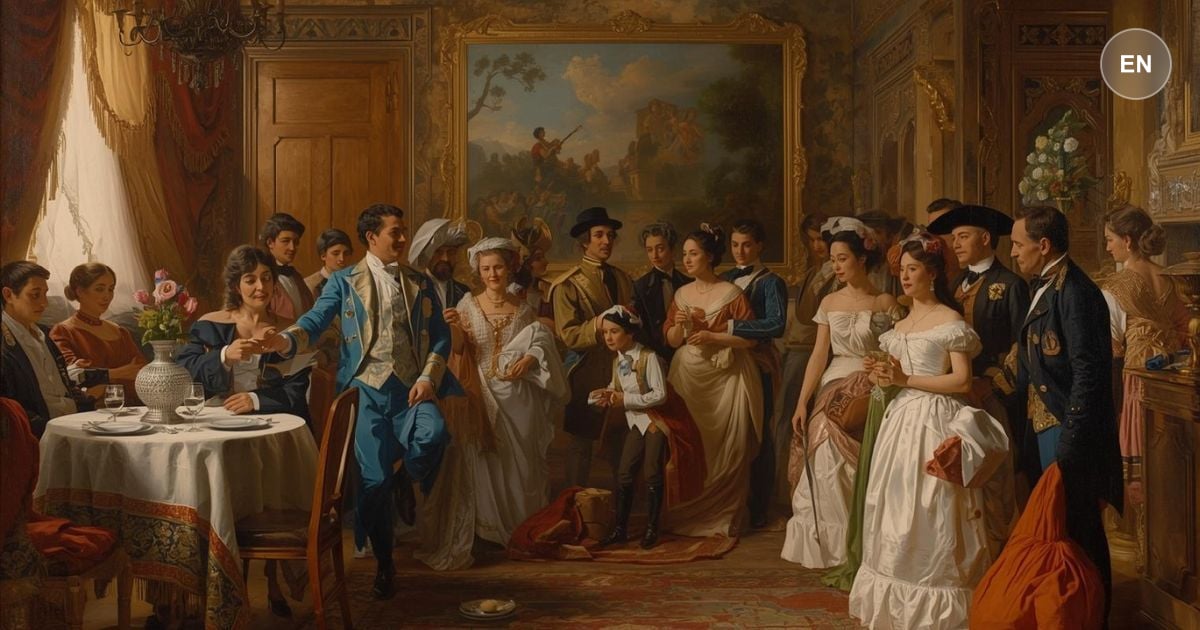
The fiesta's last morning opens with bands, rival brotherhoods buying tapers, and gamblers in diamond studs while Tasio in plain sinamay calls the orgy senseless amid misery. Don Filipo jokes with him but cannot resist the spectacle; Tasio answers resign, knowing mockery cannot stop a town addicted to display and willing to buy indulgences with wages it does not have while vendors count coins in the dust.
Processions display costly Franciscan garments sold from Manila convents, their price rising as they fray. Padre Damaso nurses a cold from ice cream and renounces preaching until vanity wins. Before Capitan Tiago's window Padre Salvi poses under the canopy; a baby in mourning cries Papa and a woman flees while Spaniards smirk at drama they treat as entertainment.
The narrator claims Salvi does not know her, yet the blush betrays an open secret piercing sacred display. Rizal shows fiesta as pressure valve, profit engine, and mask for clerical scandal simultaneously, and the crowd applauds what it half understands while the woman disappears and the baby is hushed and the procession rolls on as if shame were only another costume Salvi will wear under the canopy while brotherhoods launder scandal with incense tomorrow while the bands play louder.
Rizal understood something that remains painfully relevant: spectacle is expensive, and that expense serves a purpose. The church in colonial Philippines didn't waste money on elaborate festivals, they invested in them strategically. The pageantry wasn't just religious theater; it was economic and social control. When people are overwhelmed by sensory experience and caught up in collective participation, they're less likely to calculate how much the show costs and who's paying for it. Today's version might be a hospital hosting a charity gala in a ballroom that costs more than two nurses' annual salaries, or a corporation throwing elaborate holiday parties while announcing layoffs in January. The pattern reveals itself in the maths: organizations that claim poverty when workers ask for raises somehow find budgets for impressive displays. The baby's cry in Rizal's scene works because children haven't learned the adult skill of selective blindness yet. They point out what everyone can see but has agreed not to notice. The question isn't whether these contradictions exist, they're usually hiding in plain sight. The question is what it costs us, individually and collectively, to keep looking away from them.
Explore this chapter with AI to uncover deeper meaning and practical takeaways.
AI Discussion