
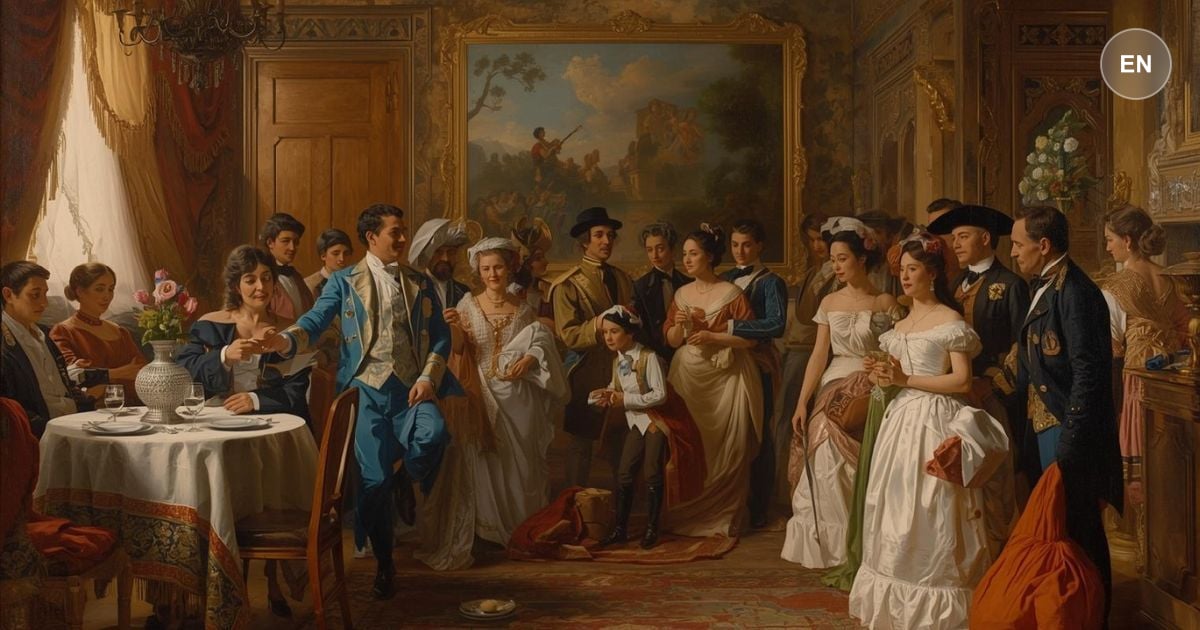
Twilight finds Capitan Tiago outdoing provincials with European luxuries while Manila papers praise Ibarra as cultivated capitalist and model Filipino Spaniard. Tiago urges naming the school for St. Francis and insists Ibarra dine with Padre Damaso, turning reform into a family brand and a friar's photo opportunity before the first lesson is taught or the first whip is removed from a classroom wall.
Maria Clara walks the fiesta streets radiant, yet the chapter's moral centre shifts when she drops her diamond locket into a leper's basket and kneels as he kisses the ground she trod. Mad Sisa seizes the outcast to pray for Basilio and Crispin, then is dragged away by a soldier while Ibarra admits he has done little for her despite Salvi's vague promises and his own telegram triumph.
Sinang mocks Salvi and the alferez's dark house; the town performs joy while outcasts embody truth. Maria Clara returns home saying fiesta days bore her when strangers rule and suffering stays visible at the margins, and Rizal shows that charity without power changes nothing but a necklace while madness and leprosy remain the town's honest commentators on a fiesta that spends gold to forget blood and the sons still missing from the convento.
Every social system has invisible people - those who don't fit the performance, can't play the game, or have been discarded by the machinery of success. In Rizal's time, it was lepers and the mentally ill. Today, it might be the homeless veteran outside your workplace, the coworker everyone avoids because they're 'difficult,' or the family member struggling with addiction. These invisible people serve as a diagnostic tool: they reveal what your social system actually values versus what it claims to value. Maria Clara's spontaneous generosity toward the leper wasn't just kind - it was radical because it broke the unspoken rule that some people don't count. When you pay attention to who gets ignored, dismissed, or actively avoided in your circles, you learn something crucial about the hidden rules governing your world. The question isn't whether these invisible people exist - they always do. The question is whether you'll train yourself to see them, and what you'll do when you do. Because how we treat the people who can't help us reveals who we really are beneath all the social performance.
Explore this chapter with AI to uncover deeper meaning and practical takeaways.
AI Discussion