
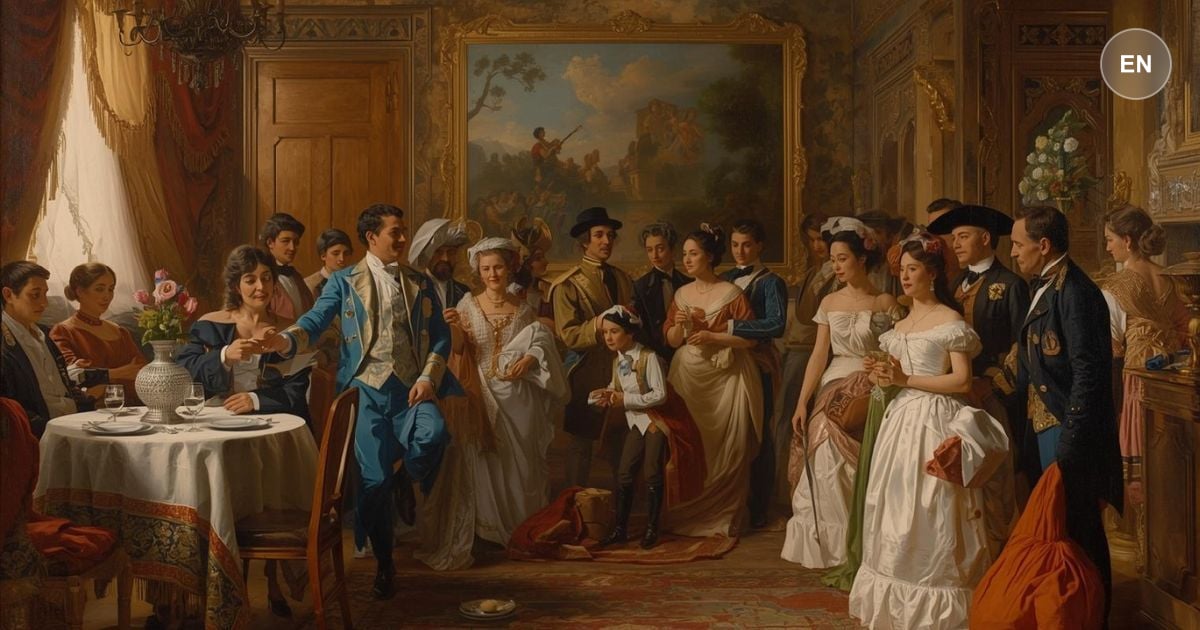
On the eve of the fiesta San Diego erupts in hospitality: banners, bands, gambling talk, and tables laden with food few hosts will taste. Rizal notes that all this toil entertains stranger and enemy alike without expecting gratitude, because celebration here is labor performed for spectators who judge the town by spectacle rather than by justice or by how it treats the missing altar boys.
Meanwhile Ñor Juan races to finish Ibarra's school foundations before the cornerstone ceremony, describing German-style wings, gardens, and even dungeons for lazy pupils. The curate will bless the stone; students weave crowns; Sister Rufa offers to beg alms. Young men copy Ibarra's collar and buttons more than his ideals, and a yellowish laborer insists on extra timber so the derrick looks impressive for tomorrow's crowd.
Tasio alone quotes Baltazar: beware smiling faces that hide secret enemies. The chapter intoxicates with communal momentum while hinting that public enthusiasm may be borrowed, performative, and fragile when the music stops and the bills come due. Building and feasting advance on the same day, but only one will be remembered in the sermons while the cornerstone waits for a blessing that may curse as easily as it consecrates the school Ibarra hopes will outlast the fiesta.
Rizal understood something crucial about social change: the moment your cause gains momentum, it attracts people whose interests don't align with yours. In colonial Philippines, Filipino reformers constantly faced this dilemma - Spanish officials and wealthy collaborators would co-opt their movements, diluting the message while claiming credit. This same pattern plays out in modern American workplaces and communities. When someone proposes genuine reform - better working conditions, community improvements, organizational changes - initial resistance often gives way to enthusiastic co-optation. Suddenly, the very people who blocked progress want to lead the initiative. They bring resources and legitimacy, but also their own agendas that may fundamentally alter the original vision. The challenge isn't rejecting all help, but learning to distinguish between allies who share your values and opportunists who see your success as their vehicle. Genuine allies support you when it's inconvenient, when there's no credit to claim, when the work is unglamorous. They care about outcomes, not optics. Opportunists perform their support loudly but disappear when real sacrifice is required. They care about association, not achievement. The most dangerous moment for any reform movement isn't when it faces opposition, but when it gains enough momentum to attract people who want to reshape it for their own purposes. How do we accept help without losing our souls?
Explore this chapter with AI to uncover deeper meaning and practical takeaways.
AI Discussion