
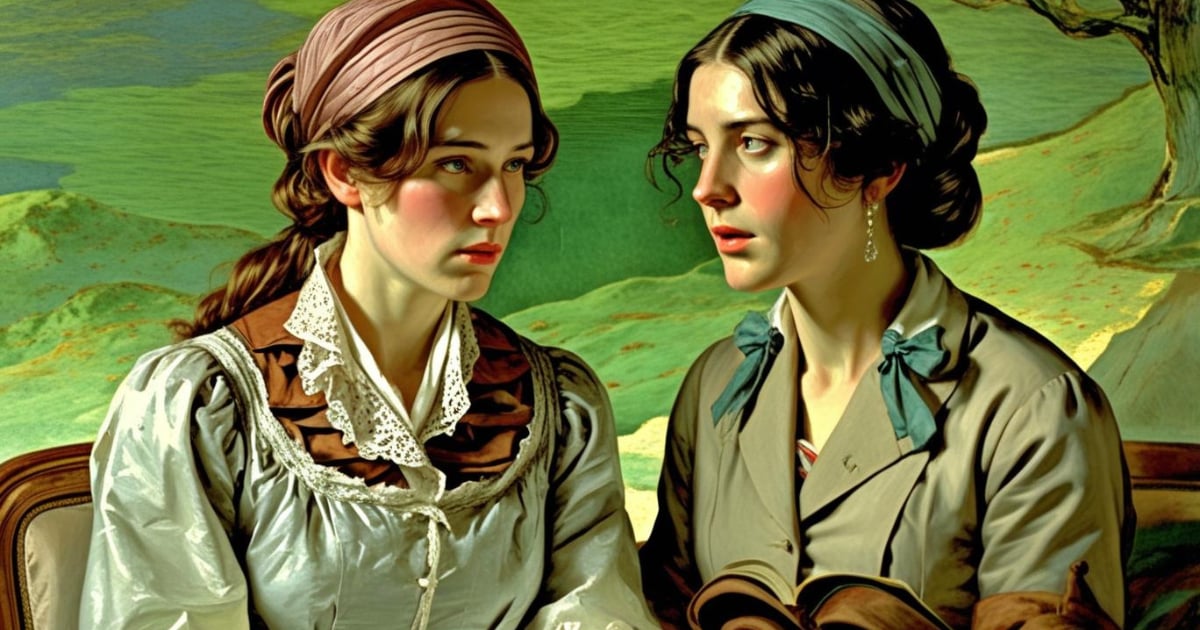
The chapter opens where the last ended: Dorothea drying her eyes before Will Ladislaw is announced. She receives him at once, hoping active sympathy will pull her from self-absorption and remind her of Casaubon's generosity. Signs of weeping make her face younger; his shyness makes him look younger too. She explains Casaubon is at the Vatican from breakfast till dinner, even as they prepare to leave Rome. Will pictures the dried pedant who won her and wastes the honeymoon on mouldy futilities, and barely turns disgust into a smile she mirrors.
They talk art, vocation, and patience. When she cites Casaubon's regret about Will's want of patience, Will's contempt stings her into defending her husband's labor. He then says Casaubon would save trouble by reading German; Germans have made roads while English scholars grope with pocket-compasses. Dorothea is wounded: her husband's life work might be void, and she wishes she had learned German at Lausanne. Will, ashamed, praises Casaubon insincerely.
Casaubon returns, rayless beside Will's brightness. Dorothea apologizes for the morning quarrel; he forgives with quoted propriety but withholds complaint that she received Will alone, restrained by pride and a jealousy that needs little fire. She begins to see she expected feeling from him under a wild illusion, and to feel that he has an equivalent centre of self whose lights and shadows cannot match hers.
Casaubon's withheld rebuke is as important as Will's smile. He will not scold Dorothea for receiving a guest because pride, fatigue, and a jealousy not exhausted on scholars still leave none for the marriage he wanted as soft fence. Eliot calls it blight bred in uneasy egoism. Dorothy who hears only the apology misses the danger: the husband senses rivalry and chooses cold control. Will is not innocent; he pinches and repents. But the chapter's permanence is Dorothea's awakening to separate selves, not the flirtation plot.
Explore this chapter with AI to uncover deeper meaning and practical takeaways.
AI Discussion