
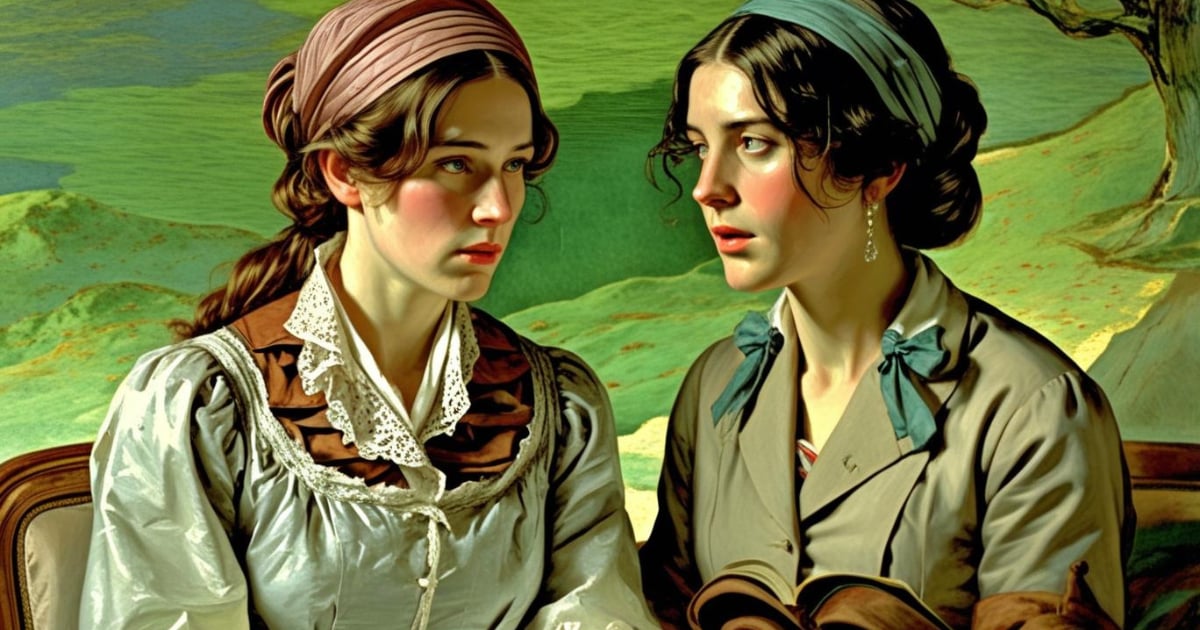
Will shines at dinner, drawing Casaubon out on Middleton and Rome's miscellaneous comparisons while his own talk falls like a gay chime after the great bell. He describes poor Romans only a free mover could see, defers to Dorothea's judgment on the Madonna di Foligno, and Casaubon preens at having a wife who speaks better than most women. Casaubon will leave Rome soon; Will urges a studio visit, and Dorothea's eagerness secures agreement. At Naumann's, Will praises sacred art and jokes that Tamburlaine driving conquered kings equals world history lashing dynasties; Casaubon suspects mockery. The painter flatters Casaubon into sitting for Saint Thomas Aquinas and asks Dorothea to pose as Santa Clara. Will wants to knock him down yet arranged the visit.
Casaubon buys the Aquinas picture; the Santa Clara sketch stays conditional because Naumann claims dissatisfaction. Will seethes when the painter speaks of Dorothea's lips. Not invited to dine next day, he calls at midday, finds her choosing cameos for Celia, and argues that enjoying art is not betrayal of the poor: the fanaticism of sympathy would make martyrs of us all. He escalates: she will be buried alive at Lowick. She presses the German scholarship question; he says Casaubon is crawling after Bryant with obsolete lumber about Chus and Mizraim while new discoveries change the field.
She is angry, then extracts a promise he will not speak that way again. He says she is a poem and that he will work his own way in England without dependence. She likes him very much; he leaves unsatisfied, meets Casaubon in the porte-cochere, and hears no further leave-taking. Dorothea tells Casaubon Will means to work independently; Casaubon awaits a letter and closes the subject coldly, adding that the young man is not otherwise an object of interest.
The chapter ends Book II on a double register: Dorothea's marriage is colder while Will has become emotionally necessary to her in ways she does not yet name. Will's jealousy and generosity tangle; Naumann's vanity and Casaubon's vanity both feed on the same sitting. Rome has given Dorothea a rival lens on her husband's work and on her own future.
Dorothea's final request is the chapter's hinge. She has heard that her husband's labor may be a lumber-room; she cannot live with that yet, so she forbids the speech that made it audible. Will agrees and feels freer to hate. Casaubon hears only independence and shuts the door. Eliot shows three moral languages: her distributive conscience, his romantic hunger, his scholarly vanity. None is wholly false. The tragedy is timing: Rome could have widened Dorothy's life, but the widening arrives attached to a man her husband tolerates and her conscience half welcomes. Book III will remind us that other plots continue while inner lives crack quietly.
Explore this chapter with AI to uncover deeper meaning and practical takeaways.
AI Discussion