
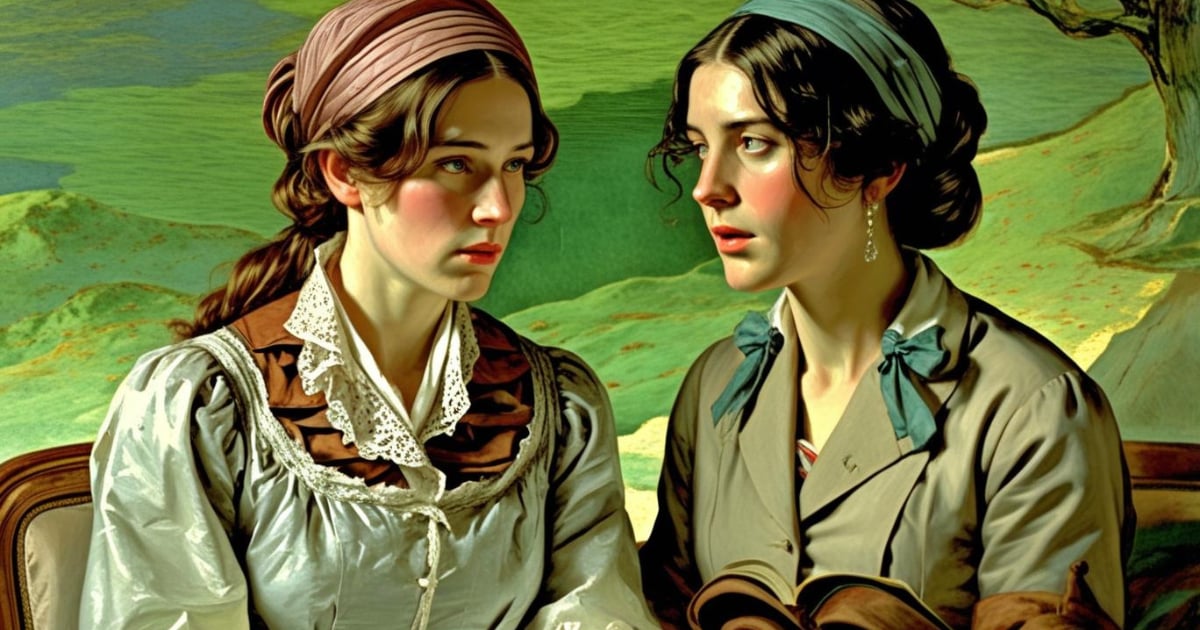
Two hours before Naumann sees her at the Vatican, Dorothea sobs alone in her Via Sistina boudoir while Casaubon stays at the library. She cannot shape a grievance; she accuses herself of spiritual poverty. She married for duty, expected his mind to tower above hers, and meets Rome as visible history: ruins, basilicas, and colossi in a sordid present, St. Peter's red drapery spreading like a disease of the retina. Bright tourists picnic on the past; she has no defense and drives to the Campagna to escape the masquerade of ages. Tantripp and the courier have shown her galleries and ruins, but without knowledge that breathes a soul into history Rome jars her like an electric shock.
Casaubon remains learned; his chronology still works. Yet the light has changed: you cannot find the pearly dawn at noonday. Courtship treated small samples as guarantees; marriage concentrates expectation on the present, and she feels she is exploring an enclosed basin. What was fresh to her is worn out to him; large vistas in his mind are anterooms leading nowhere. He offers measured courtesy at sights; she asks if he cares, and he cites cognoscenti on Raphael, Cupid and Psyche, and fish-deities she once hoped to understand from the same high ground. She would have kissed his coat-sleeve; he reaches her a chair instead.
At breakfast Casaubon speaks of seeing Rome as a bride and living henceforth as a happy wife. She tries cheer, then begs him to sift his notes and begin the book that would make his knowledge useful to the world. She ends in tears offering to write to his dictation. He flushes and delivers a speech about ignorant onlookers and scrupulous explorers, seeing her as a spy on his unfinished labor. Both are shocked. On a wedding journey meant to isolate them as each other's world, small explosions feel like catastrophe.
Neither can speak again; Dorothea drives with him to the Vatican in silence and wanders the museum listlessly until Naumann sees her brooding by the marble. Eliot notes how ordinary this marital disillusion is, yet how confounding on a honeymoon. Dorothea's reaching toward fullest truth still survives the anger: there is clearly something better than despondency ahead.
Eliot pauses to say that six weeks of wedding tears is not unusual, which is why the world does not call it tragic. That sentence is the novel's ethics. Dorothea's pain is common, therefore discounted, therefore lonelier. Casaubon's speech about happy wives is not malice; it is blindness fortified by propriety. The chapter links inward Rome to outward Rome: monuments that should educate become retina disease because the person beside you cannot share the seeing. Dorothy will need the same vocabulary when a promotion, move, or marriage delivers competence without companionship.
Explore this chapter with AI to uncover deeper meaning and practical takeaways.
AI Discussion