
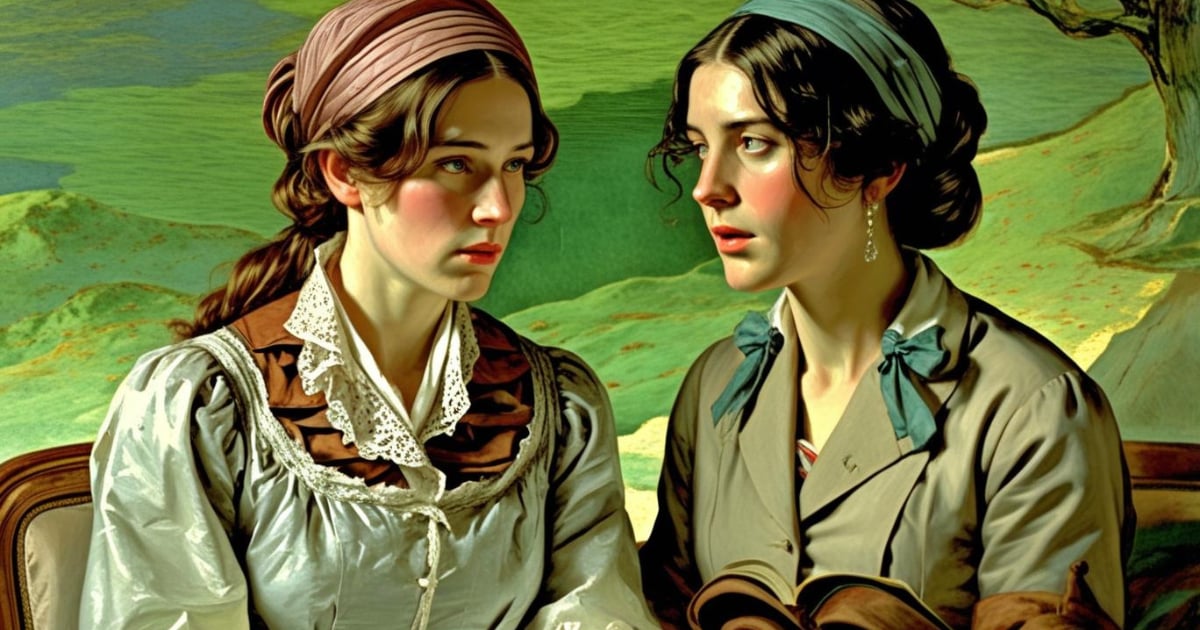
Historical markers fix the date: George IV, Wellington, Vincy mayor, Dorothea in Rome on her wedding journey. Romanticism still ferments among long-haired German artists; travelers mistake sacred art and carry thin pockets of knowledge about what they are seeing.
Will Ladislaw leaves the Belvedere Torso when Naumann seizes his arm: come quickly or she will change her pose. In the hall of the reclining Ariadne they find Mrs. Casaubon in Quakerish gray, cloak thrown back, one ungloved hand pillowing her cheek, gazing at sunlight on the floor rather than the marble. Naumann rhapsodizes on antithesis: pagan perfection beside living Christian consciousness. He wants to paint her as a nun, notes her wedding ring, mistakes Casaubon for father or rich patron, and urges pursuit. Will says she is married to his cousin and refuses.
Their quarrel turns to art versus language. Will insists painting stares with insistent imperfection; you cannot paint a woman's voice, which is diviner than anything seen. Naumann teases jealousy and calls her Will's aunt; Will forbids the word and names her Mrs. Casaubon. Something has happened to Will regarding her, though he barely knows her and half creates the irritation himself. The chapter ends with susceptibilities clashing against objects that remain innocently quiet.
Will's argument with Naumann is the chapter's ethical spine. Victorian Rome is full of bodies turned to stone and canvas; Dorothea is breathing, and Will insists that difference matters. He is not yet honest about desire, but he is already right about dignity. Eliot places this encounter before the Rome misery chapter so we hear vitality before we watch marriage drain it. The comedy of German artists and English tourists keeps the scene light, yet the stakes are not light: who gets to name a woman, and whether marriage makes her public property to artists and cousins alike.
Explore this chapter with AI to uncover deeper meaning and practical takeaways.
AI Discussion