
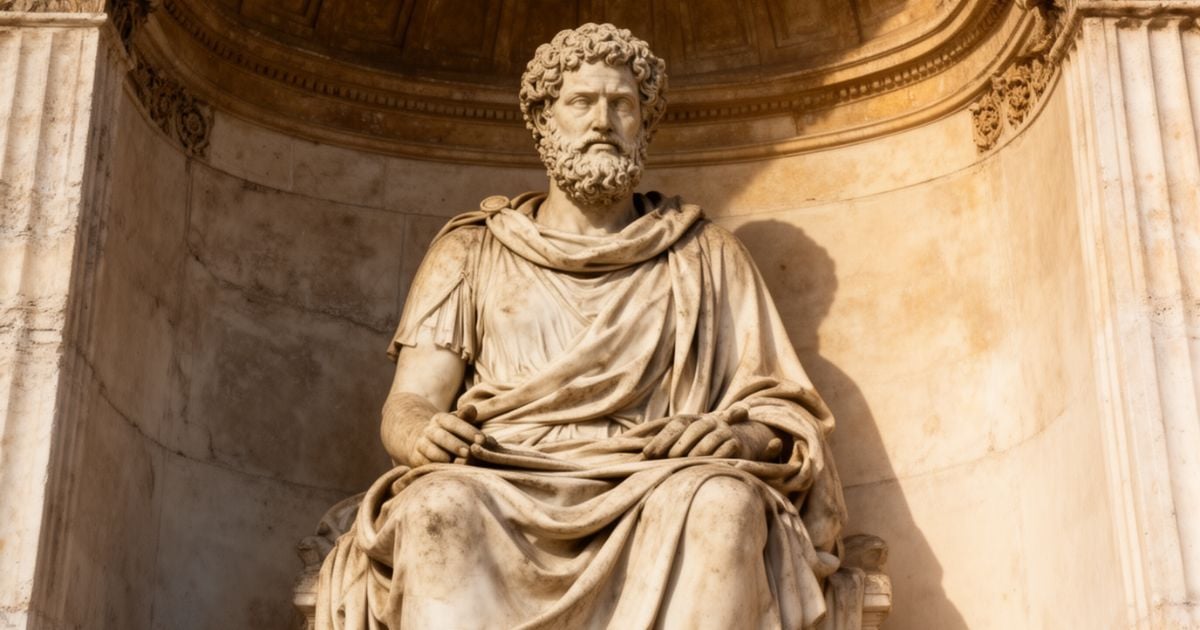
The inner fortress is not a place you travel to. A trained mind works like fire: obstacles that would quench a small flame feed a strong one, turning what blocked the first plan into the new object. You do not need the seashore or the mountains. At any moment you can retreat into yourself if brief principles are stored inside: wicked men act from ignorance and are ashes now; your lot flows from providence or atoms; honour on earth is a speck in eternity.
Marcus builds through reason and law. Objects do not reach the soul; tumult comes from opinion within. All humans share reason, therefore law, therefore citizenship in one world-city. Death is nature's wisdom, resolving elements without shame. Let opinion be taken away and wrong vanishes. Act only what a good man may do, with proviso and readiness to revise when justice requires. Two rules stay ready: do only what reason advises for the common good, and change your mind when someone shows a just correction. Frankincense drops on the altar one piece after another; you will merge back into the rational whole.
He widens the lens on vanity and flux. Do not burn days on neighbours' gossip; run straight in the line. Praise does not improve an emerald. Before each action, ask whether it is necessary. Vespasian's age and Trajan's repeat weddings, plots, deaths, then oblivion. Camillus, Scipio, Augustus, Antoninus become fabulous names, then nothing. The universe delights in change; present things are seed of what follows. Evil cannot live in another man's mind, only in the conceit you admit. He admits he is not yet perfectly simple, yet what the world needs is expedient for you too.
Marcus lands on the promontory stance. Physicians, tyrants, Helice and Pompeii are gone. Man is snivel, then embalmed carcass or ashes. Heraclitus traced elements into one another; sleeping through life by tradition alone is the real danger. Waves beat the rock; the rock stands. What happened is not misfortune by itself; generous bearing is happiness. Death hangs over you: be good now. Take the compendious way according to nature in every word and deed.
Marcus ran an empire, yet he insisted the real fortress was inward. Modern workplaces demand the opposite fiction: control every metric, every mood, every narrative. The result is exhaustion. Marcus offers radical responsibility for your own judgments and radical release of everything else. That is not passivity. The promontory still stands in the surf. The leader who stops adding opinion-storms to fact-storms becomes more useful, not less. The question is whether you are trying to calm the ocean or learn to stand.
Explore this chapter with AI to uncover deeper meaning and practical takeaways.
AI Discussion