
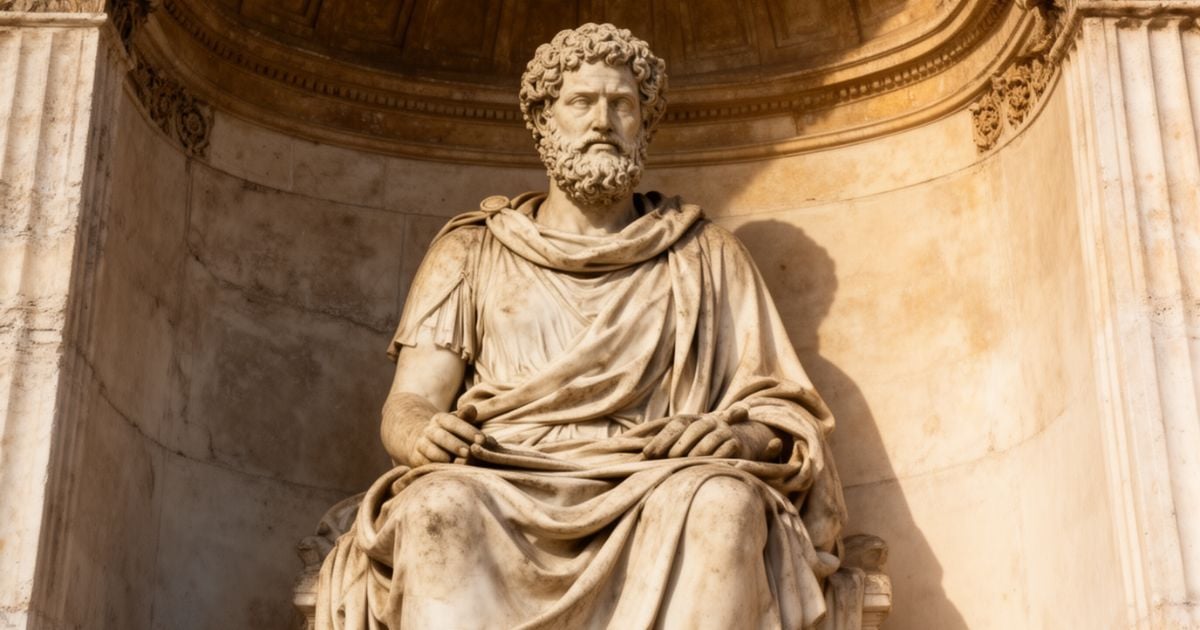
The alarm finds Marcus unwilling to rise, and he talks himself through it. You were born for a man's work, not for a warm bed. Bees, trees, and ants each do what nature requires; humans are meant for busy, rational action. Rest has a stint, but indulgence in comfort while shirking duty means you do not love your own nature. Dropping turbulent imaginings can restore rest at once. Speak and act what is honest without shrinking from reproach. Continue your course until breath returns to the air and earth that fed you. Cultivate sincerity, gravity, and contempt of pleasures even when sharp wit is not your gift.
Three kinds of helpers appear: those who keep score, those who secretly feel owed, and those like the vine that bears fruit and moves on without applause. Pray like the Athenians for rain on all their fields, not only your plot. Hardship works like a physician's prescription: harsh in itself, subordinate to the health of the whole; resentment at fate maims the coherence you belong to. When you drift from philosophy, return to it as to medicine for sore eyes, not as a student returning from play. Ask what your rational soul is doing right now: a child's, a tyrant's, a beast's? True good is prudence and justice; vulgar wealth is stage comedy. Form and matter change but are not annihilated; your thoughts dye the soul over time.
A man who blocks your path is like wind or sun; the mind converts the impediment into the aim. Honour the rational part that governs you as the universe is governed. If the city is not hurt, neither are you. Do not add opinion to pain or pleasure; live contented with what is allotted as a spectacle pleasing to the god within. Bad breath offends by nature: admonish, do not rage. Court quarrels over status are a rhombus in a comedy: others prize them, but you need not. Soon you are ashes and perhaps not even a name. Faith and modesty have fled the earth, yet you can worship, do good, bear with men, and remember externals are not yours. Death may come anywhere; happiness is a lot you deal yourself: good inclinations, good desires, good actions.
Marcus was emperor when he wrote about not wanting to leave bed. That detail matters. Absolute power did not spare him the private argument with comfort. Modern executives often treat morning dread as a personal flaw instead of a universal pattern Marcus names directly: we exceed our stint of rest and fall short in action, which means we do not love our nature as we should.
The rest of Book V is not motivational poster material. It connects that small morning failure to scorekeeping in service, resentment at hardship, and the fantasy that happiness waits on external outcomes. Michael's hospital version looks familiar: the leader who helps then silently counts favours, who treats every cut as insult, who believes peace will arrive after the next crisis passes.
Marcus closes with a harder consolation. Death may come anywhere; happiness is a lot you deal yourself through character. That is not denial. It is the only move left when circumstances refuse to cooperate.
Explore this chapter with AI to uncover deeper meaning and practical takeaways.
AI Discussion