
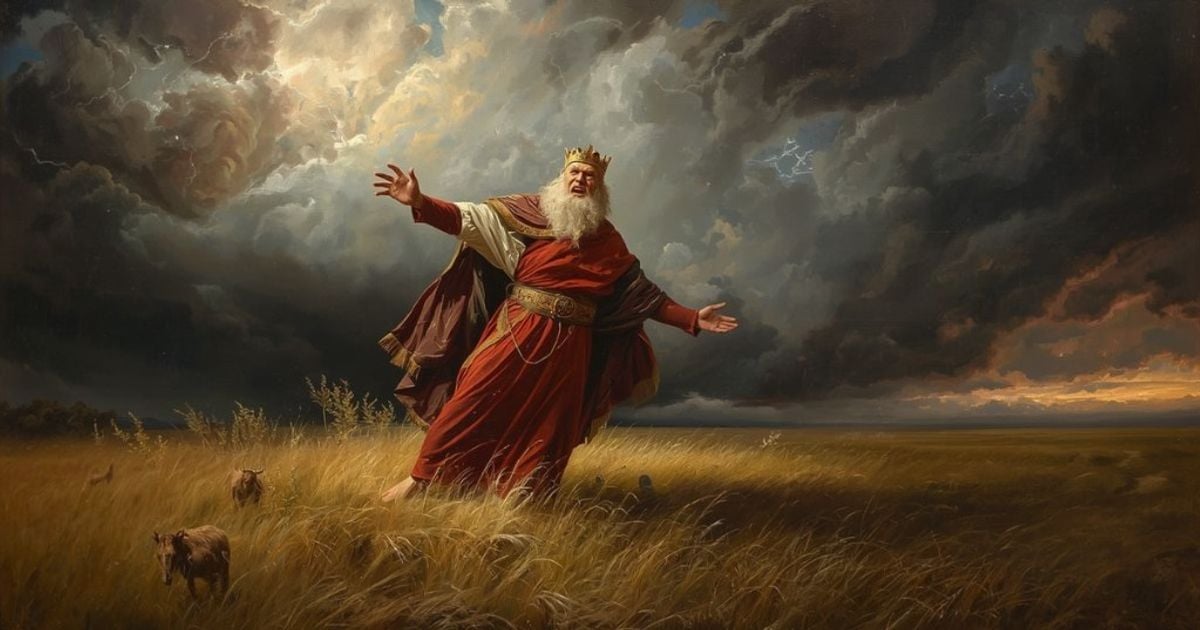
A very short scene, but one of the play's turning points.
Gloucester tells Edmund that Cornwall and Regan have forbidden him to help Lear: they have taken the use of his own house from him and warned him on pain of their "perpetual displeasure" not to speak of Lear, entreat for him, or sustain him in any way. Edmund expresses horror: "Most savage and unnatural!"
Gloucester presses on. He has received a letter, dangerous to be spoken of, now locked in his closet, reporting that French forces have already landed, that the injuries done to Lear will be answered, and that a power is already in the field. The political situation is shifting. They must incline toward the King.
His decision is direct: "If I die for it, as no less is threatened me, the King my old master must be relieved." He instructs Edmund to keep the Duke occupied while he slips out to find Lear. If anyone asks, he is ill and in bed.
The moment Gloucester exits, Edmund speaks.
"This courtesy, forbid thee, shall the Duke instantly know, and of that letter too. This seems a fair deserving, and must draw me that which my father loses, no less than all." Then the final line: "The younger rises when the old doth fall."
Edmund does not hesitate, qualify, or feel anything that resembles conflict. His father has just told him he is willing to die for an old king. Edmund's response is to calculate precisely how quickly he can turn that confession into a weapon. He is going to betray the letter, betray the secret mission, and betray the man who trusted him, and he will do it immediately, before Gloucester has even reached the door.
The scene ends in eight words of verse. They are enough.
Shakespeare understood something brutal about human nature: some people see your moral struggles as their golden opportunity. In King Lear's time, this played out in royal courts where ambitious courtiers waited for good people to make principled stands that could be used against them. Today, the same dynamic thrives in workplaces, families, and communities. The pattern is always identical. First, authority figures create impossible choices where doing right becomes dangerous. Healthcare workers face this when insurance companies deny treatments while forbidding strong patient advocacy. Teachers experience it when they see struggling students but face restrictions on intervention. Then come the opportunists, circling like vultures. They don't wrestle with conscience because they've already decided advancement matters more than integrity. They often encourage others to take moral stands, knowing the risks involved. A coworker might push you to report harassment, planning to take your position when you face retaliation. A family member might encourage you to confront addiction issues, ready to step into your role when relationships fracture. The most dangerous part is how they frame their exploitation as loyalty or business sense. They present betrayal as necessary pragmatism. Recognizing this pattern requires understanding that moral crises don't just test your character; they reveal everyone else's true nature too.
Explore this chapter with AI to uncover deeper meaning and practical takeaways.
AI Discussion