
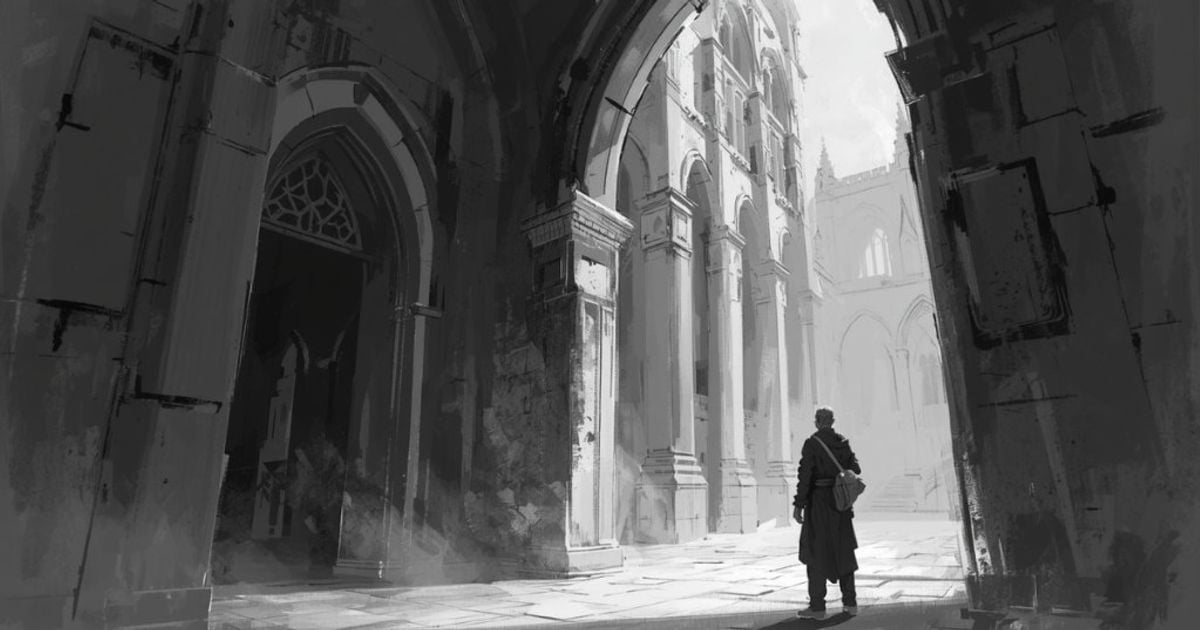
Sue sits opposite the windowless walls of Sarcophagus College, which shut out moonlight and sun from the little room. Time asks what they shall do tomorrow. All is trouble, she says. He asks if they cannot get a lodging because of the children, and whether it would be better to be out of the world than in it. She answers that it would almost. Then she is honest with him as with an aged friend. There is going to be another baby. He jumps up wildly. Oh God, Mother, you've never sent for another. He will not forgive her. If we children was gone there'd be no trouble at all. She tells him to go to sleep.
At a little past six she runs to Jude's tavern to say they are homeless. They come back to boil two eggs for the children. He times them with his back to the closet. A shriek turns him. From two hooks and a nail the three children are hanging by box-cord. He cuts them down. The surgeon is superfluous. They have been hanging more than an hour. On the floor, in the boy's hand, a scrap of lead pencil: Done because we are too menny. Sue is carried to a lower room. She thinks her talk was the cause. Jude says it was in his nature. The doctor names boys who see all the terrors before they have staying power: the beginning of the coming universal wish not to live.
The college organ practises the seventy-third Psalm while two clergymen outside argue the eastward position. There is something external, she says, that told them they shall not learn, shall not labour, and now shall not love. She will not let the baby's frock and socks be moved. At the funeral she gives way at the last moment. Jude sees the two boxes into the earth. In the afternoon he finds her in the half-filled hole, holding back the man's shovel, still in brown and red. She wants to see them once more. They walk home because a fly would cost too much. Late that night a child is prematurely born, and it, like the others, is a corpse.
Hardy wrote this chapter in 1895, when childhood was just being recognised as a distinct phase of life requiring protection. Little Jude's tragedy reflects Victorian anxieties about industrialization creating 'old' children who see too much, too young. Today, we face the same pattern in different forms. The parent who shares every financial stress with their teenager, creating anxiety the child can't solve. The manager who dumps their fears about layoffs on workers who can't control company decisions. The friend who insists on 'brutal honesty' about your relationship when you're already struggling. The healthcare worker who shares their burnout with patients fighting for hope. We tell ourselves this is respect, treating people 'like adults.' But often, it's emotional dumping disguised as honesty. True honesty considers the listener's capacity and ability to act. It asks: 'Will this truth help them navigate their world, or just transfer my burden to their shoulders?' Sometimes the most honest thing we can do is protect someone from our truth until they're equipped to carry it. The question isn't whether something is true, but whether sharing it serves love or just serves our need to unload.
Explore this chapter with AI to uncover deeper meaning and practical takeaways.
AI Discussion