
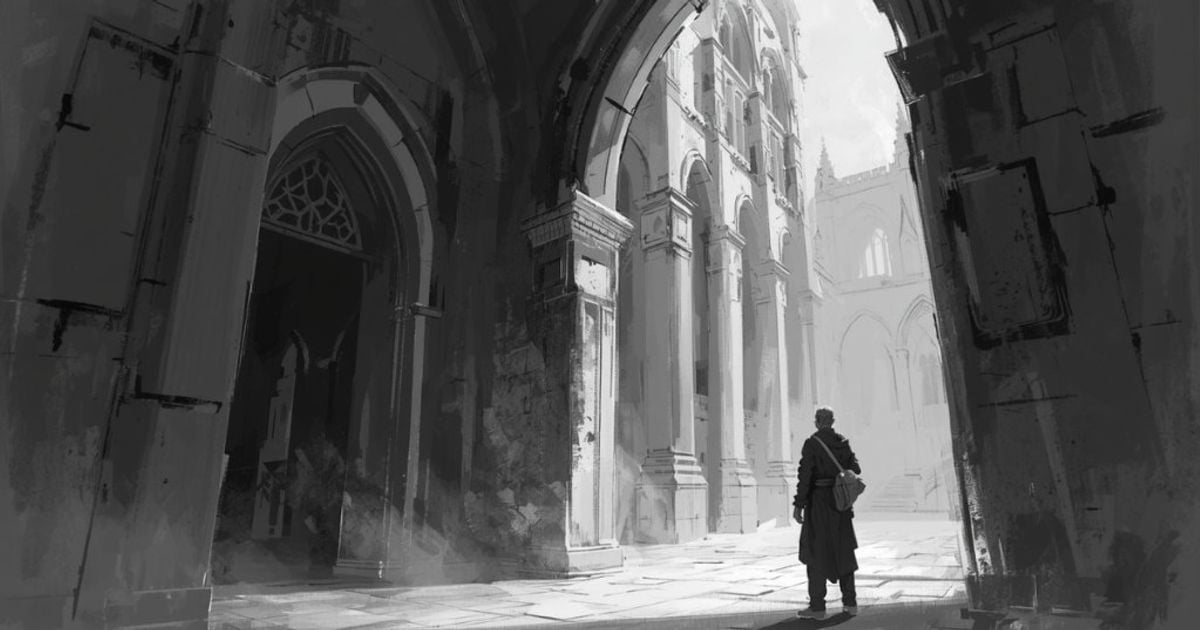
Sue is convalescent, though she had hoped for death. They lodge toward Beersheba, not far from Saint Silas. She says they must conform. All the ancient wrath has been vented upon them. Jude says the foe is only man and circumstance. He thinks they ought to make the union legal now. She has a new thought: she is still Richard's wife. He has found work on college parapets he will never enter. Events that enlarged his views have travelled her the other way. On a Sunday she comes home smelling of incense. She has been to St. Silas. She does not think she ought to be his wife any longer. Even a ceremony would make her feel worse. She belongs to him, or to nobody.
Arabella knocks in the dusk. She has come from the cemetery and could not come to the funeral. He was her child; the others she did not feel so much for. I am not his wife, Sue says, and leaves the room. Arabella is keeping house for her father, back from Australia. When she has gone, Sue is not in the house. The carpenter's wife says she has the key of St. Silas. Jude finds her prostrate under a huge jewelled Latin cross that sways on invisible wires. Arabella's child killing mine was a judgement, she tells him: the right slaying the wrong. He says affliction has brought her to this. She hears music he cannot hear.
In the street he asks where Apollo and Venus have gone. She says Arabella's coming was the finish. At a coffee-house she asks him to take a lodging there. Upstairs she puts her hand in his and says good-night. He must not stay. She slipped into the false position through jealousy. Women could have lived as mere lovers; men will not.
He takes one of the pair of pillows and flings it to the floor. She says it is conscience, not dislike. Oh but you shall kiss me. We'll be dear friends just the same, she says, and see each other sometimes, and try to be as they were long ago. He does not permit himself to speak. He turns and descends the stairs.
Sue's complete reversal from religious sceptic to desperate believer reveals something crucial about how humans respond to overwhelming loss. When our worldview gets shattered, we often reach for the nearest certainty—even if it's something that previously hurt us. This isn't stupidity; it's emotional survival. Sue's questioning mind feels dangerous now because it led to choices she blames for tragedy. So she swings to absolute orthodoxy because rules feel safer than the complexity that preceded disaster. This pattern appears everywhere today. The parent whose permissive approach backfires becomes authoritarian. The employee who gets fired for speaking up goes silent. The person burned in love either swears off relationships or rushes into marriage. We mistake rigid reversal for wisdom. But true healing usually happens in the middle ground, not in extreme swings. When you see someone trauma-swinging, don't argue with their new certainties directly. Instead, offer steady presence and gentle questions that help them find balance over time. The goal isn't returning to exactly where they were, but finding new stability that incorporates both experience and hard-won wisdom.
Explore this chapter with AI to uncover deeper meaning and practical takeaways.
AI Discussion