
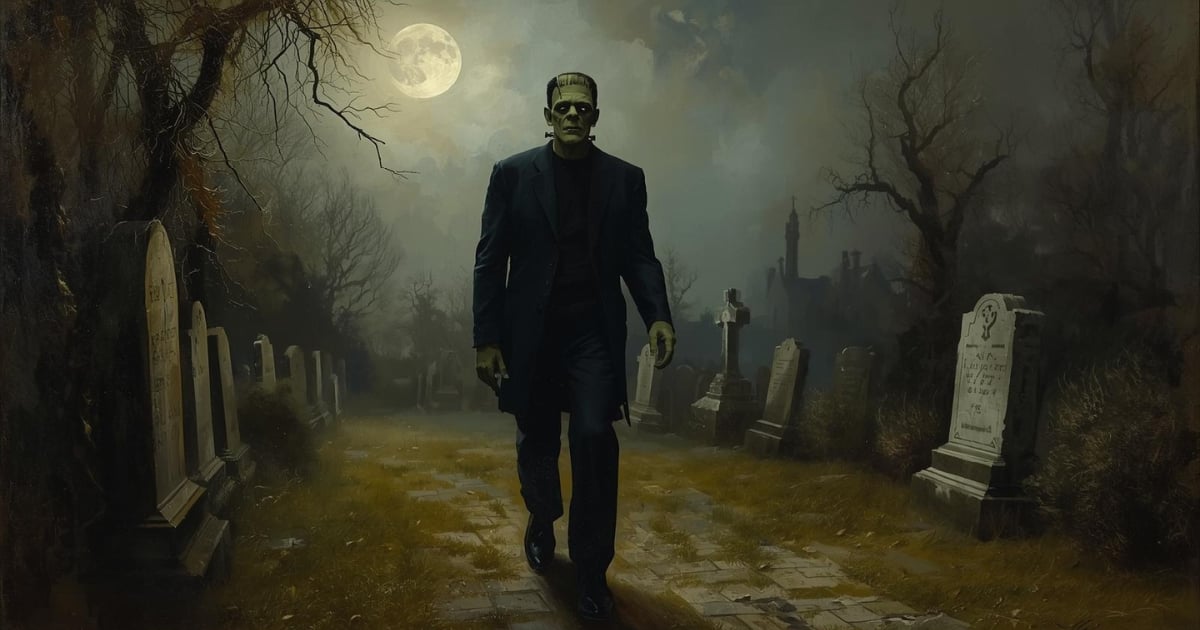
The next day the sources of the Arveiron and the advancing glacier quiet Victor's grief without removing it. Morning rain hides the summits. He has his mule brought and climbs Montanvert without a guide, remembering how the ice once gave him wings. Near noon he sits on the rock over the sea of ice. A breeze thins the mist. He crosses the uneven field for nearly two hours and, in a recess of rock, asks wandering spirits to let him keep this faint happiness or take him away.
A man comes toward him at a speed no walker could keep, bounding the crevices Victor had picked across. Rage returns first. Victor calls him devil and vile insect and springs. The creature eludes him and will not fight his maker. All men hate the wretched, he says; how much more must he be hated. He asks for the duty a creator owes. If Victor will hear him and meet his conditions, he will leave mankind in peace. If not, he will glut death with the blood of the remaining friends. He claims he was benevolent until misery made him a fiend, Adam driven out for no misdeed.
Victor still says there can be no community between them. The creature covers Victor's eyes with his hands, then leads him to a hut on the mountain. Curiosity, a first sense of a creator's duty, and the wish to know whether this being killed William make Victor follow. Rain begins again. He sits by the fire his companion has lighted, and the tale starts.
Shelley understood something profound about learning: sometimes you see most clearly when you're excluded from what you're watching. The creature's education through the cottage window mirrors experiences many of us know, being the new person at work, the outsider in a social group, the one looking in on a life we want but can't access. There's a cruel irony here: the very isolation that hurts us also teaches us. When we're forced to watch rather than participate, we notice patterns that insiders miss. We see how power really flows, who genuinely cares versus who performs caring, what makes relationships work or fail. But this clarity comes at a cost. The more we understand what we're missing, the more painful our exclusion becomes. The creature learns about family love while being utterly alone, a knowledge that becomes both gift and torture. This dynamic plays out constantly in modern life. The single person at couples' dinners, learning about relationships while feeling their own loneliness more acutely. The working-class student at an elite school, understanding privilege while experiencing exclusion. The question becomes: how do we use our outsider insights without staying trapped in outsider status? How do we move from observation to participation without losing the clarity that distance provides?
Explore this chapter with AI to uncover deeper meaning and practical takeaways.
AI Discussion