
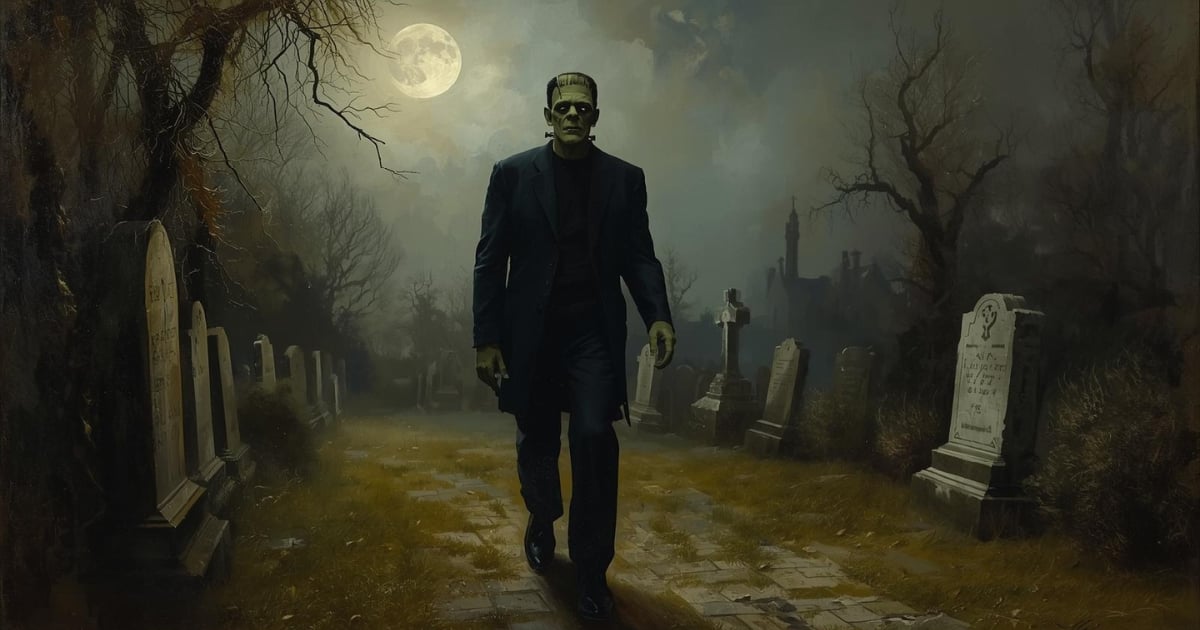
Justine is dead and Victor is still alive. The calm after the trial is worse than the storm. Alphonse, whose conscience is clear, tells him excessive sorrow is a duty failed to the living. The advice cannot reach a son who is hiding remorse, not grief. They go to Belrive. After the family sleeps, Victor rows out, sometimes leaving the boat to drift, and is tempted to let the water close over him. He stops when he thinks of Elizabeth, Alphonse, and Ernest left to the creature he will not name.
Elizabeth no longer takes delight in ordinary work. She tells Victor that misery has come home: men look like monsters thirsting for each other's blood, and yet she knows Justine was innocent. When falsehood can look so like the truth, she asks, who can be sure of happiness. Victor hears her and names himself the true murderer, not in deed but in effect. Her tenderness cannot lift the cloud.
In mid-August, nearly two months after the execution, he leaves on horseback, then by mule, for the valley of Chamounix. The Arve and the glaciers lighten the weight for an hour. At the village window he watches lightning over Mont Blanc, lays his head down, and blesses sleep as the giver of oblivion.
Victor's breakdown reveals something crucial about how secrets work in our psychology. He tells himself he can't speak because no one would believe him, but the real reason is terror of consequences. This self-deception is what makes secrets toxic - we lie to ourselves about why we're staying silent. In working-class environments, this pattern shows up constantly. The warehouse worker who sees safety violations but doesn't report them 'because nothing ever changes anyway.' The healthcare aide who witnesses abuse but stays quiet 'because administration always sides with management.' The retail employee who knows about wage theft but doesn't speak up 'because they'll just fire me and hire someone else.' Each person thinks they're being realistic about power dynamics, but they're actually protecting themselves from discomfort while watching others suffer. The psychological cost is enormous - chronic stress, insomnia, depression, the constant performance of normalcy. Shelley understood that isolation amplifies shame exponentially. When we can't share our reality with anyone, that reality becomes distorted, overwhelming, unbearable. The solution isn't always speaking truth to power - sometimes the system really is rigged. But the solution is always finding someone safe to share the burden with, even if they can't fix it.
Explore this chapter with AI to uncover deeper meaning and practical takeaways.
AI Discussion