
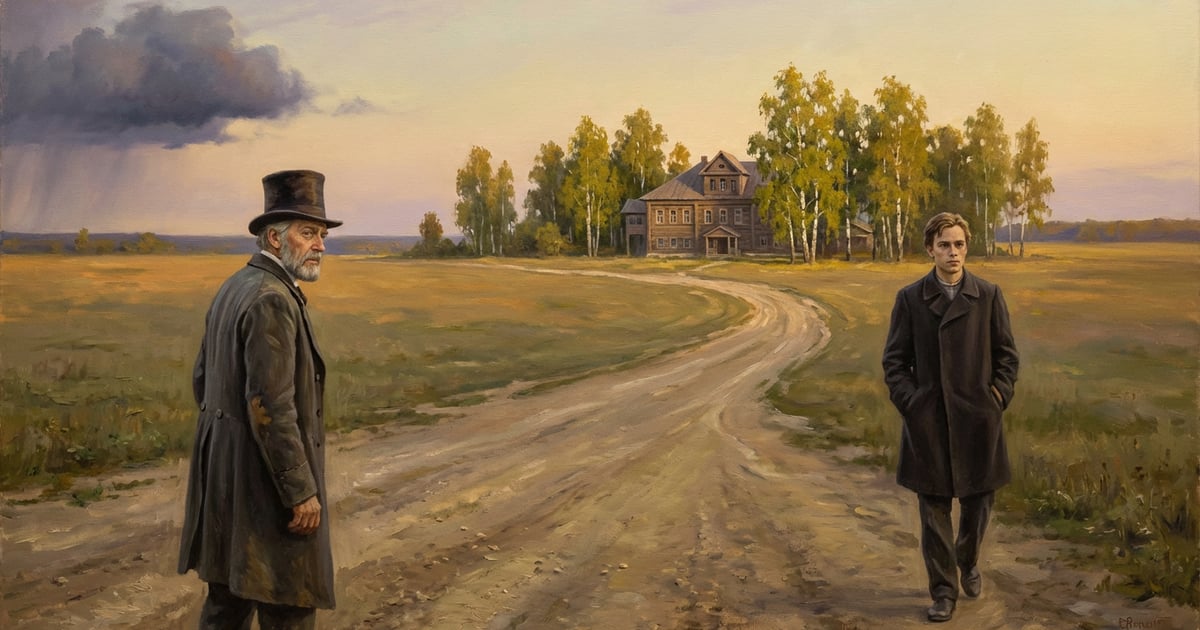
They had not expected him. He will stay six weeks, and must not be disturbed. Vasili Ivanitch gives him the study and stops Arina from every caress. At meals she begins to speak, then says it was nothing. The work passes into depression. He grows thinner, and his father does not like the colour of his face. In the village Bazarov asks a peasant about the future of Russia, which people say lies in such men. They might manage it, the peasant answers, if first they had a new chapel. Once Bazarov has turned away, the same man tells a neighbour that the gentleman was only chattering. In those eyes the young Nihilist is no better than a pease-pudding.
When his father's hands shake over a bandage, the son takes over, and ridicules the remedies he himself has advised. A typhus patient dies on the road home. Three days later Bazarov asks for hell-stone. He cut his finger while uncovering the body they had tried to hide, and the district physician had nothing he needed. Four hours have passed. Once the infection is in the system, every remedy is too late. Arina is not told. That night, told to leave the room, Vasili hides behind the cupboard doors. In the morning blood pours from his son's nose. Bazarov says he is better, and turns to the wall.
His course is run. He shows the red patches and will have the thing called pyæmia, not a chill. Do not send for Arkady. That jackdaw has joined the jackdaws. Send to Madame Odintsov, and send no letter. The messenger need only say that Evgenii Vasilitch sends his compliments, and is dying. Vasili goes to the icons. Pray, Arina. Our son is dying. A doctor talks of recovery. Bazarov shakes a table to show that the strength is still there, and says he must go all the same. Then the old man kneels and begs him to take the last sacrament while he can. To comfort them, the son will not refuse outright. If they are wrong about the recovery, he will allow it.
Anna arrives in a black veil, with a doctor, and Vasili calls her an angel come from heaven. Bazarov forbids a consultation in Latin. He already knows jam moritur. She is told there is no hope. At the bloodshot face she feels only chill terror, and thinks that if she had loved him she would not feel this. He thanks her. He is under the wheel, and then they will write fuit. He had meant to say that he loved her. Now the phrase means less than ever. She must not sit too near, and she does not take off her glove to hand him the tumbler. His father will say that Russia is losing a man. That is rubbish. She must not undeceive the old man, but comfort him as a child. Breathe upon the expiring lamp, that it may go out in peace. She presses her lips to his forehead. Enough, he says. Now let there come darkness. Next day Bazarov dies. When the holy oil touches his breast, one eyelid lifts, and something like distaste crosses his face. Vasili beats the air and cries that he protests, that he protests, that he protests. Arina puts her arms around his neck, and they sink to the floor, their heads drooping, as Anfisushka later says, like those of two sheep at midday.
Turgenev wrote this chapter during a time when young Russian intellectuals believed pure reason could solve all social problems. Bazarov represents this generation, brilliant, confident, certain that old ways of thinking were worthless superstition. His death from a simple medical accident reveals the fatal flaw in this worldview: intellectual superiority doesn't exempt you from physical reality. Today's version plays out in every workplace where someone's expertise becomes their weakness. The nurse who's seen it all and stops following protocols. The mechanic who knows cars so well he doesn't bother with safety equipment. The manager who's handled crises before and skips the documentation. We celebrate intellectual confidence in our culture, but Turgenev shows us its shadow side. The same mental framework that makes someone effective, pattern recognition, quick decision-making, confidence in their abilities, can become dangerous when it replaces basic precautions. The tragedy isn't that Bazarov died, but that he died from preventable carelessness while trying to help others. His nihilistic philosophy couldn't save him from the most human of errors: thinking his intelligence made him invincible. The question this raises is uncomfortable: In what areas of your own life has competence made you careless?
Explore this chapter with AI to uncover deeper meaning and practical takeaways.
AI Discussion