
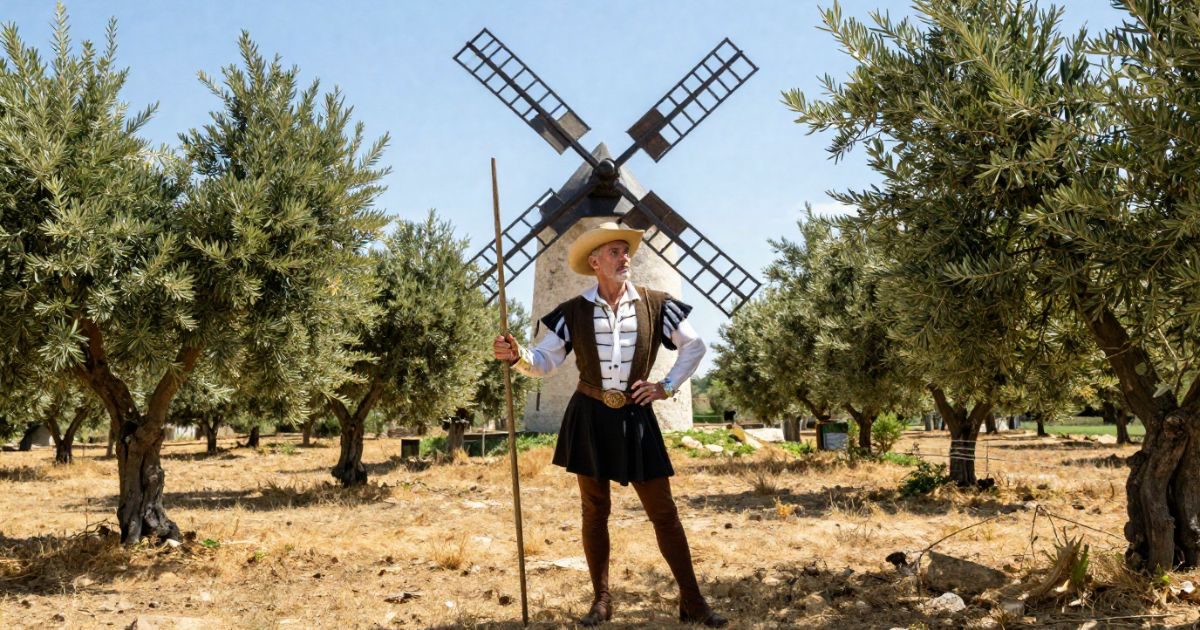
Hamete invokes the Sun to lighten his wit as Sancho arrives at Barataria, a walled village of a thousand souls given that name as a joke. Bells, keys, and burlesque ceremony seat him on the judgment bench. He asks what Don means on the wall inscription, declares he has no Don in his family, and offers to weed titled midges out of the island before the first case begins.
Two old men dispute ten gold-crowns lent and sworn repaid. Sancho watches the debtor hand his stick to the creditor while swearing, calls the stick back, breaks it, and finds the crowns inside. The court hails another Solomon. The chronicler cannot decide whether the governor is fool or sage.
A woman drags a pig dealer before him claiming force. Sancho gives her the man's silver purse, then orders him to snatch it back. Her vigour in defending money, not her body, decides the case; he banishes her with lashes. A tailor and a labourer dispute five caps made on five fingers. Sancho rules the tailor loses his labour, the labourer his cloth, and the caps go to the gaol. The record is sent to the duke, and Hamete leaves Sancho for Altisidora's music.
The Sun is invoked to lighten Hamete's wit as Sancho arrives at Barataria with bells, keys, and burlesque ceremony, is seated on the judgment seat, and told he must answer a knotty question to measure his wit. Sancho asks what Don means on the wall inscription, declares he has no Don in his family, and offers to weed out Dons like midges before the first case enters: two old men dispute ten gold-crowns lent and sworn repaid. Cervantes makes the cost visible: not only what the characters suffer, but what bystanders must decide once the story can no longer stay private. The chapter asks whether comfort, silence, or intervention is the truer form of care when someone is living inside a plot of their own.
Explore this chapter with AI to uncover deeper meaning and practical takeaways.
AI Discussion